Why earring material matters more than earring design in Pakistan
Earrings are the one jewelry category where the material question is not just about how long the piece lasts — it is about whether it is safe to wear at all. The earring post or hook sits inside a piercing — direct skin contact at a sensitive point, for hours at a time, in close proximity to the ear canal. A reactive base metal on a bracelet causes a green mark on your wrist. A reactive base metal on an earring post causes irritation, swelling, and infection inside the piercing.
In Pakistan's humidity and heat, where earrings are worn for long continuous hours — through the school day, through an office day, through a full shaadi evening — getting the material decision right for earrings matters more than for any other jewelry category. The correct answer for daily wear is stainless steel posts with 18K PVD coating. Everything else involves a compromise that ranges from acceptable for occasional use to actively harmful for daily wear.
What to look for before buying gold plated earrings in Pakistan
- Earring post or hook material — must be stainless steel — the post or hook is the element in direct contact with the piercing. Brass or zinc alloy posts cause irritation and infection in sensitive ear piercings — a condition widespread among Pakistani women who have experienced itching, redness, or discharge after wearing affordable earrings. Stainless steel posts are hypoallergenic under normal conditions. Surgical steel is the same designation — both refer to the corrosion-resistant grade used in medical applications.
- Coating on the visible surface — 18K PVD — the decorative surface of the earring faces light and is seen but experiences less friction than bracelets or rings. This means even PVD coating on earrings tends to last longer than on wrist and finger jewelry. A PVD-coated stainless steel earring will maintain its gold colour for years of regular wear in Pakistan.
- Earring back type — butterfly backs (friction backs) are the most common for studs and provide secure hold but can become loose over time. Push-back styles are more secure for heavier earrings. For long dangles worn at events in Pakistan where earrings move significantly, check that the back mechanism matches the earring weight to prevent the earring rotating or sliding forward on the lobe.
- Weight relative to use duration — heavy statement earrings worn for a full shaadi evening in Pakistan stretch the piercing over time. For daily office or university wear, studs and small hoops under 5 grams prevent the gradual lobe stretching that heavy daily earrings cause.
Earring styles in Pakistan — which work for which occasion
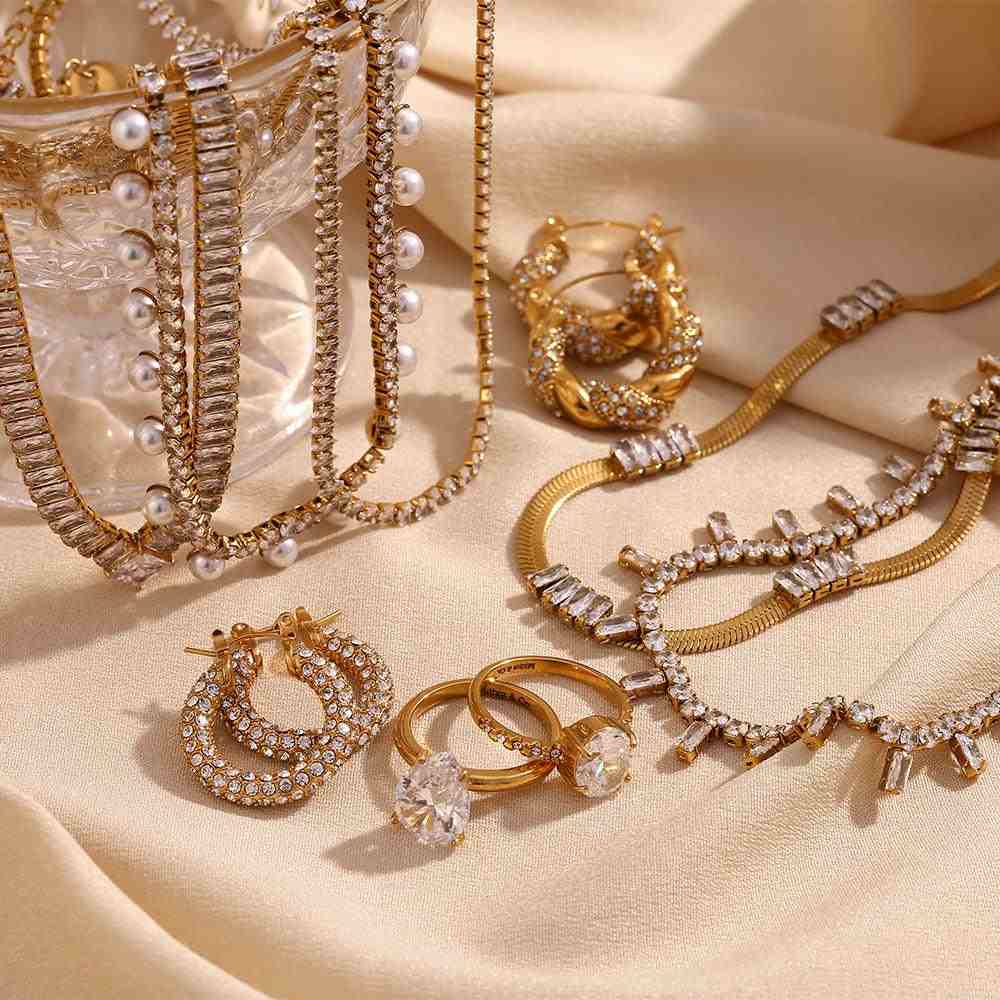
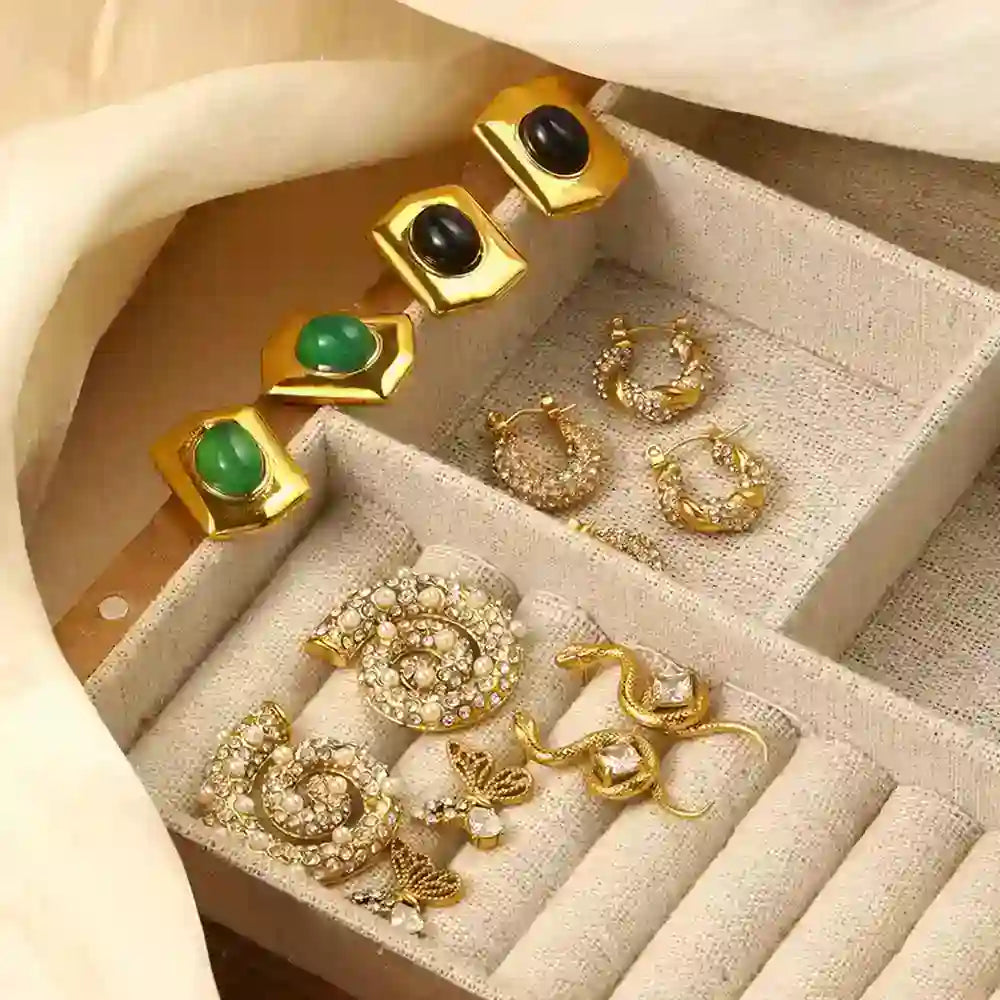
- Studs — the lowest-friction, lowest-weight earring style. Sit flush against the earlobe with minimal movement. The correct choice for daily wear — office, university, errands — because they require zero decision-making and never clash with any outfit. A simple gold disc stud on a stainless steel post is the single most versatile earring in any Pakistani woman's collection.
- Small hoops — slightly more presence than studs with minimal added weight or friction. Work across casual, office, and semi-formal contexts in Pakistan. Huggies (tight hoops that hug the earlobe) are the most wearable daily hoop style because they do not catch on hair, clothing, or dupatta.
- Dangles and drops — appropriate for office wear when the drop length is under 3 centimetres and the design is clean. Longer dangles for events and occasions. The material question is more important for dangles than studs because the metal surface area is larger and more exposed to air and skin contact.
- Statement earrings — for shaadi season and occasions. Chandeliers, tassel styles, and large hoops. In Pakistan's summer event conditions, the post and hook materials matter most because these pieces are worn for the longest continuous hours under the highest sweat exposure.
- Ear cuffs and climbers — no piercing required, worn on the outer ear cartilage. Lower skin contact area means the reactive base metal problem is less acute than for post earrings. Still best in stainless steel for daily wear in Pakistan's humidity.
How long do gold plated earrings last in Pakistan — realistic lifespan
| Earring type | Base and coating | Daily wear lifespan Pakistan | Skin safety |
|---|---|---|---|
| Standard fashion earrings | Brass post, electroplated | 1–3 months | Irritation risk once coating wears |
| Better electroplated earrings | Brass post, thicker plating | 3–8 months | Moderate irritation risk |
| 18K PVD studs and hoops | Stainless steel post, PVD | 3–5+ years | Hypoallergenic — no reaction |
| 18K PVD dangles and drops | Stainless steel, PVD | 2–4 years | Hypoallergenic — no reaction |
| Gold vermeil earrings | Sterling silver, electroplated | 1–2 years | Safe unless silver sensitive |
Earrings last longer than bracelets or rings under equivalent coating quality because their friction exposure is significantly lower. A PVD earring worn daily in Pakistan can maintain its finish for three to five years with basic care — making it the lowest-maintenance category for material investment in the entire jewelry collection.
Sensitive ears and hypoallergenic earrings in Pakistan
Ear sensitivity to jewelry is extremely common among Pakistani women — and almost always caused by the earring post material rather than the visible metal surface. The symptoms — itching inside the piercing, redness around the hole, discharge or crusting after wearing — are the result of nickel in brass or copper posts reacting with the skin inside the piercing under sweat exposure.
The solution is straightforward: stainless steel posts contain nickel in a bound form that does not leach into skin under normal conditions. For buyers who have experienced ear reactions to affordable Pakistani jewelry, switching to stainless steel post earrings — not just looking for hypoallergenic labelling, but confirming the post material is stainless steel — resolves the reaction in most cases. Understanding why base metal causes skin reactions explains the chemistry behind why this happens and what to look for on any product listing.
How to care for gold plated earrings in Pakistan
- Clean the post or hook after every wear — the post sits inside the piercing where skin oils, sebum, and product residue accumulate. A soft cloth wipe on the post after removing the earring prevents buildup that can cause irritation even on stainless steel posts over time.
- Do not spray perfume directly on earrings — the ear area receives direct perfume application from most people. Spraying before putting earrings on — and allowing the perfume to dry completely before the earring post contacts the skin — prevents alcohol compounds from sitting between the post and the piercing.
- Store studs in a dedicated holder or tray compartment — loose studs in a drawer lose their backs, tangle together, and scratch against each other. A small earring holder or divided tray keeps each pair separated and the backs attached.
- Remove heavy earrings before sleeping — pressure on one side causes uneven tension on piercing tissue overnight. Even for stainless steel earrings, sleeping in heavy dangles or large hoops accelerates the gradual lobe stretching over time.
Gold plated earrings in Pakistan — shop with COD
Every earring at Mithra & Co uses stainless steel posts and hooks with 18K PVD coating — hypoallergenic, tarnish-free, and built for daily wear in Pakistan's climate. COD available across Pakistan with free delivery on orders above Rs. 5,000.
Browse gold plated earrings in Pakistan at mithraofficial.com — studs, hoops, dangles, and statement pieces.
Frequently asked questions
Q1. Why do earrings cause itching and irritation in Pakistan?
A: Almost always the earring post material — brass or copper posts contain nickel and reactive metals that leach into the piercing under sweat and heat. Pakistan's humidity means earring posts sit in a warm, moist environment against sensitive piercing tissue for extended wear periods, accelerating the reaction. Switching to stainless steel posts resolves the irritation in most cases because stainless steel is biologically inert and does not react with skin tissue under normal Pakistani wear conditions.
Q2. What are the best hypoallergenic earrings for sensitive ears in Pakistan?
A: 18K PVD coating over stainless steel posts — the stainless steel is hypoallergenic at normal skin contact levels and the PVD coating adds a non-porous barrier between the metal and the ear. Confirm the post material is stainless steel specifically — "hypoallergenic" on a product listing without specifying stainless steel or surgical steel can refer to many base materials that still cause reactions in sensitive ears under Pakistani daily wear conditions.
Q3. Can I wear gold plated earrings every day in Pakistan?
A: Yes — 18K PVD over stainless steel is the correct choice for daily earring wear in Pakistan. Studs and small hoops on stainless steel posts are comfortable for twelve-plus hours of daily wear, do not cause ear reactions, and maintain their finish for three to five years under normal conditions. Standard brass post earrings are suitable for occasional wear but cause irritation and finish degradation under daily Pakistani wear.
Q4. How do I clean gold plated earrings at home in Pakistan?
A: Wipe the post and the visible surface with a soft microfibre cloth after every wear. For a deeper clean, use a small amount of mild soapy water on a cotton bud to clean around the post specifically — the area where product residue and sebum accumulate — then wipe dry immediately with a clean cloth. Never submerge earrings in water and avoid alcohol-based cleaners which strip the PVD surface over repeated use.
Q5. Where can I buy hypoallergenic gold plated earrings in Pakistan with COD?
A: Mithra & Co makes every earring with stainless steel posts and 18K PVD coating — hypoallergenic, tarnish-free, built for daily Pakistani wear. COD available across Pakistan nationwide. Browse the full earrings collection at mithraofficial.com.


Leave a comment
This site is protected by hCaptcha and the hCaptcha Privacy Policy and Terms of Service apply.