

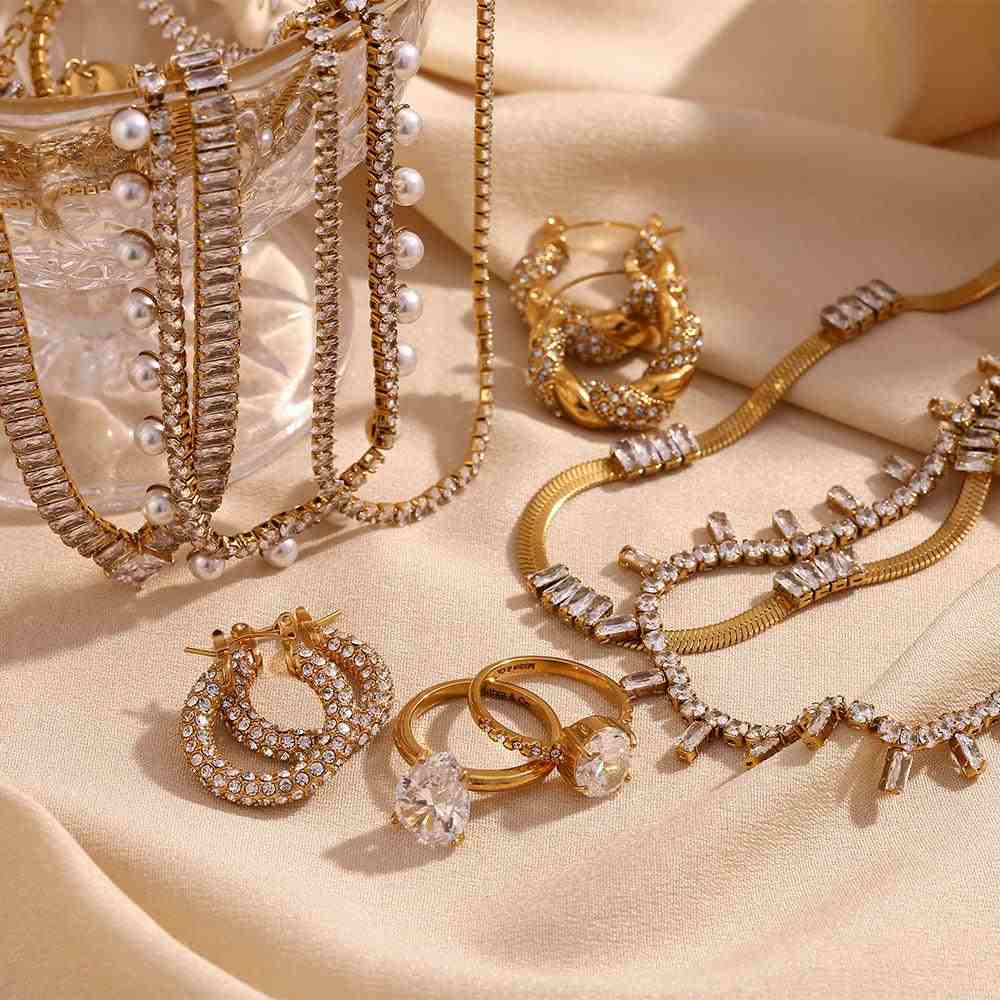
Gold plated jewelry is the most widely worn jewelry category in Pakistan — and the most misunderstood. Most buyers choose on appearance and price. Most regrets come from not knowing what sits underneath the gold surface. This guide covers the four things that decide whether a piece holds up or fails in Pakistan's heat and humidity: the base metal, the coating method, realistic lifespan by piece, and what to check on a listing before you order. Every number here is the reference used across the rest of this site.
What gold plated jewelry actually is
Gold plated jewelry is a base metal — stainless steel, brass, copper, or zinc alloy — with a thin layer of real gold applied to the surface and measured in microns. The gold layer decides the colour. The base metal decides how the piece behaves on skin, how long the colour holds, and whether it reacts under sweat and humidity.
The phrase "gold plated" on a product listing tells you one thing: the surface is gold-coloured. It tells you nothing about the base metal, the coating thickness, the application method, or how long the piece will keep that appearance under real Pakistani wear. Those four variables — not the gold colour — are what you are actually buying.
Base metals — the decision most buyers never make
Most product pages either do not disclose the base metal or bury it in vague language ("premium alloy", "high quality metal"). It is the single variable that most predicts what the piece will do over the next year.
Non-reactive. A passive chromium oxide layer stops it corroding under sweat, water, or humidity. No copper, so no green marks even where the coating eventually wears at contact points. The base metal to look for in daily wear jewelry in Pakistan.
Copper-zinc alloy. Reacts with the sodium chloride in sweat once the coating thins at high-friction points — inner ring band, bracelet underside — producing green marks and irritation. Fine for occasional wear. Not suited to daily wear in Pakistan's climate.
The most common base in budget fashion jewelry. More brittle than brass, with weaker coating adhesion, so wear and clasp failure appear earlier. Oxidises to a white powdery residue under sweat.
The most reactive of the four. Produces the most visible green discolouration, often within hours of wear in Karachi summer. Rarely named on listings — usually hidden inside "alloy".
If you are still working out what "artificial", "imitation", and "gold plated" mean in the Pakistani market and how they differ, start with the artificial jewelry guide for Pakistan. For why stainless steel specifically outperforms every other base, see why stainless steel is the right base metal.
Coating methods — electroplating vs PVD
The gold layer is applied one of two ways. The method decides thickness, adhesion, porosity, and how long the colour holds.
-
Standard electroplating (dip plating)The piece sits in a gold solution and an electrical current deposits gold on the surface. The layer sits on top of the base metal rather than bonding into it, typically 0.5 to 2 microns thick and comparatively porous. Under friction and sweat it lifts at contact points, and on a brass or zinc base the exposed metal then reacts with skin. This is the construction behind nearly every "it turned green in a month" complaint.
-
PVD coating (physical vapour deposition)Gold is vaporised inside a vacuum chamber and deposited onto the surface with enough energy to bond into it rather than sit on it. The result is a harder, denser, lower-porosity layer, typically 1 to 3 microns, with far stronger adhesion. Combined with a stainless steel base, it is the only plated construction that handles daily Pakistani wear for years rather than weeks.
For the full side-by-side of PVD against gold-filled, gold vermeil, standard plating, and solid gold, see gold plating types explained. For what PVD is at a process level and how long it lasts by piece, see what PVD means in jewelry.
How long gold plated jewelry lasts in Pakistan — the reference table
Lifespan depends on coating method, base metal, and how much friction the piece takes daily. Pakistan's heat, humidity, and year-round sweat exposure sit at the demanding end of the spectrum, so these ranges are shorter than international estimates — and they are the figures every other guide on this site uses.
| Construction | Base metal | Daily wear lifespan in Pakistan | Green mark / skin reaction risk |
|---|---|---|---|
| Standard electroplated | Brass or zinc alloy | 2–8 weeks | High once coating wears |
| Heavy electroplated | Brass | 2–6 months | Moderate to high |
| Gold vermeil | Sterling silver | 6–18 months | Low — silver tarnish rather than green marks |
| Gold filled | Brass | 1–2 years | Low to moderate |
| 18K PVD coated | Stainless steel | 1–3+ years (see by piece below) | Very low |
| Solid 18K gold | Gold alloy | Decades — no coating to wear | Very low |
Within the 18K PVD range, the piece matters as much as the material, because friction is what wears a coating:
| 18K PVD over stainless steel | Friction level | Expected daily wear lifespan |
|---|---|---|
| Necklaces and pendants | Low | 3–5+ years |
| Stud and hoop earrings | Low to moderate | 3–5+ years |
| Bracelets | Moderate to high | 1–4 years (dominant hand at the low end) |
| Rings worn daily through all tasks | Very high | 8–18 months |
Wear starts at edges and contact points — the inner band of a ring, the underside of a bracelet, a clasp — not evenly across the piece. That is normal for any coated surface, not a defect. For why Pakistan's climate accelerates coating breakdown specifically, see why gold plated jewelry fades; for the green-mark reaction itself, see why gold plated jewelry turns skin green.
Daily wear, events, and water — the short version
For daily wear in Pakistan — office, university, errands — the material requirement is stainless steel base with 18K PVD coating. Everything else either reacts under sweat or needs replacing within weeks. For event wear — shaadi season, Eid, formal dinners — the material requirement does not change; only the design brief does, from minimal to statement.
-
Plain water is fineWuzu, hand washing, dishes, rain, and a normal shower do not meaningfully affect 18K PVD on stainless steel. Dry the piece afterwards rather than leaving it wet. Daily showering with it on will shorten the coating's life over months — not ruin it, but shorten it.
-
Chlorine and saltwater are notPools and the sea are stronger oxidisers than sweat or tap water. Remove jewelry where possible; otherwise rinse and dry immediately afterwards.
-
Gym is manageable with one habitA workout followed by a shower is fine for stainless steel PVD if you rinse and dry the piece after rather than letting sweat sit under the shower stream and air-dry. Heavy weights and abrasive surfaces are a friction issue, not a water issue — remove rings for those.
The activity-by-activity breakdown — wudu, dishes, monsoon, gym, pool — is in gold plated jewelry in water, gym, and daily life. What sweat, perfume, and hand sanitiser each do is in what actually damages gold plated jewelry. For event wear in Pakistani heat specifically, see jewelry for Pakistani summer.
Four care habits that matter more than any product
-
1Products first, jewelry last — perfume, sunscreen, moisturiser, and hairspray applied and fully absorbed before any piece goes on. Alcohol in fragrance and sanitiser is the fastest chemical wear on any plated surface.
-
2Dry microfibre wipe after every wear — removes sweat salts and skin oils before they sit against the coating overnight. The single most effective habit for extending PVD life in Pakistani conditions.
-
3Separate pouch storage, out of the bathroom — metal-on-metal contact scratches; bathroom humidity accelerates surface change even on stainless steel. One piece per pouch, in a bedroom drawer.
-
4Remove for pools, sea, and abrasive work — these are the only daily exposures that genuinely shorten a PVD coating's life rather than just dulling the surface.
The full routine — cleaning method, what household products to avoid, storage by material — is in the complete care guide.
What to check on a listing before you order
The gap between how jewelry looks in a studio photo and how it performs under Pakistani daily wear is the most common source of buyer disappointment. Four checks close most of it:
-
Base metal named explicitlyStainless steel, brass, or zinc alloy — specifically. "Alloy", "metal", or "premium quality" with no name almost always means zinc alloy or brass. Brands confident in their base metal state it.
-
Coating method stated"PVD" or "physical vapour deposition" named explicitly. "18K gold plated" or "18KGP" with no method specified should be assumed to be standard electroplating.
-
Dimensions, not adjectivesChain length in inches, pendant size, ring size range, earring drop length. "Mid-length" and "dainty" are not specifications.
-
Exchange terms written downHow many days, from which date, in what condition, and who pays return shipping. A brand that does not publish this before the sale is not planning to honour it after.
Sizing, reading reviews properly, and the full pre-order checklist are in what to check before buying jewelry online in Pakistan. Seller red flags and COD scam patterns are in is it safe to buy jewelry online in Pakistan.
How Mithra & Co pieces are built — and what the policy actually is
Every Mithra & Co piece is 18K PVD coating over a 316L stainless steel base, and every product page states both. That construction is why the lifespan figures in the table above apply to them — and it is also why we do not describe them as "lifetime" or "tarnish-proof". A PVD coating is the most durable plated finish available at this price; it is still a coating, and it still wears at contact points over years of daily use.
Orders ship nationwide with cash on delivery. Under standard courier rules in Pakistan the rider is paid before the sealed flyer is opened, so inspect the piece as soon as it is in your hands. If the size is wrong or there is a manufacturing defect, contact sales@mithraofficial.com or Instagram DM with your order number within 7 days of delivery; the item must be unworn and in original condition. Exchanges are for sizing and defects — not change of mind. The full terms are in the refund and exchange policy.
-
NecklacesGold plated necklaces — chains, pendants, and tennis-style pieces. The lowest-friction category and the longest-lasting.
-
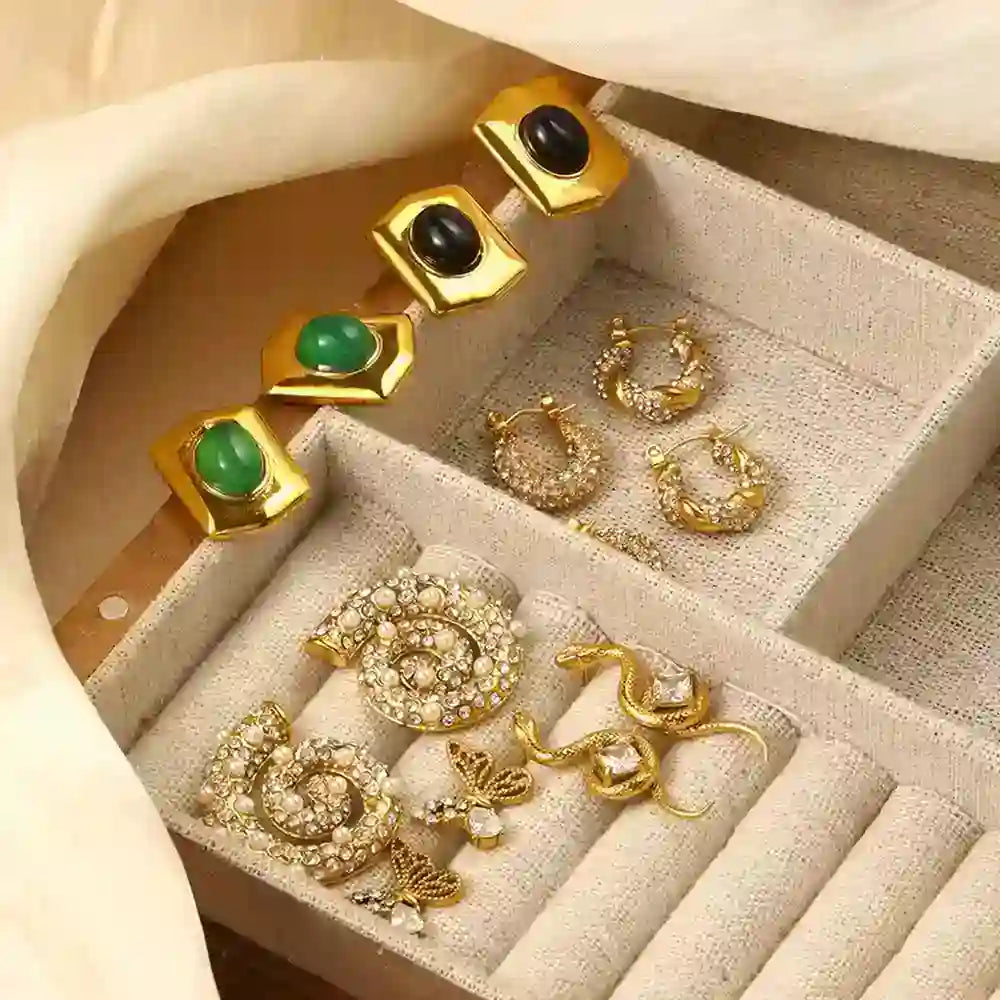
EarringsGold plated earrings — studs, hoops, drops, and statement pieces on stainless steel posts.
-
BraceletsGold plated bracelets — hand chains, tennis style, bangles, and cuffs.
-
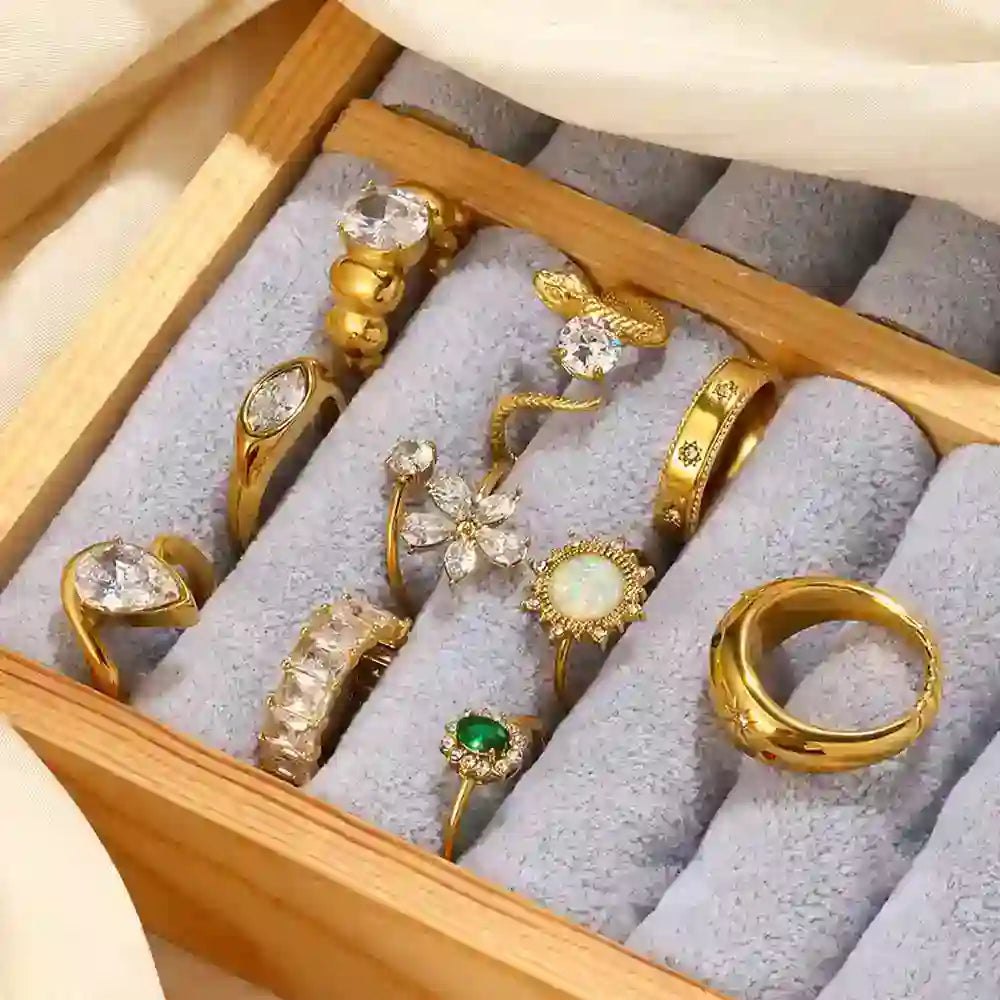
RingsGold plated rings — band, stacked, stone, and adjustable styles. Adjustable removes the sizing risk of ordering online.
Frequently asked questions
Q1. What is the best gold plated jewelry for daily wear in Pakistan?
A: 18K PVD coating over a 316L stainless steel base. The stainless steel does not react with sweat or skin, and the PVD layer holds its colour for years rather than weeks under Pakistani heat and humidity. Start with the three lowest-maintenance pieces — a thin chain, small studs, and an adjustable ring or bracelet.
Q2. Why does gold plated jewelry turn green in Pakistan?
A: The green comes from copper in a brass or copper base metal reacting with the salt in sweat once the coating has worn through at a contact point. It is a base-metal problem, not a skin problem. Stainless steel contains no copper and does not produce the reaction.
Q3. How long does gold plated jewelry last in Pakistan?
A: Standard electroplated brass: 2 to 8 weeks of daily wear. 18K PVD over stainless steel: roughly 3 to 5 years for necklaces and earrings, 1 to 4 years for bracelets, and 8 to 18 months for a ring worn daily through every task. Friction, not the climate alone, sets where in that range a piece lands.
Q4. Is gold plated jewelry safe for sensitive skin?
A: 18K PVD over 316L stainless steel is among the safest options in fashion jewelry — no copper to cause green marks and no free nickel at reactive levels. It is not a guarantee for every individual; anyone with a diagnosed metal allergy should check the exact alloy before buying. Brass and zinc alloy bases are the usual cause of reactions.
Q5. Can I wear gold plated jewelry in water?
A: Plain water — wuzu, hand washing, rain, a normal shower — is fine for 18K PVD on stainless steel if the piece is dried afterwards. Chlorinated pools and the sea should be avoided or rinsed off immediately. Standard electroplated brass should be kept out of water entirely.
Q6. What is the difference between 18K PVD and standard 18K gold plated?
A: Both use real 18K gold for the colour. Standard plating deposits 0.5 to 2 microns on top of the surface by electrical current; PVD bonds 1 to 3 microns into the surface inside a vacuum chamber, producing a harder, denser layer with much stronger adhesion. On the same base metal, PVD lasts several times longer under daily wear.

Leave a comment
This site is protected by hCaptcha and the hCaptcha Privacy Policy and Terms of Service apply.