

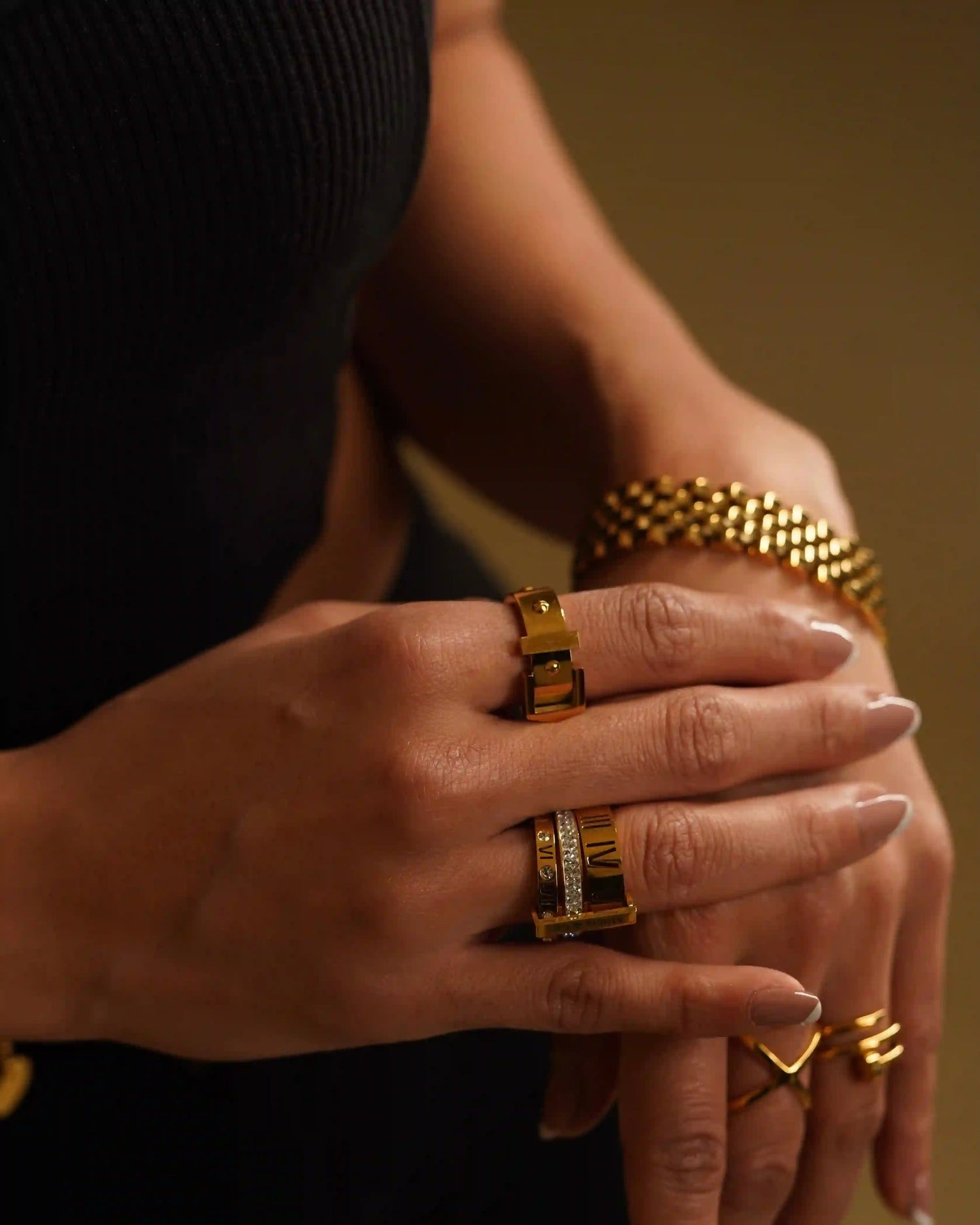
The answer by piece type — because it is not the same for every piece
Stud earrings in stainless steel: generally fine. Hoop earrings: not recommended. Chains: depends on the clasp and your sleep position. Rings: the base metal determines everything. Bracelets with hard closures: consistently damaging over time.
The question sounds simple. The answer is not, because sleeping in jewelry creates two separate problems — mechanical stress on the piece itself, and a chemical environment that accelerates tarnish. Whether those problems matter depends on what the piece is made of and how it is constructed.
What actually happens to jewelry during sleep
During sleep, the body does three things that are specifically hard on jewelry: it sweats continuously at low levels, it presses jewelry against fabric and skin for six to eight hours without movement to relieve the contact, and it shifts position repeatedly in ways that stress clasps, chains, and settings.
The continuous low-level sweat matters because sodium chloride in sweat is the primary driver of base metal oxidation. When you are awake and moving, sweat on a bracelet or ring dries and is refreshed — the contact time with any single spot is limited. When you are sleeping, sweat accumulates under a piece that is in fixed contact with skin, sealed against the fabric of bedding. The oxidation environment is more concentrated and more sustained than anything that happens during the day.
The mechanical stress matters differently depending on the piece. A chain necklace worn during sleep gets kinked, compressed against the pillow, and pulled by the weight of the body shifting. A ring gets pressed from the side as the hand rests under a pillow or against the mattress. A hoop earring gets bent by the ear catching against fabric. None of this is immediate destruction — but each instance accelerates the structural fatigue of the piece.
Why Pakistani nights specifically make this worse than the standard advice assumes
Most jewelry care advice on sleeping with jewelry is written for climates where overnight temperatures drop significantly and the body's sweat production falls close to zero for most of the night. Karachi, Lahore, and Islamabad summer nights don't offer that drop — even with air conditioning running, ambient bedroom temperatures and bedding contact keep nocturnal sweating meaningfully higher than the conditions most international guides are built around. The result is that the trapped-sweat window during sleep runs longer and more aggressively here than the "should be fine occasionally" advice assumes. For sensitive base metals, that's the difference between a green mark appearing after months of occasional sleep-wear versus after a handful of nights in a Pakistani summer.
By piece type — the specific damage and whether it is worth avoiding
Stud earrings. The lowest-risk piece to sleep in. The post goes through the ear and the back holds it against the lobe — there is no moving part, no clasp under tension, and minimal fabric contact. The main risk with studs during sleep is the earring back pressing into the back of the ear over hours, which causes localized pressure irritation rather than damage to the jewelry. For stainless steel studs specifically, the base metal will not oxidize meaningfully from sleep sweat. For brass-base studs, the back of the setting will discolour faster than it would with daytime-only wear.
Hoop earrings. Consistently the most damaged by sleeping. The hoop sits in the ear canal and extends behind the lobe — when the head rests on a pillow, the hoop is compressed between the ear and the fabric. Over time, this deforms the hoop's circular shape. The clasp mechanism on most hoops is also the weakest structural point, and the lateral pressure of sleeping accelerates clasp fatigue. Thin hoops deform fastest. Thick rigid hoops resist deformation better but still stress the clasp.
Chain necklaces. The issue with sleeping in chains is not tarnish — it is kinking. Every time a chain kinks, the link at the kink point flexes beyond its designed range. The PVD coating or plating at that point microfractures. Repeated kinking at the same location eventually breaks the link. Finer chains (below 2mm) kink more easily and show this damage faster. Box chains kink differently from rope chains — box chains tend to develop a single sharp crease; rope chains develop distributed compression. Neither is good for the piece long-term.
Pendant necklaces. Same chain risks as above, with an additional factor: the pendant weight during sleep creates a concentration point. When you shift position, the pendant pulls on whichever link is supporting it at that moment. This is the link most likely to fail first.
Rings. Rings during sleep are primarily a base metal issue. The inner band — the surface in continuous contact with the finger — is the most chemically exposed surface on any ring. During sleep, that inner band sits against skin that is sweating at low levels for hours. For stainless steel rings, this is manageable — the passive oxide layer on 316L stainless resists this environment well. For brass-base rings, the copper in the alloy reacts with accumulated sweat to cause both inner-band tarnish and the green skin mark that appears on the finger in the morning. If you wake up with green on your finger, the ring was worn to sleep on a brass base.
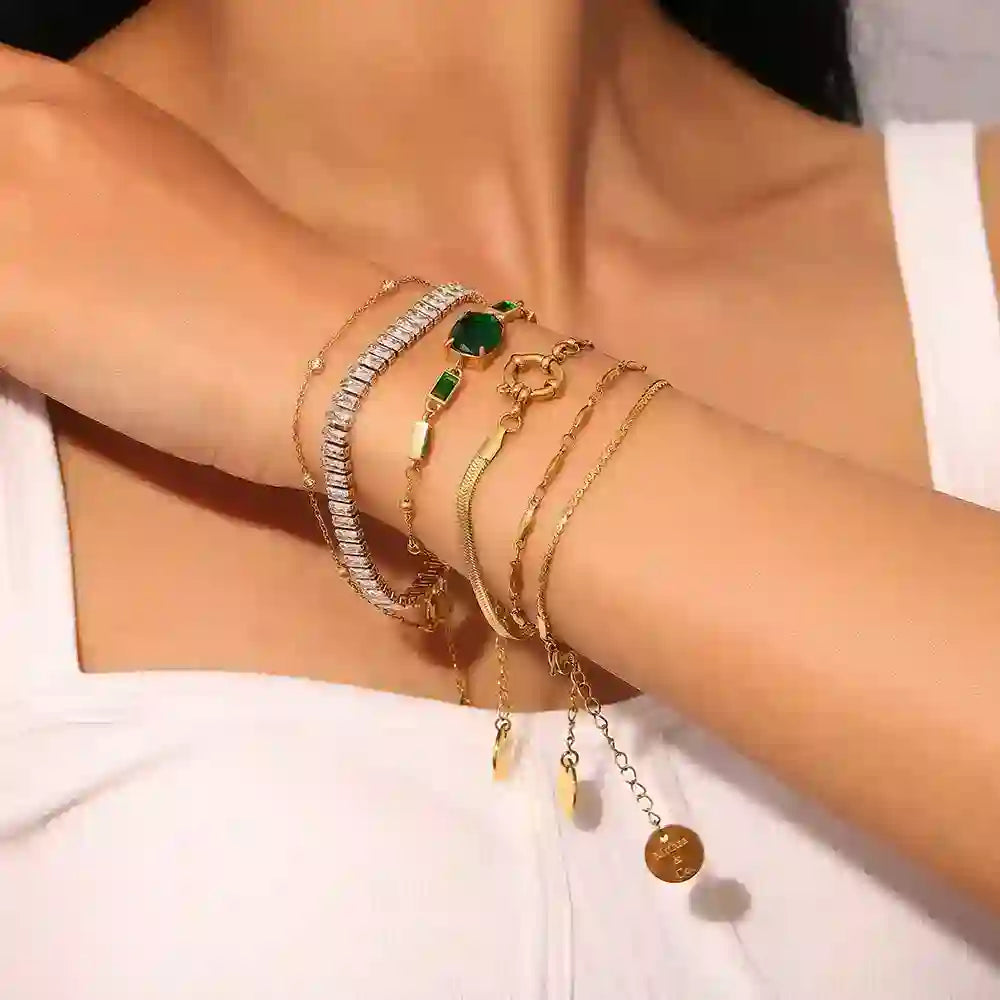
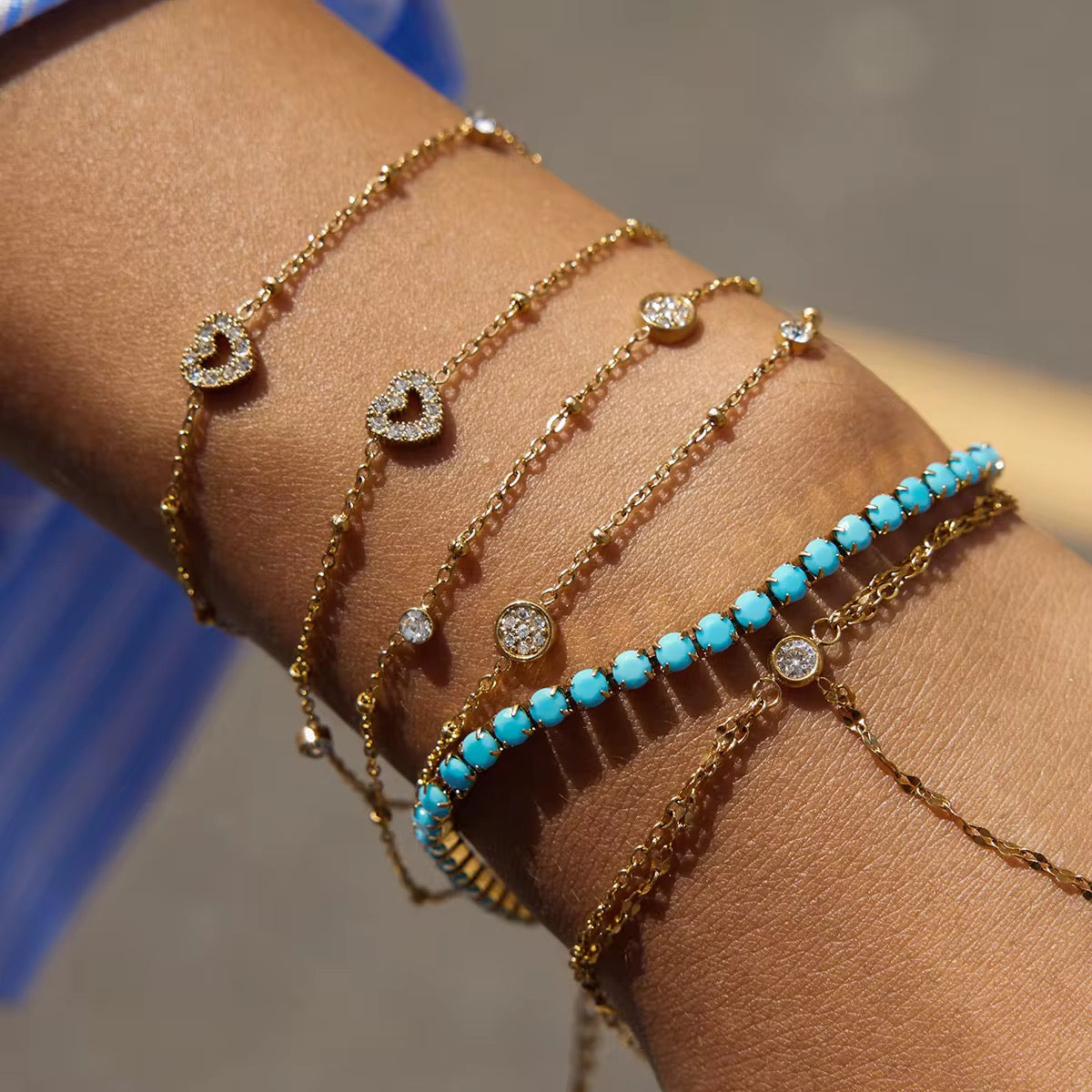
Bracelets. The combination of wrist movement during sleep, the clasp mechanism bearing tension, and the underside of the bracelet in sealed sweat contact makes bracelets the highest-risk category for accelerated wear. The clasp is the first thing to fail. The inner surface is the first to discolour. Chunky chain bracelets with heavy links transfer the mechanical stress differently than fine chains, but neither type benefits from being worn to sleep.
What Pakistani sleep conditions add on top of the temperature issue
Cotton bedding, the standard across Karachi, Lahore, and Islamabad households in summer, absorbs sweat but also holds it against the jewelry surface. Synthetic fabrics do not absorb but create a sealed pocket of humidity around the piece instead. Both are worse for jewelry than sleeping in dry conditions, but for different reasons — cotton keeps the piece wet; synthetic keeps the humidity concentrated. Combined with the overnight heat described above, the practical implication is that sleeping in jewelry in Pakistan during summer is meaningfully harder on plating than doing the same in a cooler, drier climate. The tarnish timeline is compressed on both fronts at once.
The pieces that are safe and the ones that are not — a direct summary
| Piece type | Sleep risk level | Primary damage mechanism | Stainless steel base | Brass base |
|---|---|---|---|---|
| Stud earrings | Low | Pressure on ear back | Safe | Setting discolouration |
| Hoop earrings | High | Shape deformation, clasp stress | Shape damage regardless | Shape damage + tarnish |
| Chain necklaces | Medium–High | Kinking, link fatigue | Structural damage | Structural + tarnish |
| Pendant necklaces | High | Pendant-point link stress | Link failure risk | Link failure + tarnish |
| Rings | Medium | Inner band sweat accumulation | Generally safe | Green mark, inner tarnish |
| Bracelets | High | Clasp stress, inner surface | Clasp wear | Clasp wear + tarnish |
The one habit that changes the outcome
If you are going to sleep in jewelry — and most people do at some point, because removing it every night requires a dedicated habit that takes time to build — the single most effective thing is to wipe the piece with a dry cloth before sleeping. Not cleaning it, not polishing it. Just removing the surface layer of day sweat before the piece is sealed against skin for eight hours. This reduces the oxidation environment significantly without requiring a storage routine.
The second habit is removing pieces with clasps before sleep even if you keep studs on. Clasp mechanisms are the most failure-prone part of any jewelry piece and the one most directly stressed by the specific movements of sleeping. Protecting clasps extends the functional life of a piece more than protecting any other part of it.
The jewelry that survives sleeping is not the jewelry that avoided all damage — it is the jewelry made of a base metal that can tolerate an aggressive chemical environment without oxidising. Stainless steel tolerates it. Brass does not. The label "gold plated" tells you nothing about which one you have.
Frequently asked questions
Q1. Can I sleep in my gold plated stainless steel ring every night?
A: Yes, with minor caveats. The stainless steel base handles the sweat environment of sleep without oxidising, and the PVD coating on a quality stainless steel ring is dense enough to tolerate sustained skin contact. The inner band may show minor dulling over months of nightly wear — a wipe with a soft cloth every few days maintains it. The one thing to watch is the ring's setting if it has a stone: the setting prongs can catch on bedding and bend over time.
Q2. Why do I wake up with a green mark on my finger when I sleep in my ring?
A: The green mark is copper chloride forming on your skin — the copper in the brass base of the ring is reacting with sodium chloride in the sweat that accumulates under the ring during sleep. It does not mean the ring is fake, it means the ring has a brass base. The mark washes off. The solution is either a stainless steel base ring, which will not produce the mark, or removing the ring before sleep.
Q3. Do hoop earrings get damaged from sleeping even one night?
A: A single night is unlikely to cause visible damage, but the shape deformation and clasp stress from sleeping in hoops is cumulative. After weeks or months of regular sleep-wear, most hoops show either a slightly flattened shape or a clasp that no longer closes as precisely as it did. Thin gold plated hoops show this faster than thick rigid ones.
Q4. Is it worse to sleep in jewelry in summer in Pakistan?
A: Yes, measurably. Higher ambient temperatures mean more nocturnal sweating, which means more prolonged sweat contact with the piece. The oxidation rate on brass-base pieces is directly proportional to the concentration and duration of sweat exposure. Pakistani summer conditions — particularly Karachi's humidity and Lahore's heat — compress the tarnish timeline compared to cooler climates, on top of the overnight-temperature effect described above.
Q5. What is the safest piece to leave on permanently — day and night?
A: A plain stainless steel stud earring or a thin stainless steel ring. These two piece types have no clasp mechanism to fatigue, no moving parts to stress, a base metal that resists sweat oxidation, and minimal contact with fabric during sleep. For how PVD coating holds up specifically under this kind of continuous wear, the PVD coating durability guide covers what to expect over months of uninterrupted daily and nightly use.
The Short Version
Stud earrings and stainless steel rings: leave them on if you want. Hoops, chains, pendants, and bracelets: take them off. The difference is not about being careful with jewelry — it is about which pieces are structurally and chemically designed to handle what sleep actually does to them, and which are not.
Browse stainless steel rings built for daily and overnight wear — pieces where the base metal does the work so you do not have to think about it.

Leave a comment
This site is protected by hCaptcha and the hCaptcha Privacy Policy and Terms of Service apply.