

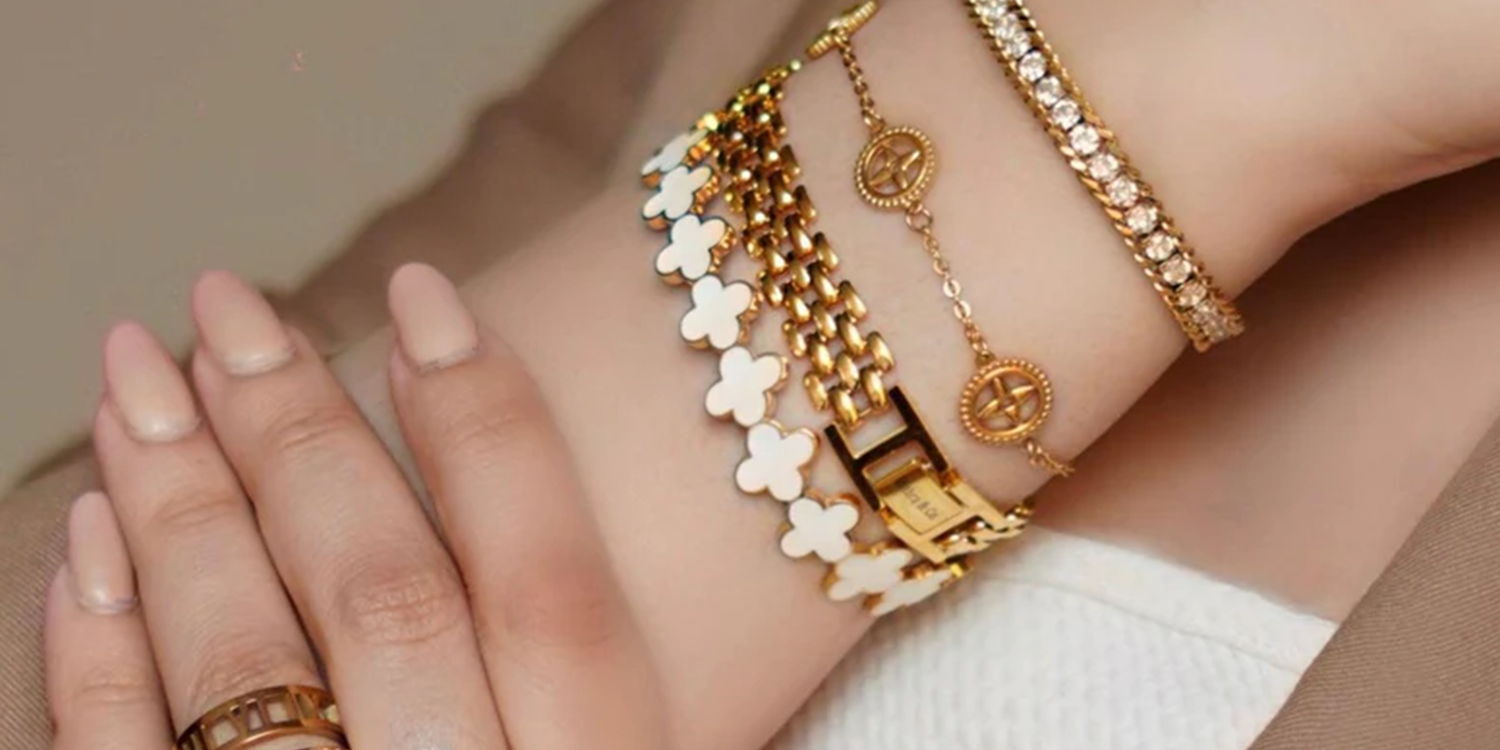
There is a version of yourself you dress for at work. A version you dress for at home. A version for family events, for friends, for the rare occasion when you get an hour entirely to yourself. Most women in Pakistan move between these versions so fluidly that they stop noticing the transitions — until they look at what they are wearing and realise it does not belong to any of them.
The Piece You Reach for Without Thinking Is the Most Honest Signal in Your Collection
Pay attention, for one week, to which piece of jewelry you put on without deliberating. Not the earrings you chose for a specific event. Not the necklace you wore because it matched. The piece that goes on automatically — before the decision has been made, almost before you are fully awake.
That piece is telling you something about where you actually are right now. Not where you want to be, not where you were two years ago — where you are. The automatic choice bypasses all the curating and all the performing and lands directly on what feels most like yourself in this specific season of life.
Most people have never thought about it this way. Jewelry gets treated as an aesthetic decision — does this match, does this suit the occasion, does this look right. But the pattern underneath the aesthetic decisions is more interesting than any individual choice. The pattern is a map. And the pieces that hold up across every version of your day — the ones made on stainless steel with 18K PVD coating that look exactly the same whether they were worn yesterday or put away for three months — are the ones the map keeps returning to.
The pieces you stop reaching for tell you as much as the ones you cannot leave the house without. Both are worth paying attention to.
What You Wear on a Hard Day — and Why It Matters More Than What You Wear on a Good One
Think about the last genuinely difficult week you had. A result that did not go the way you planned. A conversation that sat badly. A period of uncertainty that stretched longer than it should have. Think about what jewelry you wore through that week — not what you intended to wear, but what actually ended up on your body.
For most women, the hard-day piece is almost always one of two things: either the most familiar piece they own — the chain that has been there through everything, the ring that has not come off in months — or nothing at all. The elaborate earrings stay in the drawer. The statement pieces feel like too much performance for a day when performance is already costing too much.
And on a good day — a day when something worked, when energy was high, when the version of yourself you like most showed up — the jewelry tends to follow. Something bolder comes out. Something more deliberate. The piece that has been waiting for the right day finally feels appropriate.
This is not a coincidence and it is not vanity. It is emotional intelligence expressed through a channel most people do not think of as emotional. What you put on your body when you are not performing for anyone is one of the clearest signals available about where your energy actually is.
The implication for buying jewelry is significant: the pieces that will genuinely be worn are not always the most impressive ones. They are the ones that feel right across the full range of days — not just the good ones. Understanding how to choose jewelry that crosses every kind of day starts with knowing which days you are actually buying for.
The Working Woman's Jewelry Problem in Pakistan — and Why It Is Harder Than It Looks
There is a specific jewelry tension that most Pakistani working women navigate without ever naming it directly. On one side: a workplace environment that has its own unspoken rules about what is appropriate — how much, how visible, how formal, how culturally legible. On the other side: a personal aesthetic that has nothing to do with those rules and everything to do with who you actually are when the office is not watching.
The result is usually a split collection. A set of "work pieces" that feel safe but slightly deadening — small studs, a plain chain, nothing that draws attention. And a separate set of personal pieces that live in the drawer on weekdays and come out on weekends, on evenings, on the occasions when the professional version of you gets to clock out.
What this split costs is more than inconvenience. It costs continuity. When the jewelry you wear at work does not feel like yours, it adds a small but real weight to the already significant labour of showing up as a professional version of yourself eight or nine hours a day. The small stud that does not feel like you is a tiny daily reminder that you are performing rather than simply being.
The solution most people do not try, because it seems counterintuitive: the answer is not bolder work jewelry. It is minimal jewelry pieces for a 9–5 workday that feel professional and personal at the same time. A thin gold chain that is actually beautiful, not just inoffensive. A small ring that you would have chosen on a weekend. Studs that are small but deliberate. The everyday piece that works from 9–5 and still feels like you — because it belongs to both your professional and personal self equally.
That crossing is what most work jewelry fails to achieve — and it is what makes the difference between a collection that feels like yours and one that feels like a costume with two different scenes.
Why Pakistani Women Are Quietly Moving Away From Gold Sets — and What That Shift Actually Means
Something has been changing in how Pakistani women relate to traditional gold jewelry sets — the elaborate matching necklace-earring-bangles combinations that have defined bridal and formal occasions for generations. The shift is not loud. It is not a rejection. It is quieter than that — a gradual drift toward pieces that feel more individual, more wearable across more of life, less tied to specific occasions that may or may not arrive.
The reasons are practical on the surface: gold sets require gold-set occasions. They live in boxes. They come out for events and go back. Most of the time they are not available to be worn, because most of life does not rise to the level of occasion they were designed for. A woman who owns a beautiful traditional set and a few everyday pieces effectively has two separate jewelry lives — the ceremonial one and the actual one.
But underneath the practical reason is something more personal. The generation of Pakistani women currently in their mid-twenties to late thirties grew up with those sets as the standard — and many of them have spent the last few years quietly realising that the standard was never really theirs to begin with. It was inherited. Gifted. Expected. The set was beautiful but it was also a specific kind of beautiful that belonged to a specific kind of occasion that belonged to a specific version of femininity that may or may not be the version they inhabit.
What they are moving toward is not less jewelry. It is more personal jewelry. Individual pieces chosen for their own quality rather than their place in a matching set. A chain that is worn because it is genuinely loved, not because it completes an ensemble. A ring that was chosen rather than received. Earrings that belong to the everyday life rather than waiting for the extraordinary one.
This is not a loss of tradition. It is a renegotiation of it — keeping what is genuinely meaningful and releasing what was simply inherited without examination. The women doing this most fluently are the ones who can hold both: a piece with genuine cultural rootedness for the occasions that call for it, and everyday personal pieces that belong to the ordinary life that makes up most of the calendar.
The Jewelry You Wear to Feel Like Yourself Again — and Why Material Matters Here Specifically
There is a specific jewelry behaviour that almost nobody talks about but almost everybody has experienced. After something ends — a relationship, a job, a version of your life that used to make sense — or simply after a long hard season that ground you down quietly over months, there is a moment when you put something on and it feels like a small return. Not to where you were before. To something that is still you.
It is rarely the most impressive piece in the collection. It is usually the one that has the longest relationship with the person you were before the hard thing started. The ring that predates the difficulty. The chain that was there before the season that changed everything. The earrings you wore when you felt most like yourself and have not reached for since because reaching for them during a hard time felt like too much optimism.
Wearing that piece again is not a declaration. It is a quiet signal — mostly to yourself — that something is returning. That the version of you who chose that piece is still here, has been here through all of it, and is starting to feel like the primary version again rather than something glimpsed occasionally and then lost.
This is why the question of what your jewelry is made of — whether it holds up, whether it looks the same after months of being put away and taken back out — matters beyond the practical. A piece that held up through the difficult period and still looks like itself when you reach for it again is doing something no other object in your possession does quite as specifically. The care guide for keeping gold plated jewelry in the same condition through months of storage matters most for exactly this reason — the piece needs to be ready when you are. The ring that looks exactly as it did the day you stopped wearing it is ready for you whenever you are ready for it. That readiness is a quality of material — and it matters.
What the Pattern Tells You — If You Are Willing to Look at It
Pull everything above together and the pattern becomes readable. The piece you reach for automatically. What changes on hard days. The split between your professional and personal collection. The traditional set that stays in the box. The piece you have not worn since something changed.
Each of these is information about where you actually are — not where you perform yourself to be, not where you are going, but where you currently live. And reading that information honestly produces something more useful than any shopping guide: it tells you exactly what your collection is missing, which is almost never more jewelry and almost always a more honest relationship with the jewelry you already have.
If you have read about why jewelry gifts fail in Pakistan and recognised yourself in it — this is what sits underneath that pattern. The drawer is not a shopping problem. It is a self-knowledge problem. The pieces that sit untouched are usually tied to a version of you that you have outgrown, not yet grown into, or one that someone else chose for you.
The pieces that get worn every day, across every kind of day, through every season — those are the ones that belong to who you actually are right now. Building a collection that functions like that requires less buying and more honesty. And the honesty costs nothing.
FAQs Worth Asking Before You Buy Anything Else
Q1. Why do I keep wearing the same two or three pieces every day?
A: Because those pieces have passed the honest test — they work across every kind of day, every version of you, without requiring a specific occasion or mood to justify them. The pattern is not a lack of imagination. It is a clear signal about what actually belongs to you versus what you bought for a version of yourself you were trying on.
Q2. What jewelry is best for hard days in Pakistan?
A: The piece with the longest personal history — not the most impressive one. On a hard day the body defaults to what requires no performance. That is almost always the lightest, most familiar piece: a thin chain, a simple ring, small studs. Pieces built on stainless steel with 18K PVD coating hold their appearance through months of daily wear and months of being put away — which means they are ready on the hard days exactly when you need them.
Q3. Why does my traditional gold set stay in the box?
A: Because it was designed for occasions that make up a small fraction of actual life. The set is not wrong — it is over-specified. It requires a ceremony to justify it, and most days are not ceremonies. The shift Pakistani women are making is not away from jewelry but toward pieces that belong to the ordinary days that make up most of the calendar.
Q4. How do I build a jewelry collection that I actually wear?
A: Start with the honest audit — which pieces do you reach for without thinking, which ones have not moved in months, and why. The collection that gets worn daily is almost always smaller and more specific than the one that looks complete in a drawer. Three pieces you wear constantly outperform fifteen pieces that cover every theoretical occasion. A practical guide to choosing jewelry that crosses every version of your day helps narrow the selection to what actually gets used.
Q5. Does gold plated jewelry hold up if it goes unworn for months?
A: It depends entirely on the base metal and coating type. Standard electroplated brass pieces stored for months often show surface dulling, oxidation marks, and colour shifts when taken out — especially in Pakistan's humidity. Stainless steel with 18K PVD coating stores significantly more stably because the base metal does not react to atmospheric moisture and the PVD layer is less porous than standard electroplating. The full detail on what happens to stored jewelry is in the guide to jewelry tarnishing in storage.
Where to Go From Here
If this landed somewhere specific — if one section described a version of yourself you recognised — the practical next step is not a purchase. It is a question: what piece, worn honestly, would feel most like where I actually am right now?
That question answered, the collection becomes smaller and more useful. The pieces that serve the answer are the ones worth having. Everything else is performance — and performance is exhausting enough without your jewelry adding to it.
If the answer leads you toward something new — everyday pieces that cross the boundary between every version of you, pieces built to last through every kind of day on stainless steel with 18K PVD plating, available with COD across Pakistan — the collection is at Mithra. Browse when you know what you are actually looking for. That clarity makes all the difference.

Leave a comment
This site is protected by hCaptcha and the hCaptcha Privacy Policy and Terms of Service apply.