

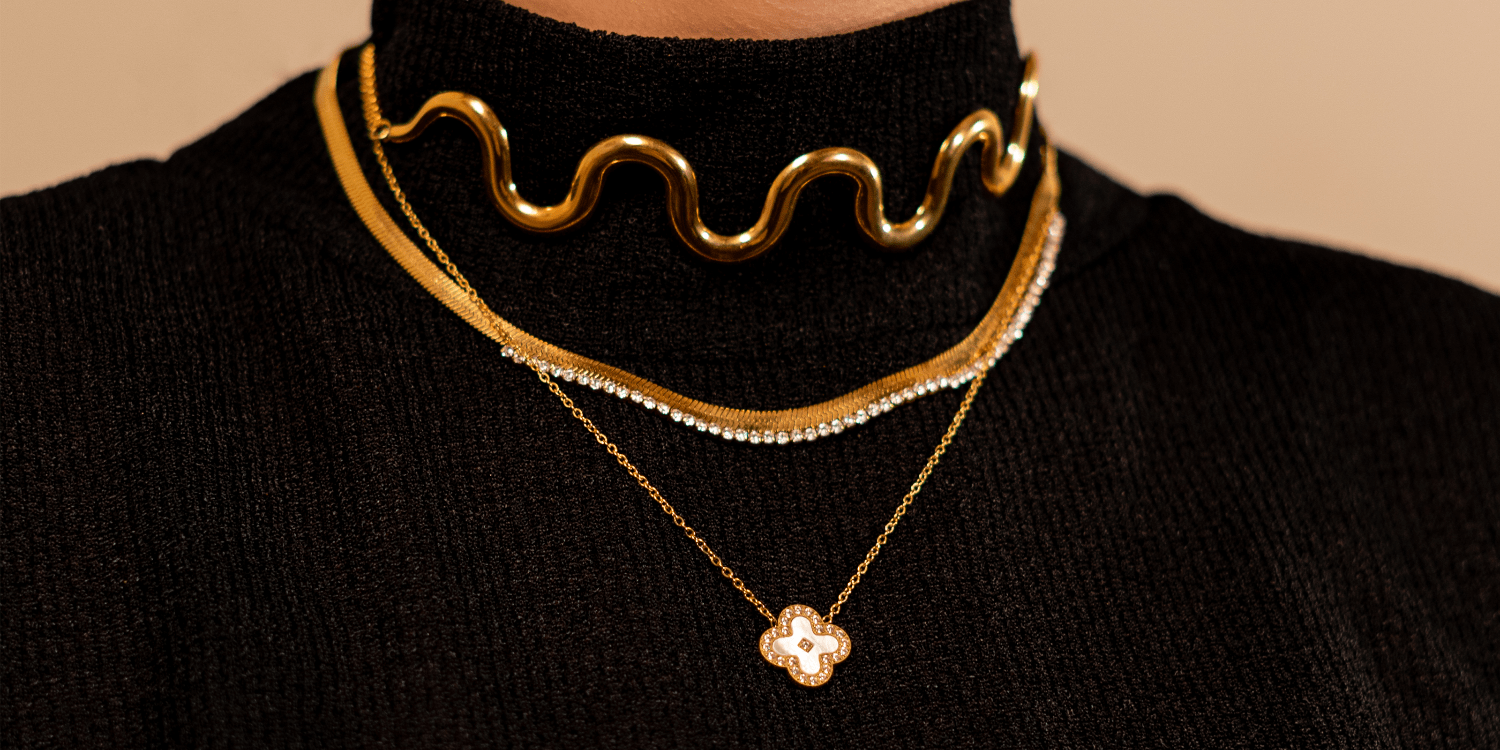
Yes — jewelry tarnishes in storage even when you are not wearing it
Most people assume jewelry only degrades during wear — from sweat, friction, and chemical exposure. In reality, metal surfaces continue reacting with their environment even when sitting untouched in a drawer. The reaction is slower than during wear, but it is continuous. In Pakistan's climate specifically — where ambient humidity in Karachi stays between 70 and 90 percent for most of the year and summer heat adds thermal energy to every chemical reaction — stored jewelry can show visible tarnishing, surface dullness, and colour shift within weeks of being put away.
The difference between jewelry that comes out of storage looking the same as when it went in and jewelry that comes out dull, discoloured, or green is not the quality of the piece alone. It is the storage environment, the base metal, and whether the piece was cleaned before being stored. Understanding these three variables is what determines whether long-term storage preserves your jewelry or degrades it.
What causes jewelry to tarnish in storage — the actual chemistry
Tarnish is the result of a chemical reaction between the metal surface and compounds in the surrounding air. The primary culprits in Pakistan's indoor environments:
- Hydrogen sulphide — present in air from cooking, household products, and atmospheric pollution. Reacts with silver and silver-containing alloys to form silver sulphide — the black or grey layer that appears on sterling silver and silver-based vermeil pieces in storage. This reaction happens at room temperature with no moisture needed. In Pakistani homes where cooking produces sulphur compounds consistently, stored silver-base jewelry tarnishes faster than in less affected environments.
- Oxygen and moisture combined — brass and copper base metals oxidise under oxygen exposure. Moisture dramatically accelerates this oxidation by acting as an electrolyte that completes the electrochemical reaction between the metal surface and atmospheric oxygen. In Pakistan's humid coastal cities, the moisture in indoor air alone is sufficient to maintain continuous low-level oxidation on brass-base jewelry in storage — even without any skin contact or active wear.
- Chlorine compounds — present in tap water residue left on jewelry before storage. If a piece is stored without being dried after any water contact, the residual chlorine compounds in tap water sit against the metal surface and accelerate surface oxidation. This is especially relevant for jewelry stored in bathrooms where water vapour and tap water contact are both higher than in bedroom storage.
- Skin oils and sweat residue not cleaned before storage — the organic compounds in skin oils and dried sweat left on jewelry surfaces continue reacting with the metal after the piece is stored. Sodium chloride in dried sweat is chemically aggressive to brass and copper surfaces. Storing a piece without cleaning it after wear concentrates this residue against the surface for the entire storage period — accelerating tarnish significantly compared to a clean piece stored under identical conditions.
Which jewelry materials tarnish fastest in storage in Pakistan
Different base metals and coating methods have completely different storage stability profiles. Understanding which materials are most at risk helps prioritise storage care for the right pieces.
| Material | Storage tarnish risk | Primary cause | Visible change timeline Pakistan |
|---|---|---|---|
| Brass base, electroplated gold | High | Oxygen and moisture oxidation through coating | 2–8 weeks in open storage |
| Copper base, electroplated | Very high | Copper oxidation produces green patina | 1–4 weeks in humid storage |
| Sterling silver (vermeil base) | High | Silver sulphide from hydrogen sulphide in air | 2–6 weeks unsealed storage |
| Stainless steel, standard plating | Low to moderate | Coating oxidation, base metal stable | 3–6 months open storage |
| Stainless steel, 18K PVD | Very low | PVD low porosity slows air penetration | Minimal visible change up to 12+ months |
| Solid gold (18K+) | Negligible | Gold is chemically inert under normal conditions | No visible change in standard storage |
The two variables that determine storage stability are the base metal's reactivity and the coating's porosity. Brass and copper react under oxygen and moisture regardless of what is coated on top. High-porosity coatings — standard electroplating — allow atmospheric moisture to penetrate and reach the reactive base metal even during storage. PVD's lower porosity slows this penetration significantly. The structural reason PVD resists tarnish better than electroplating — including during storage — comes down to the molecular-level bonding that reduces surface permeability.
Why Pakistan's climate makes storage tarnish worse than most guides describe
Most international jewelry care guides are written for temperate climates where indoor humidity stays between 30 and 50 percent. Pakistan's indoor humidity — particularly in Karachi, Hyderabad, and coastal cities — regularly sits between 70 and 90 percent for extended periods. This is not a minor difference. At 80 percent humidity, the rate of oxidation on exposed brass surfaces is multiple times faster than at 40 percent humidity.
The practical implications for stored jewelry in Pakistan:
- A brass-base gold plated necklace stored open on a dressing table in Karachi can show visible dullness within two to three weeks — not months
- Sterling silver pieces stored in a non-airtight box in a Lahore home during the monsoon can develop visible black tarnish patches within a month
- Any piece stored in a bathroom — regardless of base metal — experiences sustained humidity levels that accelerate all tarnish mechanisms simultaneously
- Even stainless steel PVD pieces stored open for several months in coastal Pakistani humidity will show slightly reduced surface brilliance compared to sealed storage — not damage, but visible difference
For the full breakdown of how Pakistan's climate specifically affects jewelry — both during wear and in storage — the guide to why gold plated jewelry fades covers the complete climate-specific chemistry.
The five storage mistakes that accelerate tarnish in Pakistan
- Storing without cleaning first — the single most impactful storage mistake. Dried sweat, skin oils, and product residue left on a piece concentrate against the metal surface for the entire storage period. A 10-second microfibre wipe before storing removes these compounds and eliminates their contribution to storage tarnish entirely.
- Open storage — trays, dishes, dressing tables — open storage exposes jewelry to continuous air circulation, ambient humidity, and atmospheric sulphur compounds. In Pakistan's indoor air quality, open storage is essentially continuous low-level chemical exposure. Even a pouch provides meaningfully better protection than a tray.
- Bathroom storage — the worst possible storage location for any jewelry in Pakistan. Shower steam, tap water vapour, soap residue in the air, and sustained high humidity create the ideal conditions for accelerating every tarnish mechanism simultaneously. Move all jewelry storage out of the bathroom entirely.
- Mixed metal storage — storing different base metals in contact with each other creates galvanic corrosion — an electrochemical reaction between dissimilar metals that accelerates surface oxidation on both pieces. Brass touching stainless steel in a humid Pakistani storage environment accelerates tarnish on the brass piece significantly compared to storing it separately.
- Plastic bags without anti-tarnish treatment — plain plastic bags trap existing moisture with the jewelry rather than absorbing it. Anti-tarnish pouches contain activated charcoal or silica compounds that absorb both moisture and sulphur compounds from the enclosed air — providing meaningfully better protection than plain plastic or fabric bags in Pakistan's humid storage conditions.
How to store jewelry to prevent tarnish in Pakistan — by material type
Brass base and standard plated jewelry
The most vulnerable category in Pakistan's storage conditions. Clean thoroughly before storing — a soft cloth wipe to remove all sweat and skin oil residue. Store in individual anti-tarnish pouches or zip-lock bags with as much air removed as possible before sealing. Add a small silica gel packet inside the bag to absorb residual moisture. Store in a cool, dry location away from the bathroom and away from the kitchen where hydrogen sulphide from cooking can penetrate storage.
Sterling silver and gold vermeil
Silver sulphide tarnish from hydrogen sulphide in indoor air is the primary storage risk for these pieces. Anti-tarnish strips or activated charcoal pouches inside the storage container absorb sulphur compounds from the enclosed air before they contact the silver surface. For pieces stored more than a month in Pakistan, an airtight container with an anti-tarnish strip provides the most effective protection against the black-grey tarnish pattern characteristic of stored silver.
18K PVD over stainless steel
The most storage-stable option in the fashion jewelry category. The non-reactive stainless steel base and low-porosity PVD coating mean this category requires the least active storage intervention. Individual soft pouches — the Mithra & Co pouches each piece comes with — provide sufficient protection for normal Pakistani storage periods. For storage longer than six months in coastal Pakistani humidity, an airtight container adds a useful extra layer. Clean before storing to remove any sweat residue from the last wear.
Solid gold
Chemically stable under all normal storage conditions. Surface dulling from skin oil residue and physical micro-scratching from contact with other pieces are the only realistic storage concerns. Individual pouches and occasional professional polishing maintain appearance without active anti-tarnish measures.
What to do when jewelry comes out of storage already tarnished
The restoration approach depends on how far the tarnish has progressed and what material the piece is made from:
- Surface dullness only — no colour change — a soft microfibre cloth wipe restores surface brilliance in most cases. This is surface dust and atmospheric particulate, not chemical tarnish. No cleaning product needed.
- Light tarnish with slight colour shift — mild soapy water on a soft cloth, wiped gently and dried immediately. Works for PVD and electroplated pieces where the coating is still intact. Do not use toothpaste, baking soda, or abrasive cleaners — all three remove the gold layer faster than the tarnish itself.
- Green discolouration on brass-base pieces — this is copper oxide patina formed on the exposed base metal. If the coating is still intact over most of the surface, gentle cleaning may restore appearance temporarily. If the coating has worn through and the base metal is fully exposed, cleaning removes the green but cannot restore the gold colour — the coating is gone. Re-plating by a professional jeweller is the only restoration option, and for most fashion jewelry the cost of re-plating exceeds the piece's replacement value.
- Black tarnish on sterling silver vermeil — silver sulphide tarnish. A silver polishing cloth or mild silver cleaning solution removes it from exposed silver areas. For vermeil pieces, avoid silver polishing agents on the gold-plated surface as they are abrasive enough to remove the remaining gold layer. Clean only the areas where the black tarnish is visible on exposed silver.
For the complete cleaning and care guide covering all jewelry types and materials, the jewelry care guide covers every scenario in detail.
Storage by jewelry category — which pieces need the most protection
Not all stored jewelry faces the same tarnish risk — the category and material combination determines the priority level for storage care:
- Bracelets and rings — highest priority — these categories also accumulate the most sweat and skin oil residue during wear, meaning they arrive in storage with the highest chemical load already on their surfaces. Cleaning before storage matters most for these categories. Stainless steel bracelets and rings in PVD require less intervention than brass equivalents but still benefit from individual pouch storage in Pakistan's humidity.
- Necklaces — moderate priority — lower sweat accumulation than wrist and finger jewelry. The clasp and back-of-neck section are the highest residue areas. Clean those specifically before storing. Tangle prevention through individual hanging storage or coiled pouches matters as much as tarnish prevention for necklace storage.
- Earrings — lower priority but post hygiene matters — earring posts accumulate sebum and product residue from the piercing area. Clean the post specifically before storage. Tarnish on the visible earring surface is slow under normal Pakistani conditions for PVD pieces — the storage concern for earrings is more about post hygiene than surface oxidation.
Frequently asked questions
Q1. Does gold plated jewelry tarnish in storage in Pakistan?
A: Yes — brass-base electroplated jewelry tarnishes in storage in Pakistan's humidity, typically showing visible dullness or surface colour shift within two to eight weeks of open storage. 18K PVD over stainless steel is significantly more storage-stable — the non-reactive base and low-porosity PVD coating mean minimal visible change for up to twelve months or longer in sealed pouch storage. The base metal and coating type determine storage stability more than any other factor.
Q2. How do I stop jewelry from tarnishing in storage in Pakistan?
A: Three steps that together cover most of the risk: clean the piece with a soft cloth before storing to remove sweat and skin oil residue; store in an individual sealed pouch rather than open on a tray or in a shared container; keep storage in a cool dry location away from the bathroom and kitchen. For brass-base or sterling silver pieces stored longer than a month in Pakistan's humidity, adding a small silica gel packet or anti-tarnish strip inside the sealed container provides additional protection against the moisture and sulphur compounds in Pakistani indoor air.
Q3. Why does jewelry turn black or green when stored in Pakistan?
A: Black tarnish is silver sulphide — hydrogen sulphide in indoor air reacting with sterling silver surfaces. Green discolouration is copper oxide patina — oxygen and moisture reacting with brass or copper base metals exposed where the coating has worn through. Both happen faster in Pakistan's high-humidity indoor environments than standard international jewelry guides predict. Prevention is storage-based: sealed containers, anti-tarnish materials, and cleaning before storage. Restoration once the discolouration has formed requires cleaning for surface cases and professional re-plating for cases where the base metal is fully exposed.
Q4. Does PVD jewelry tarnish in storage?
A: Minimally — 18K PVD over stainless steel is the most storage-stable option in the fashion jewelry category. The stainless steel base does not react with oxygen or moisture under normal storage conditions, and the PVD coating's low porosity slows atmospheric penetration significantly. In sealed individual pouch storage in Pakistan, PVD pieces show negligible visible change for twelve months or more. Open storage in high-humidity Pakistani conditions can produce slight surface dulling over several months — not chemical tarnish but particulate accumulation — which wipes clean with a soft cloth.
Q5. Where is the worst place to store jewelry in Pakistan?
A: The bathroom — without exception. Shower steam, tap water vapour, soap compounds in the air, and Pakistan's baseline high humidity combine to create the most aggressive possible storage environment for any jewelry material. Even stainless steel PVD pieces stored on a bathroom shelf for months will show surface effects that sealed bedroom storage prevents entirely. Move all jewelry storage out of the bathroom and into a cool, dry bedroom location — this single change extends the storage lifespan of every piece in the collection.

Leave a comment
This site is protected by hCaptcha and the hCaptcha Privacy Policy and Terms of Service apply.