


You don't decide a bracelet is "for daily wear" by looking at it in the box. You decide it a week later — the third time you've taken it off for wuzu, the second time it's dug into your wrist during a long typing stretch, the first time you forgot to remove it before sleep and woke up with a mark on your skin.
Daily wear isn't a durability question — it's a routine question
For the material science behind which base metal and coating actually hold up under Pakistani conditions, the bracelets buying guide already covers that in full — stainless steel, PVD, closure quality, lifespan by type. And if you're still deciding between bracelet styles altogether — chain, cuff, bangle, tennis — before testing any of them against your routine, the types of bracelets guide covers the full taxonomy first. This post starts from a different question: assuming the material and style are already right, does the bracelet actually survive a real Pakistani day without becoming something you keep taking off and putting back on?
A bracelet that's technically durable can still fail as a daily piece if it interrupts wuzu five times a day, digs into your wrist during three hours of typing, or gets forgotten and worn into sleep every second night. Durability and daily-wear comfort are two different tests, and most buying guides only answer the first one.
The four moments that decide whether a bracelet stays on all day
A bracelet that rests against the desk edge for hours needs enough flex to avoid pressure points. Rigid cuffs and bangles concentrate contact at one spot; chain bracelets and watchband styles distribute it.
Anything that has to come off repeatedly for ablution needs a clasp you can undo one-handed without a mirror. A fiddly lobster clasp turns a daily bracelet into one you eventually stop bothering to put back on.
Most people don't remove bracelets before bed on purpose — it happens by forgetting. A bracelet that's comfortable enough to sleep in occasionally without leaving marks is a genuinely different requirement than one that's just durable.
Sweat plus friction is the fastest-wearing combination for any coating, and it's also the least comfortable moment to be wearing anything rigid on the wrist.
A bracelet that's technically the most durable material on the market still fails as a "daily" piece if it's uncomfortable during the one part of the day you actually need it to disappear.
What removing five times a day for wuzu actually requires from a clasp
This is the single most overlooked factor in choosing a genuinely everyday bracelet in Pakistan, and it has nothing to do with base metal. A toggle clasp or a magnetic closure can be undone one-handed in a few seconds. A small lobster clasp with a tight spring often needs two hands and a moment of fumbling — manageable once, tedious five times a day. Chain bracelets with an extender link are usually the easiest to remove and refasten quickly, which is exactly why they end up being the piece people actually keep wearing daily rather than the piece that looks best in a photo. The wuzu and jewelry guide covers exactly what needs to come off and what doesn't, in more depth than fits here.
Does it survive being forgotten during sleep
Nobody plans to sleep in a bracelet. It happens on nights you're tired, and it happens more often than most people admit. The question worth asking before buying a daily bracelet isn't "can I sleep in this on purpose" — it's "if I forget to take this off, does it leave a mark or become uncomfortable enough to wake me up." Lighter, flatter pieces without raised settings tend to go unnoticed. Anything with prongs, a raised charm, or a rigid edge is more likely to press into the wrist overnight. The full guide on sleeping in gold plated jewelry goes through this properly.
Weight matters more here than anywhere else on the body
A heavier necklace or ring rests in one place. A heavier bracelet swings, shifts with the arm, and contacts the desk or table constantly through the day — which means its weight is felt far more over eight or ten hours than the same weight would be anywhere else. This is the specific reason a bracelet that felt fine in the store can feel noticeably heavier by the third hour at a desk. The jewelry weight and comfort guide covers why this happens and what weight ranges actually stay comfortable through a full day.
Sweat is a comfort problem before it's a durability problem
Most guides talk about sweat purely in terms of what it does to coating over months. On a day-to-day level, sweat under a bracelet is first a comfort issue — a rigid bangle traps moisture against skin in a way a looser chain doesn't, which is noticeable within hours, not weeks. The sweat and jewelry guide covers the longer-term material side; here, the practical takeaway is that anything worn through Karachi or Lahore summer heat all day benefits from a looser fit and more airflow around the wrist than the "correct" size chart technically calls for.
So what actually makes a bracelet a genuine daily piece
Not the one that photographs best. Not even, on its own, the one with the best coating — that's a separate, necessary but not sufficient condition covered in the buying guide. The bracelet that actually stays on every day is the one that clears all four moments above without friction: an easy one-handed clasp for wuzu, enough flex or looseness for desk hours, low enough weight and profile that forgetting to remove it before sleep doesn't matter, and enough room that summer sweat doesn't make it uncomfortable by afternoon.
Frequently asked questions
Q1. What makes a bracelet easy to remove for wuzu multiple times a day?
A: A clasp you can open and close one-handed without needing a mirror — toggle clasps, magnetic closures, and chain bracelets with an extender link are usually the easiest. Small lobster clasps with tight springs are the most likely to become tedious after the second or third removal of the day.
Q2. Is it bad to accidentally sleep in a bracelet?
A: Occasionally, no — as long as the piece is lightweight, flat, and free of raised settings or prongs that could press into skin overnight. It's a different question from whether a bracelet is durable; a technically durable piece can still be uncomfortable to sleep in if it's heavy or has a raised profile.
Q3. Why does a bracelet feel heavier by the afternoon than it did in the morning?
A: Because a bracelet moves and contacts surfaces constantly through the day in a way jewelry worn elsewhere on the body doesn't. The same weight that felt negligible for the first hour becomes noticeable after several hours of desk contact and wrist movement.
Q4. Should a daily bracelet fit tighter or looser in Pakistan's heat?
A: Slightly looser than the standard size chart suggests, especially for anything worn through summer heat in Karachi or Lahore. A snug fit traps more sweat and heat against the skin, which becomes a comfort issue well before it becomes a coating issue.
Q5. Does the base metal matter for daily comfort, or only for durability?
A: Base metal mainly affects durability and skin reaction, not day-to-day comfort — clasp type, weight, and profile matter more for how a bracelet feels through a full day. The bracelets buying guide covers the material side in full if you're deciding between options.
Durable and comfortable are two different tests — a real daily bracelet passes both
The right material keeps a bracelet from wearing out. The right clasp, weight, and fit keep you actually wearing it. Most people only shop for the first one and wonder later why the piece ended up in a drawer.
Browse bracelets built for daily wear at Mithra & Co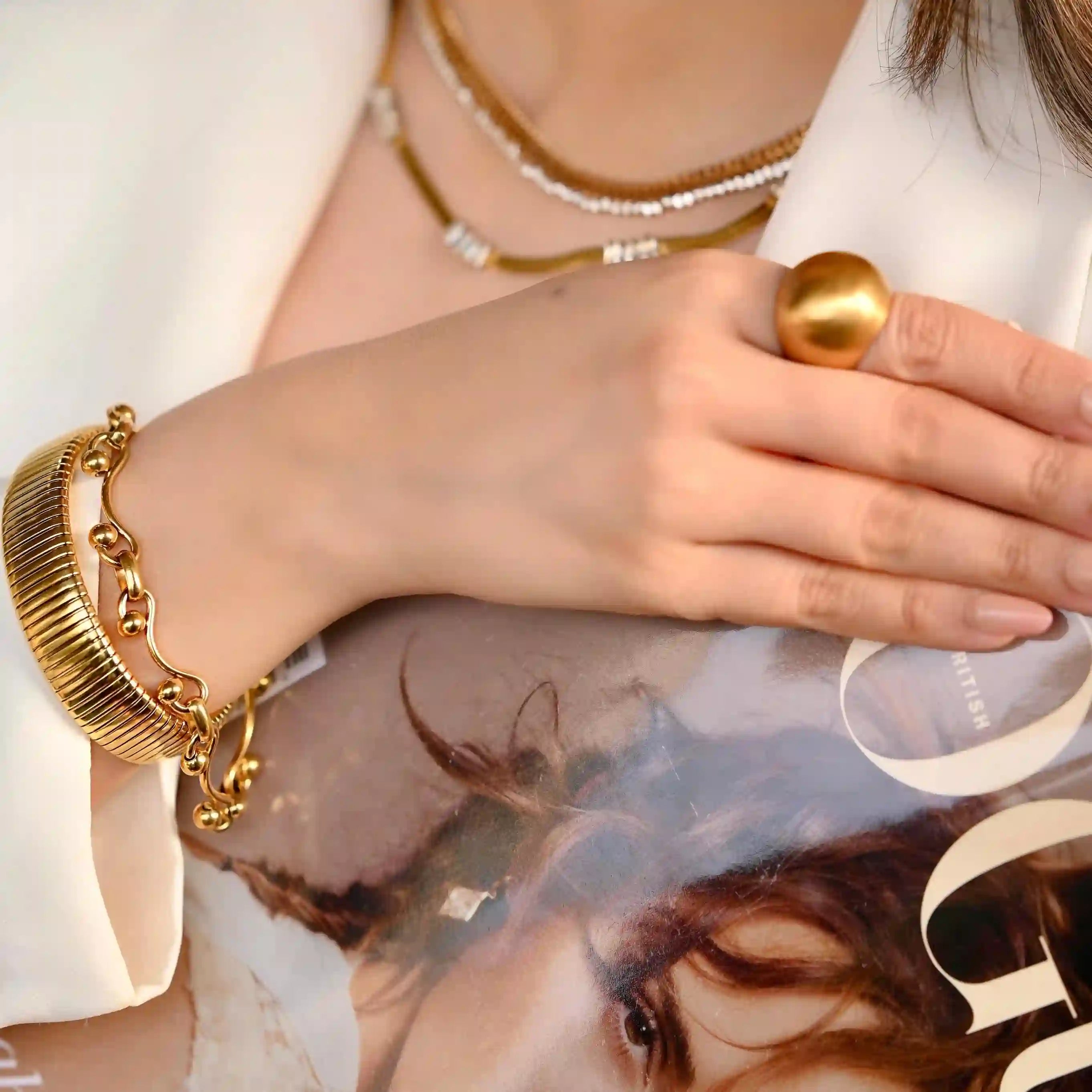

Leave a comment
This site is protected by hCaptcha and the hCaptcha Privacy Policy and Terms of Service apply.