

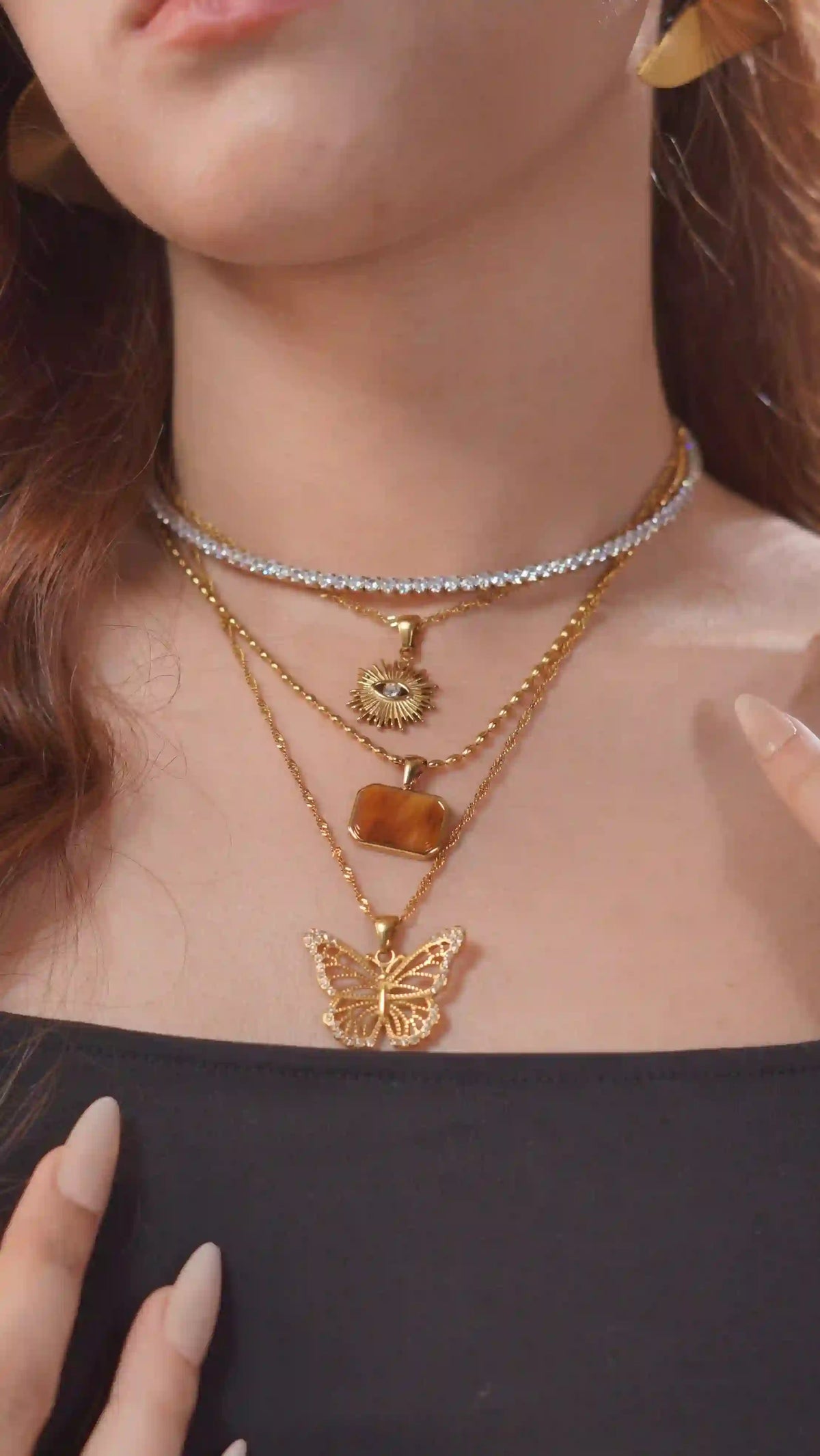
Why the tennis necklace became Pakistan's most searched necklace style
The tennis necklace accumulated search volume in Pakistan without a specific trend moment driving it. Pakistani women started reaching for it because it solved a problem most necklace styles do not — it works equally well for a Wednesday office morning and a Saturday wedding, sits cleanly under a kurta and over a formal dress, and photographs consistently under every lighting condition. That crossing of contexts is rare in jewelry and explains why, once most women own one, it becomes the piece they reach for most often.
What a tennis necklace actually is
A tennis necklace is a continuous chain where each link contains a stone — typically cubic zirconia in gold plated fashion versions — set in a consistent pattern around the full length of the necklace. No pendant. No focal point. Just an unbroken line of matched stones from one clasp end to the other.
The name has nothing to do with the sport's aesthetics. It comes from a 1987 US Open match where tennis player Chris Evert's diamond bracelet broke and fell on the court mid-game — she stopped play to retrieve it. The incident fixed "tennis" as a descriptor for continuous stone-set jewelry, first for bracelets and then for necklaces that followed the same construction logic.
What distinguishes a tennis necklace from other stone-set necklaces:
- Continuous stone setting: Every link contains a stone. There are no plain metal links between stones, no spacing variations, no single focal pendant. The stones run the full circumference of the necklace, producing the consistent sparkle effect when light hits the piece from any angle. This is the construction detail that separates a genuine tennis necklace from a stone-accented chain.
- Uniform stone size and cut: All stones are the same size and typically the same cut — round brilliant being the most common. The uniformity creates the uninterrupted visual line. Pieces that vary stone size along the length are cluster necklaces or graduated designs, not tennis necklaces — the distinction matters for how the piece photographs and how it sits against different necklines.
- Flexible construction: The individual link construction makes the necklace flexible — it moves with the body rather than sitting rigidly. This allows it to sit cleanly against different necklines and body types without the stiffness that makes some statement necklaces look awkward in motion. The piece drapes naturally at the collarbone regardless of how the wearer moves.
Why the tennis necklace works so well in the Pakistani context
Most necklace styles solve one context well and compromise in others. A plain chain is perfect for daily wear but reads as too minimal for occasions. A heavy statement piece works for weddings but is too much for a Tuesday. A layered set works for specific outfit combinations but requires active styling effort to pull off correctly.
The tennis necklace sits in a genuinely rare middle position. It has enough presence — from the continuous stone setting — to work at formal occasions and weddings without looking underdressed. But the sparkle is clean and consistent rather than elaborate, which means it does not compete with a wedding outfit the way a heavy traditional piece sometimes can. And it is structured and polished enough for office and professional contexts in a way that most statement necklaces are not.
In the Pakistani context specifically, this crossing of contexts matters more than in many other markets because Pakistani women navigate a wider range of formality levels within a single week — office, university, family events, and occasionally formal weddings — often without the wardrobe budget to maintain completely separate jewelry collections for each register. A piece that genuinely works across all of them without compromise is worth more than pieces that each do one context perfectly.
The other Pakistani-specific advantage is photography. At weddings, Eid gatherings, and family occasions, photographs matter. The tennis necklace photographs consistently well under every lighting condition because the continuous stone setting catches and reflects light predictably from any angle — under the mixed indoor lighting of a wedding venue, under outdoor natural light, under the harsh flash of a mobile camera. Many pieces that look beautiful in person photograph poorly. Tennis necklaces do not have this problem.
What to look for before buying a tennis necklace in Pakistan
The visual similarity between a well-made tennis necklace and a poorly-made one is higher in this category than almost any other jewelry type. Both look identical in product photographs. The differences show up under daily Pakistani wear conditions — and in this category, the differences are significant.
- Base metal — stainless steel only for daily wear: Tennis necklaces sit at the collarbone and neck — a high-sweat area in Pakistan's climate, particularly in summer. A brass-base tennis necklace will show oxidation marks on the neck skin once the plating wears at the clasp and highest-friction contact points. Stainless steel does not react to sweat or skin chemistry regardless of the coating condition. For a piece worn as frequently as most women end up wearing their tennis necklace, the base metal is the most important specification to verify before purchase.
- Coating — PVD over standard electroplating: Standard electroplating on a tennis necklace wears at the clasp and the back-of-neck contact area first — the highest-friction points. Under daily Pakistani wear in humidity, this typically becomes visible within a few months. PVD coating at 3 to 5 microns holds significantly longer at these contact points under the same conditions. The difference is most visible after six months of regular wear.
- Stone setting security: Each stone in a tennis necklace is individually set in a small prong or bezel mount. The number of settings across a full necklace — typically 40 to 60 individual stones — means that stone security matters more here than in any other necklace type. Look for stones that sit flush and secure in their settings without visible gaps between stone and mount. A setting that feels loose before purchase will lose stones under daily wear.
- Clasp construction: The clasp on a tennis necklace must secure the continuous line without creating a bulky visual gap. Premium tennis necklaces feature custom-fitted fold-over clasps or dual-locking box clasps with secondary safety latches. These closures are specifically engineered to support the continuous weight of the stone-set links securely through active movement.
- Length — typically 16 to 18 inches for most necklines: A 16-inch tennis necklace sits as a choker length — at or just above the collarbone — and works for high necklines and crew necks where a longer necklace would disappear inside the fabric. An 18-inch necklace sits at the collarbone and works for most Pakistani dressing necklines including V-necks, boat necks, and the open collars common in formal suits. If you are unsure which length to choose, 18 inches is the more universally wearable starting point for Pakistani wardrobe necklines.
How to wear a tennis necklace in Pakistan — by context
Daily and office wear
The tennis necklace works for daily and office wear when the rest of the look is relatively quiet. A plain tennis necklace against a solid-colour kameez or office suit reads as polished and intentional — the consistent sparkle adds presence without competing with the outfit. Keep earrings minimal — studs or small hoops rather than drops — when wearing the tennis necklace as the focal piece. The necklace is doing the work. The earrings support rather than compete.
For office wear in Pakistan specifically, the 16 to 18 inch length keeps the necklace visible above most collar lines — including the high boat necks common in formal kameez — without sitting so high that it reads as costume jewelry rather than a deliberate everyday piece.
Weddings and formal events
For Pakistani weddings and formal occasions, the tennis necklace works best as a clean alternative to traditional heavy sets when the outfit is already doing significant visual work. A heavily embellished formal dress or lehenga paired with a tennis necklace rather than a traditional matching set creates a contemporary formal look that photographs extremely well — the necklace adds sparkle without competing with the embroidery or embellishment of the outfit itself.
For events where the outfit is simpler — a plain formal suit or a solid colour dress — the tennis necklace can carry more of the styling load. A longer 18-inch piece against a V-neckline, paired with statement earrings for a matched stone look, works for the most formal Pakistani occasion contexts without requiring a full traditional set.
The material case for events is particularly strong. Pakistani shaadi conditions — heat, sunscreen, continuous sweat, and hours of fabric friction — are exactly the conditions that degrade standard electroplated brass necklaces fastest. A tennis necklace on stainless steel with PVD coating handles a full Pakistani occasion evening without the surface failure that cheaper alternatives produce reliably under the same conditions.
Casual and weekend wear
The tennis necklace for casual wear in Pakistan works best when the outfit is simple — a plain t-shirt, a casual kurta in a solid colour — where the consistent sparkle of the stone setting reads as the intentional styling element rather than as overdressing. Against patterned or heavily printed casual outfits, the tennis necklace competes visually rather than complementing. On those days, the plain chain from the daily foundation is the better choice — the tennis necklace is for when the outfit is quiet enough to give it room.
Tennis necklace vs plain chain — when to choose which
| Context | Tennis necklace | Plain chain |
|---|---|---|
| Formal office meeting | Works — polished and intentional | Works — minimal and professional |
| Pakistani wedding as guest | Ideal — sparkle reads well in photos | Underwhelming for occasion level |
| Eid family gathering | Works for most outfit levels | Works for casual Eid dressing |
| University or daily errands | Works on plain outfits | Works on all outfits |
| Heavily patterned outfit | Competes with pattern | Sits quietly alongside pattern |
| Layering with other necklaces | Best as the statement layer | Best as the base layer |
Tennis necklace and layering in Pakistan
The tennis necklace layers well when it is used as the statement layer rather than the base layer. A plain chain at 16 inches as the base, the tennis necklace at 18 inches as the middle layer, and a longer pendant at 22 inches as the final layer produces a three-piece arrangement with clear visual separation between pieces. The consistent sparkle of the tennis necklace draws the eye to the middle layer while the plain chain and longer pendant frame it at different lengths.
The most common layering mistake with tennis necklaces in Pakistan is pairing two stone-set pieces at similar lengths — a tennis necklace and a pendant necklace both sitting at collarbone height, competing for the same visual zone. Space the tennis necklace and any other stone-set piece by at least three inches of length difference to create genuine visual separation rather than visual competition. For the complete guide to layering necklaces without the pieces fighting each other, the necklace layering guide for Pakistan covers every combination in detail.
Care specific to tennis necklaces
The continuous stone setting in a tennis necklace creates more surface area — and more stone-to-setting gaps — than any other necklace type. These gaps accumulate product residue, sweat, and skin oils faster than plain chain surfaces. The care habits that matter most specifically for tennis necklaces:
- Put the necklace on after all products are dry — skincare, perfume, and hairspray sit in the stone settings directly, accelerating surface changes at the setting edges faster than on plain chain surfaces
- Use a soft brush for cleaning — not just a cloth — a soft-bristled brush (a clean mascara brush or soft toothbrush) reaches between settings to remove accumulated residue that a cloth cannot access. Use with a small amount of mild soapy water, then dry immediately
- Store flat or coiled in a separate pouch — tennis necklaces can develop kinks in the link chain when coiled too tightly in storage. A flat storage position or a loose coil in a separate sealed pouch prevents kinking and keeps individual stone settings from catching on other pieces
- Check stone settings monthly — press each section of the necklace between fingers and feel for any stones that move or wobble in their settings. A loose stone caught early can be re-set. A stone lost mid-wear and unnoticed is usually not recoverable
The complete care guide covering all jewelry types and materials is at the jewelry care guide.
Tennis necklaces in Pakistan — shop with COD
Every tennis necklace at Mithra & Co is built on a stainless steel base with 18K PVD coating and cubic zirconia stone setting — the construction this guide describes as the correct choice for daily and occasion wear in Pakistan's climate. Base metal and coating specified on every product listing. COD available across Pakistan — Karachi, Lahore, Islamabad, Rawalpindi, and nationwide.
Browse tennis necklaces in Pakistan at mithraofficial.com — available in multiple lengths and stone sizes for daily wear through formal occasions.
Frequently asked questions
Q1. What is a tennis necklace and why is it popular in Pakistan?
A: A tennis necklace is a continuous chain where each link contains a matched stone — typically cubic zirconia in gold plated versions — running the full length of the necklace without interruption. It became Pakistan's most searched necklace style because it works across more contexts than almost any other necklace type — formal enough for weddings and Eid gatherings, clean enough for office and daily wear, and consistent enough in its sparkle to photograph well under every Pakistani lighting condition from outdoor sun to indoor wedding lighting.
Q2. What length tennis necklace should I buy in Pakistan?
A: 18 inches is the most universally wearable length for Pakistani dressing — it sits at the collarbone and works with most necklines including crew necks, V-necks, boat necks, and the open collars common in formal suits. A 16-inch choker-length tennis necklace works specifically for high necklines where an 18-inch piece would not be visible. If you are unsure, start with 18 inches — it covers more neckline scenarios across the range of outfits most Pakistani women wear regularly.
Q3. Can I wear a tennis necklace to a Pakistani wedding?
A: Yes — and it works particularly well as an alternative to traditional heavy sets when the outfit is already heavily embellished. The continuous stone setting adds sparkle that photographs well under wedding lighting without competing with the embroidery or embellishment of formal Pakistani outfits. For summer wedding events, a tennis necklace on stainless steel with PVD coating holds its finish through a full evening of heat, sunscreen, and continuous wear — which standard electroplated brass alternatives do not reliably do.
Q4. Does a tennis necklace work for daily wear in Pakistan?
A: Yes, on plain or solid-colour outfits. The consistent sparkle of the stone setting reads as polished and intentional for office and daily contexts when the outfit is quiet enough to give the necklace room. On heavily patterned or printed outfits, a plain chain works better — the tennis necklace competes visually with strong patterns. The piece is at its best when the outfit says "here is the necklace" rather than "here is the outfit and also a necklace."
Q5. Where can I buy a tennis necklace in Pakistan with COD?
A: Mithra & Co delivers tennis necklaces on stainless steel with 18K PVD coating and CZ stone setting across Pakistan — Karachi, Lahore, Islamabad, Rawalpindi, and nationwide — with cash on delivery on every order. Browse the tennis necklace collection at mithraofficial.com.

Leave a comment
This site is protected by hCaptcha and the hCaptcha Privacy Policy and Terms of Service apply.