

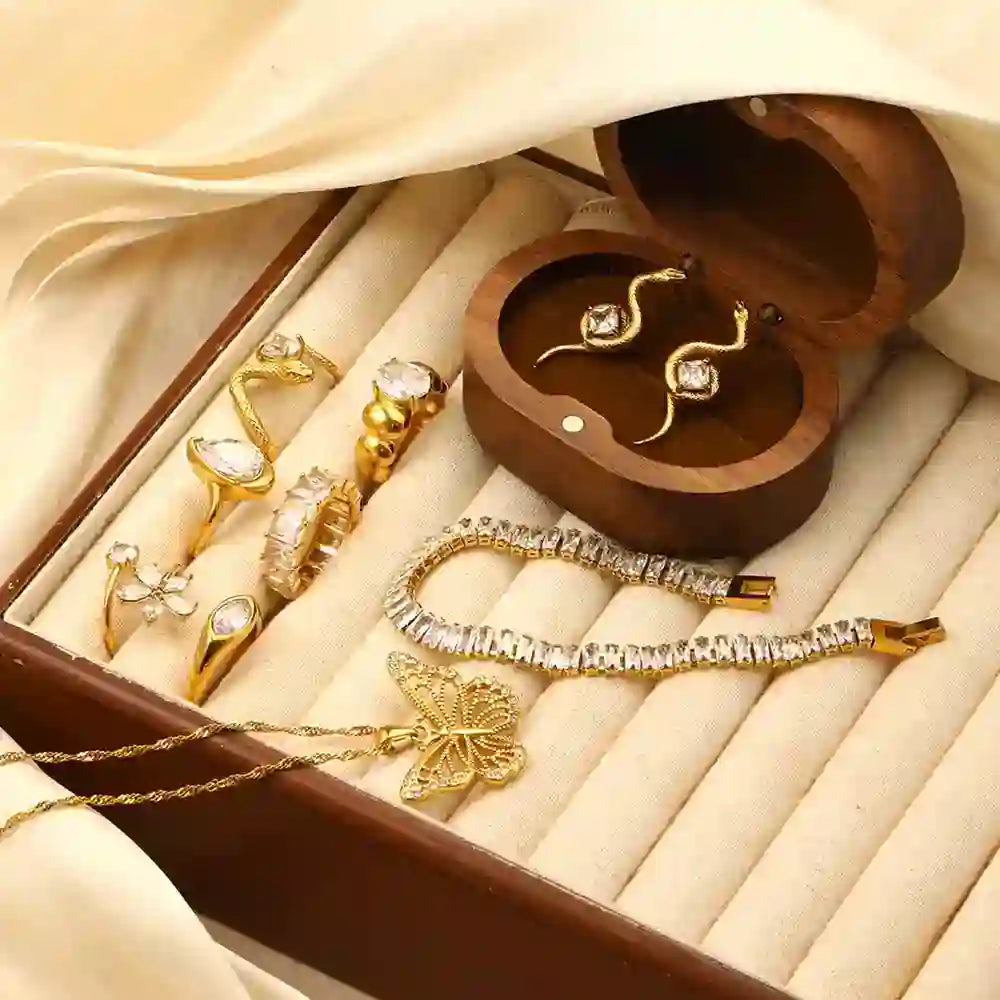
How to Build a Jewelry Collection From Scratch in Pakistan — The Right Order
Why most jewelry collections in Pakistan do not work — and why the order matters
Most jewelry collections in Pakistan are not built. They accumulate. A gift here, an impulse purchase there, something bought for one occasion that never quite worked outside of it, a set received that sits in a box because the individual pieces do not integrate with anything else owned. The result is a drawer full of pieces and nothing that feels like a collection — nothing that works together, nothing that covers the full range of daily life, nothing that gets reached for automatically.
The problem is almost never the pieces themselves. It is the order in which they were acquired. A statement necklace bought before a plain chain means the statement piece has no foundation to sit against. A ring set bought before understanding personal sizing means adjustable basics come too late. Occasion pieces bought before daily essentials means the collection serves the rare moments and leaves the ordinary ones uncovered.
Building a collection that functions requires a sequence. The sequence is not complicated — but it is specific, and almost nobody explains it before the purchases are already made.
Before buying anything — the honest audit
If you already own jewelry, start here before adding anything new. Pull everything out. Every piece, including the ones that have not moved in months. Sort them into three groups:
- Pieces you reach for without thinking. These are working. They belong to who you actually are right now. Note what they have in common — metal tone, scale, style register — because these are the signals about what to add next.
- Pieces you reach for occasionally for specific situations. These are serving a purpose even if it is narrow. Keep them but do not build around them.
- Pieces that have not moved. These are not failures — they are information. Most of them were bought for a version of you that does not show up regularly, bought for someone else's occasion, or bought without knowing what they would need to work alongside. Understanding why each one sits untouched tells you more about what your collection actually needs than any shopping guide can.
Buyers starting fresh who are also unsure about materials, sizing, and what to check before placing an order online will find the simple jewelry guide for Pakistan a useful starting point before running this audit.
The audit takes twenty minutes and changes what you buy next more reliably than any other exercise. The full guide to why jewelry ends up unworn covers this in more detail — including why the drawer problem is almost always a sequence problem rather than a taste problem.
First-time buyers placing their first online order should also check the honest buyer's guide to jewelry online in Pakistan before purchasing — it covers base metal checks, sizing, COD, and exchange policy in full detail.
Stage one — the three daily essentials
Every functional jewelry collection starts with three pieces that work across every kind of day, every outfit, and every version of who you are. These are not the most interesting pieces in the collection. They are the most important ones — because they are the pieces that make everything else possible.
The three daily essentials are:
A plain chain necklace
Not a pendant. Not a statement piece. A plain chain in your preferred metal tone — gold or silver — at a length that works with your most common necklines. This is the piece that goes on without a decision being made. It works under a kurta, under a blouse, under anything with a visible neckline. It works alone as a minimal look and as the base layer under a pendant when you want more.
The right length depends on your most common outfit necklines. 16 to 18 inches sits at or just below the collarbone and works with most high and medium necklines. 20 inches sits at mid-chest and works with wider and lower necklines. If you are unsure, 18 inches is the most versatile starting point for Pakistani dressing specifically.
Material matters most here because this piece will be worn more than anything else you own. A brass-based chain worn daily will show wear at the clasp and links within months. A stainless steel chain with PVD coating holds its finish and its structure under continuous wear in ways that brass-based chains cannot. Plain gold plated chain necklaces built on stainless steel are the right starting point for this piece specifically.
A pair of small earrings
A stud or a small hoop — not both yet, just one reliable pair. Small enough to wear to work, to family events, to any occasion without the earring being the decision. The piece that goes on because it is always right, never because it was specifically chosen.
Small hoops between 12 and 20mm diameter are the most versatile starting earring because they read as minimal from a distance and have detail up close. Small studs — a plain ball, a small stone, a simple geometric shape — are the lowest-maintenance option and the one most likely to be worn continuously without being removed for any context.
For earrings specifically, the base metal matters for skin contact at the post. Brass posts oxidise against the earlobe in exactly the same way they oxidise against wrist skin — producing irritation and sometimes the same green marks. Stainless steel posts do not. Gold plated earrings on a stainless steel base are the starting point — hypoallergenic, consistent through daily wear, and the earring you never have to think about removing.
One adjustable ring
Not a ring set. Not a statement ring. One slim adjustable band that fits the way you want to start wearing rings — on whichever finger feels natural, at a size that does not require measurement. This piece exists to establish a ring habit before committing to fixed sizes and specific fingers.
Most people who do not habitually wear rings skip this stage and buy a fixed-size ring that fits imperfectly, spend the first few weeks adjusting to the discomfort, and then stop wearing it. An adjustable band worn for a few weeks teaches you which finger you actually reach for, what width feels comfortable, and whether you prefer a piece with detail or a plain band. That information is worth more than any ring set bought before knowing it.
Adjustable gold plated rings on stainless steel are the right choice for stage one — low commitment, immediate wearability, and accurate sizing information for whatever you buy next.
Stage two — the occasion layer
Once the three daily essentials are established and being worn consistently — which takes two to four weeks of actual daily use, not just acquisition — the collection is ready for its second layer. Stage two adds pieces that serve specific situations without disrupting the daily foundation.
Stage two has two additions:
A pendant necklace
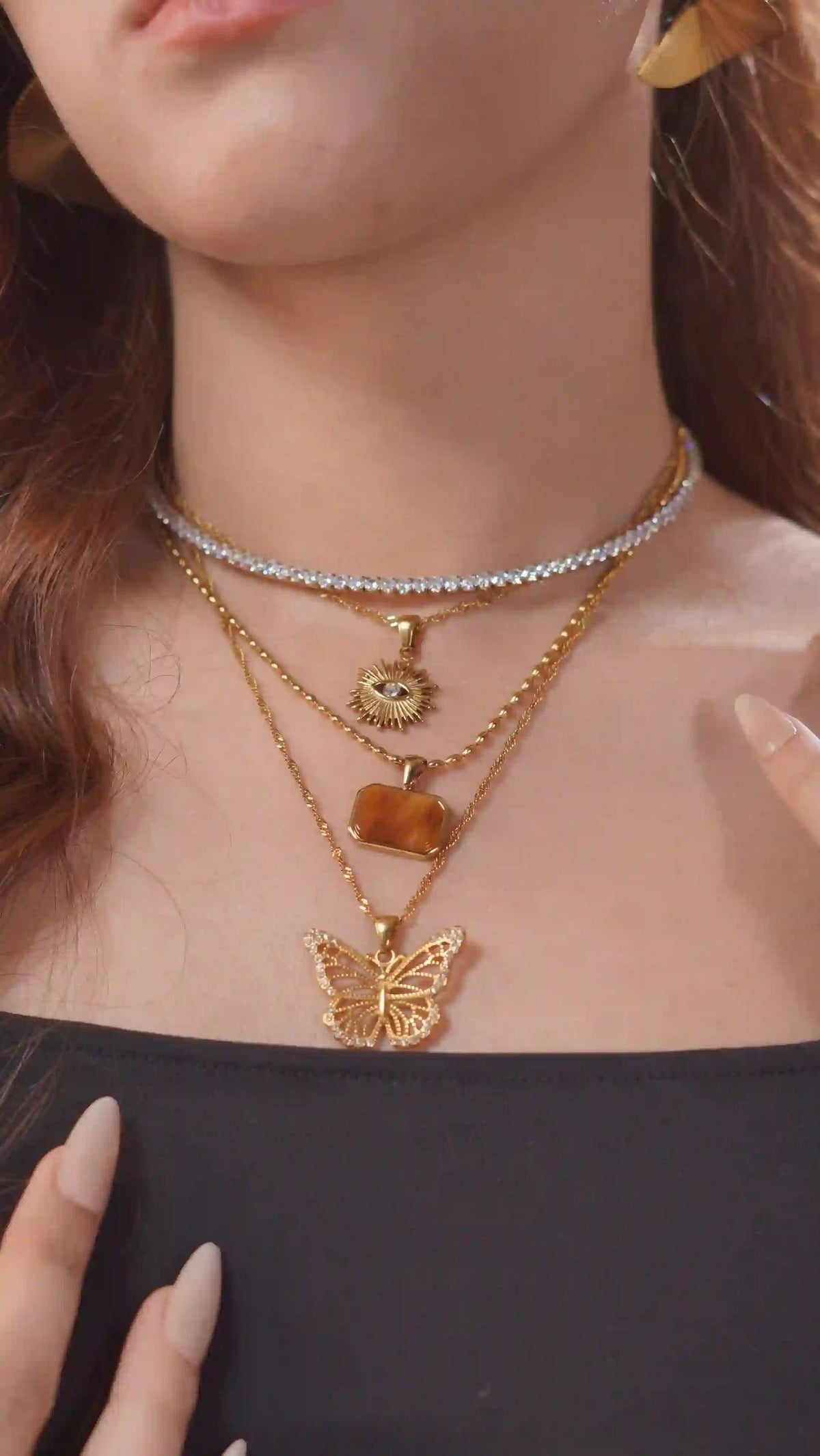
Now that the plain chain from stage one is part of the daily routine, a pendant necklace serves two purposes: worn alone as a more detailed daily option, or layered over the plain chain for a two-piece look with length separation. The pendant should sit at a noticeably different length than the plain chain — three to five inches longer — so the two pieces create genuine visual separation when layered rather than competing at the same chest height.
A clover, a geometric shape, a symbolic motif — the detail of the pendant is what makes this piece memorable. Pendant necklaces in gold plated stainless steel that carry a specific design point of view are the right choice here — something chosen, not just something that fills the pendant category.
A statement earring
The counterpoint to the small daily earring from stage one. A dangle, a drop, a bold hoop, or a statement stud that is clearly different in scale from the everyday pair. This piece exists for the situations where the daily earring feels like not enough — an evening function, a significant family occasion, a moment that calls for something more deliberate.
The statement earring from stage two should be chosen in relation to the pendant necklace from this same stage. If the pendant is the statement at the neck, the statement earring should be smaller — a medium hoop rather than a full dangle. If the neck stays quiet with the plain chain, the earring can carry more presence. The two pieces at neck and ear exist in the same visual zone and should be calibrated against each other. Statement earrings for Pakistani occasions across every formality level are available across the full earring collection.
Stage three — the personality pieces
Stage three is where the collection becomes specifically yours rather than generically functional. The first two stages build a collection that works. Stage three builds a collection that feels like it belongs to one person.
Stage three has no fixed sequence — it is guided by what the audit from the beginning of this guide revealed about which version of yourself you are actually dressing for most often.
For the daily wear builder
A chain bracelet that goes on with the morning routine and stays. A second plain ring at a fixed size now that you know which finger and which width works from the adjustable piece in stage one. A second chain necklace at a third length for three-piece layering. These additions extend the daily foundation rather than adding new categories. Chain bracelets for daily wear in Pakistan are the most common stage three addition for this profile.
For the occasion dresser
A piece with genuine cultural weight — something that belongs to the occasions that carry meaning in the Pakistani context. Eid, family walimas, events where the jewelry is part of how the moment is marked. This piece does not need to work for daily wear. It needs to be exactly right for the specific occasions it serves. The Inheritance collection exists specifically for this — pieces that feel rooted in occasion without being costumed by it.
For the statement wearer
One bold piece chosen with full commitment — a sculptural ring, a motif necklace, an earring that ends the conversation before it starts. This piece does not need to work with everything. It needs to work completely for the moments when the version of you that wants to be noticed is the one showing up. The Sauvage collection covers this register — deliberate, specific, built on the same stainless steel foundation as everything else in the collection.
The material question — why it determines whether the sequence works
The sequence above only functions if the pieces at each stage hold up long enough for the next stage to build on them. A daily essential that degrades within three months does not establish a foundation — it establishes a replacement cycle. A pendant that turns the neck green does not become a layering piece — it becomes a piece that gets worn once and retired.
This is why the material choice at stage one is the most important decision in the entire sequence. Stainless steel with 18K PVD coating is the construction that makes the foundation durable enough to build on. The base metal does not react to skin or sweat. The PVD layer holds significantly longer than standard electroplating under daily wear conditions. The piece that goes on at stage one still looks like itself at stage three — which is the condition that makes the layering and the occasion pieces work as a coherent collection rather than a series of isolated purchases.
For the full detail on why this material combination outperforms the alternatives available in Pakistan's market, the guide to stainless steel with 18K gold plating covers the comparison in detail. And for understanding what happens to pieces that use brass or zinc alloy bases — including the green mark problem that derails many stage one attempts — the guide to why jewelry turns skin green explains exactly why the base metal decision matters before any other choice.
For buyers who also want to verify the seller before committing to any stage one purchase, the seller safety checklist for online jewelry in Pakistan covers COD verification, exchange policy checks, and fake review patterns in one place.
How long the sequence actually takes
Stage one acquisition takes one shopping session. Stage one establishment — the period of actually wearing the three pieces consistently until they become automatic — takes two to four weeks. This period is not optional. A piece bought and not yet worn has not joined the collection. It is waiting to find out whether it belongs.
Stage two follows naturally once the stage one pieces are genuinely established in the daily routine. Most people reach stage two within four to eight weeks of starting stage one correctly.
Stage three has no timeline. It happens when the collection reveals what it is missing — which it does, clearly, once stages one and two are functioning. The gaps become obvious when the foundation is in place. Before the foundation is in place, the gaps are impossible to read accurately, which is why most people skip to stage three pieces first and end up with a drawer full of things that do not connect.
Questions about building a jewelry collection in Pakistan
Q1. How much should I spend to start a jewelry collection in Pakistan?
A: Stage one — three pieces — can be built for between Rs. 6,000 and Rs. 10,000 on stainless steel with PVD coating. A plain chain at Rs. 2,000 to Rs. 2,500, a pair of small earrings at Rs. 1,500 to Rs. 2,500, and an adjustable ring at Rs. 1,500 to Rs. 2,000 covers the foundation. Spending more does not improve the foundation — spending on the right material does. A Rs. 8,000 foundation on stainless steel outperforms a Rs. 15,000 foundation on brass because it stays functional long enough to build on.
Q2. Should I buy a jewelry set or individual pieces when starting out in Pakistan?
A: Individual pieces in the sequence above. Sets are visually coherent but functionally narrow — they work together and rarely work with anything else. A necklace-earring-bracelet set from stage three, purchased at stage one, leaves you with three pieces that only function as a unit rather than three pieces that each function independently across different contexts. The sequence builds versatility first, then adds specificity.
Q3. What is the best everyday jewelry for Pakistani women?
A: A plain gold chain at 16 to 18 inches, a pair of small stud or hoop earrings, and one slim ring — all on stainless steel with PVD coating. These three pieces cover every daily context — office, university, casual, family — without requiring any styling decision in the morning. They are the foundation that makes every other piece in the collection work better by giving it something to sit against.
Q4. How do I know when my jewelry collection is complete?
A: When you stop reaching into the drawer looking for something and not finding it. A complete collection is not one that covers every theoretical occasion — it is one where the pieces you actually need for the life you actually live are all present and functional. For most Pakistani women, this is between eight and twelve pieces total across all three stages. More than that is usually accumulation rather than collection.
Q5. Where can I buy gold plated jewelry for building a collection in Pakistan with COD?
A: Mithra delivers 18K PVD gold plated jewelry on stainless steel across Pakistan — Karachi, Lahore, Islamabad, Rawalpindi, and nationwide — with cash on delivery on every order. The collections are organised by category so each stage of the sequence above maps directly to a collection page. Browse the full collection here and start with the three stage one pieces before adding anything else.

Leave a comment
This site is protected by hCaptcha and the hCaptcha Privacy Policy and Terms of Service apply.