

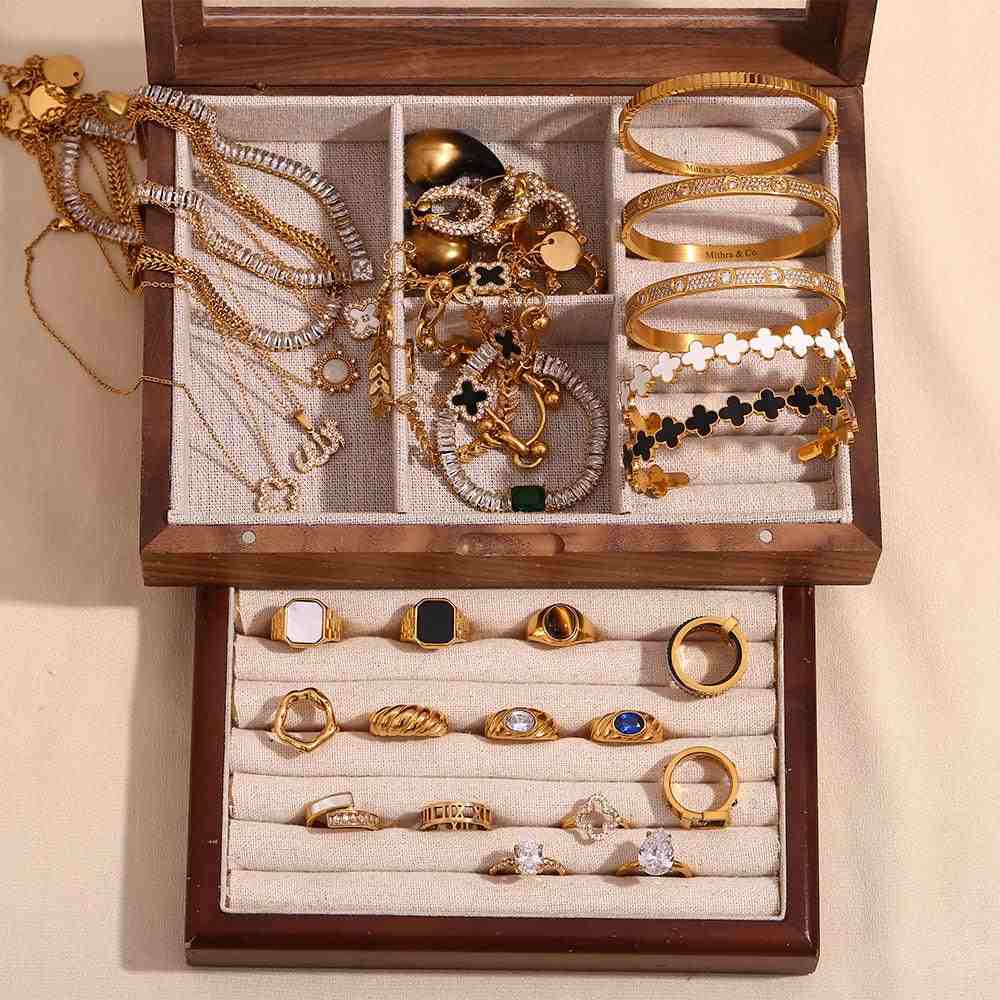
Jewelry for shaadi season in Pakistan is a different problem from jewelry anywhere else. It is not just about looking right for the occasion — it is about surviving 42°C heat, six hours of continuous wear, sunscreen, sweat, and fabric friction, all running together on the same evening. That green mark on your ring finger the morning after is often a sign that the base metal or coating was not suited to the conditions. And if you already own jewelry that is doing this to you — the fix may be simpler than buying something new. Start there.
If You Already Own Jewelry That Is Failing You — Read This First.
Before anything else: if you have pieces at home that are turning your skin green, leaving dark lines, or itching after two hours of wear — that is not necessarily a product-care problem and it may not be fixable through cleaning alone.
The cause is often the same. Zinc alloy or copper-based metal can react with sweat. Sweat contains salts and other compounds that can accelerate corrosion and oxidation on reactive metals. Once the surface coating strips, the exposed metal can react directly against your skin. That is where green discoloration and irritation can begin.
If those pieces still have their finish intact — no visible peeling, no colour change on the metal itself — they may survive one more event if you follow the care protocol at the end of this article. If the finish is already gone, no amount of care will restore the original coating. That is when the base metal matters — and that is what the rest of this article is about. why gold plated jewelry fades tells you what to look for differently the next time you buy.
Why Pakistani Shaadi Conditions Are a Specific Problem for Most Jewelry.
Most jewelry — including expensive fashion jewelry — is not tested for what a Pakistani shaadi actually involves. It is tested for normal wear. Normal wear is not this.
Here is what is actually happening to your jewelry across a single shaadi evening in June:
-
1Sunscreen goes on before the event Because it is June and you have to. Sunscreen contains chemical filters that can remain in contact with jewelry from the moment you leave home. When product residue, heat, and moisture combine, the surface sees more exposure than it would during a short indoor event.
-
2Body temperature rises within the first hour Pakistani shaadi lawns in summer can become extremely hot. Your core temperature rises. Sweat begins accumulating under every piece — the necklace, the ring, the bracelet, the earring backs. Sweat and moisture are now sitting against the metal surface on top of the sunscreen layer already there.
-
3Fabric friction runs continuously Every time you move — sit down, stand up, hug someone, adjust your dupatta — your outfit fabric creates friction against every piece you are wearing. Friction is one of the fastest mechanical ways to wear down a surface coating.
-
4All three run together for five to six hours Sunscreen residue. Continuous sweat. Continuous fabric friction. Simultaneously. For the entire evening. Thin conventional electroplating is especially vulnerable when all three conditions occur together for hours.
This is not necessarily a quality-control failure on a specific piece you bought. It can be the predictable result of the wrong base metal or coating meeting demanding Pakistani shaadi conditions.
The Base Metal Comparison — So You Can Make This Decision Yourself.
Most affordable Pakistani jewelry is built on zinc alloy, copper, or other lower-cost metals. Here is what that means in practice versus stainless steel:
Can react to sweat and moisture, causing green marks, dark lines, or irritation when the exposed base metal reaches the skin. Surface coating can also wear under heat and friction. Once the coating is significantly compromised, the base metal is directly exposed.
Resistant to corrosion and better suited to repeated moisture exposure than reactive copper-based alloys. When used as the base for plated jewelry, it provides a more stable foundation for daily wear and reduces the green-mark risk associated with exposed copper.
Creates a surface gold layer that can wear down under friction and repeated exposure. In Pakistani shaadi conditions — sunscreen, sweat, and fabric friction combined — the finish can deteriorate faster than it would under shorter or lower-exposure wear.
A high-density coating applied over a stainless steel base. Compared with conventional electroplating, PVD is designed for higher wear resistance and better surface durability, making the combination more appropriate for frequent wear in demanding conditions.
For the full breakdown of every gold finish type — vermeil, gold-filled, solid gold, flash plating — and which makes sense for which kind of wear, read the gold plating types explained for Pakistan. And if you are choosing jewelry specifically for event and occasion wear in Pakistan — not just shaadi season — how to choose jewelry for Pakistani occasions maps the decision from material through to style.
The Honest Condition PVD Cannot Escape — And What You Do About It.
PVD is one of the more durable finishes in this price category. It is not permanent. Direct friction over time, perfume applied directly onto the piece, and harsh chemical contact can shorten any plated finish — PVD included. This is normal wear physics, not automatically a product failure.
The difference between a PVD finish that lasts one shaadi season and one that lasts significantly longer is often in how you treat it. Here is the practical protocol — specific to Pakistani shaadi conditions, not a generic jewelry care list.
-
1Before the event — products first, jewelry last Apply perfume, hairspray, and all body products first. Let them dry and absorb completely. Then put your jewelry on. Direct product contact can contribute to surface breakdown on plated finishes. The order of getting ready is therefore a simple habit worth changing.
-
2Sunscreen absorbed first, pieces on after Apply sunscreen, let it absorb fully into the skin, then put your jewelry on. Sunscreen sitting underneath a bracelet or ring for six hours in Pakistani summer heat — combined with sweat and fabric friction — creates unnecessary exposure. Breaking that contact at the start costs you nothing.
-
3Wuzu — water yes, aggressive rubbing no Stainless steel with PVD is well suited to brief water exposure such as wuzu. Let water run over the pieces, then pat dry with a soft cloth if possible. Avoid aggressive rubbing while the piece is wet.
-
4After the event — microfibre cloth, not polishing cloth Before you sleep, wipe each piece down with a soft microfibre cloth. Avoid abrasive polishing cloths that can contribute to surface wear over repeated use. The wipe removes sweat residue, salts, and skin oils before they remain on the surface overnight.
-
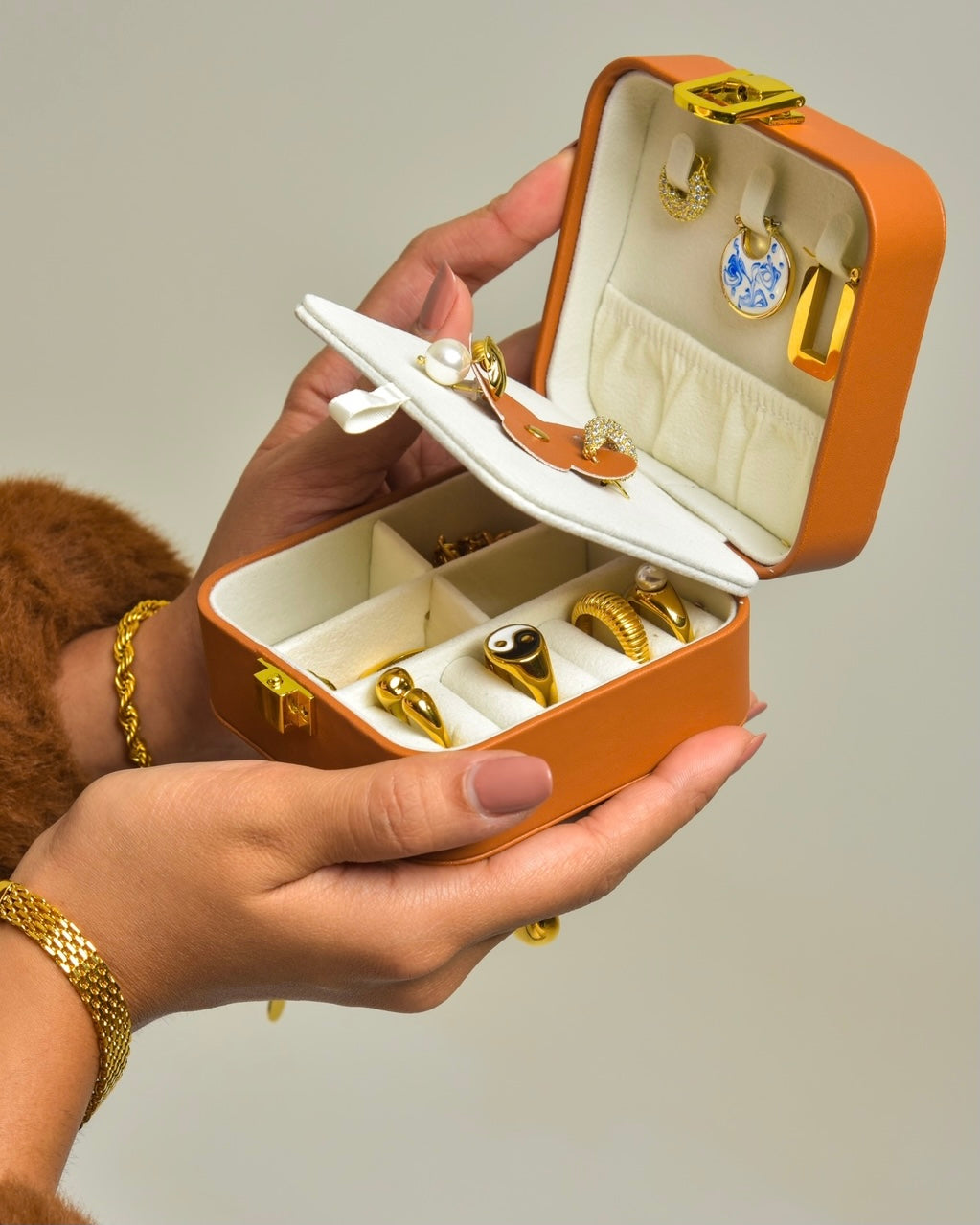
5Storage between events — pouches, not the drawer Store each piece separately in individual pouches. Not loose in a jewelry dish. Not tangled together in a drawer. Metal-on-metal contact creates surface scratches, and scratches can accelerate visible wear. Cool and dry storage is the better option.
For storage specifics, gemstone care, and the daily wipe-down method — the full detail is in the complete jewelry care guide for Pakistan. Read it once before shaadi season and use the routine throughout the season.
One Baraat. One Photograph. The Jewelry Decision Is the Only Variable Left.
The outfit is decided. The venue is booked. The only thing still in your control is whether the jewelry you wear to that evening performs or fails.
-
The photographA dark line under your necklace does not wash out in editing. It is in the image permanently. The occasion does not repeat.
-
The eveningAn hour spent quietly scratching your earlobes instead of being present is a distracted memory from an occasion that does not come back.
-
The morning afterA green ring mark that takes days to fade is evidence that the purchase was not well suited to the conditions. The repeat of it is avoidable.
Frequently asked questions
Q1. Why does jewelry leave green marks on skin at Pakistani shaadis?
A: Green discoloration is commonly associated with the base metal rather than the gold colour itself. When copper-containing metals underneath a worn coating contact sweat, moisture and skin chemistry can produce compounds that stain the skin green. Pakistani shaadi conditions — heat, sunscreen, continuous sweat, and fabric friction running together for hours — can accelerate surface wear and expose the reactive base metal sooner.
Q2. What jewelry is safe to wear to a Pakistani shaadi in summer?
A: 18K PVD coating over a stainless steel base is a strong option for summer event wear. The stainless steel base is corrosion-resistant, while the PVD coating is designed for higher surface durability than conventional electroplating. No plated finish is completely immune to wear, so care still matters.
Q3. Can I wear gold plated jewelry for wuzu at a shaadi?
A: For 18K PVD pieces over stainless steel, brief water exposure such as wuzu is generally well tolerated. Let water run naturally over the pieces and pat dry afterward. Standard electroplated brass or copper-base pieces are more vulnerable to repeated moisture exposure, so removing them before wuzu can help reduce unnecessary wear.
Q4. How do I stop my jewelry from tarnishing during shaadi season in Pakistan?
A: Two habits that cost nothing: products first, jewelry last — perfume, hairspray, sunscreen all applied and fully absorbed before any piece goes on. And after the event, one microfibre wipe before sleep to remove sweat residue and salts before they remain on the surface overnight.
Q5. Is expensive jewelry safer for Pakistani shaadi conditions than affordable gold plated pieces?
A: Not necessarily — price does not determine base metal. An expensive piece on a reactive base can still produce green marks or surface wear under Pakistani shaadi conditions. The deciding factors are the base metal, coating method, construction, and how the piece is worn and maintained.
You Have What You Need. The Decision Is Yours.
You know what causes the reaction. You know which base metals are more reactive and which are better suited to repeated wear. You know what PVD is, what it can survive, and what shortens it. You know the practical care protocol for Pakistani shaadi conditions specifically.
If your current jewelry is already failing you — shop stainless steel jewelry for Pakistan. Available with COD nationwide.

Leave a comment
This site is protected by hCaptcha and the hCaptcha Privacy Policy and Terms of Service apply.