

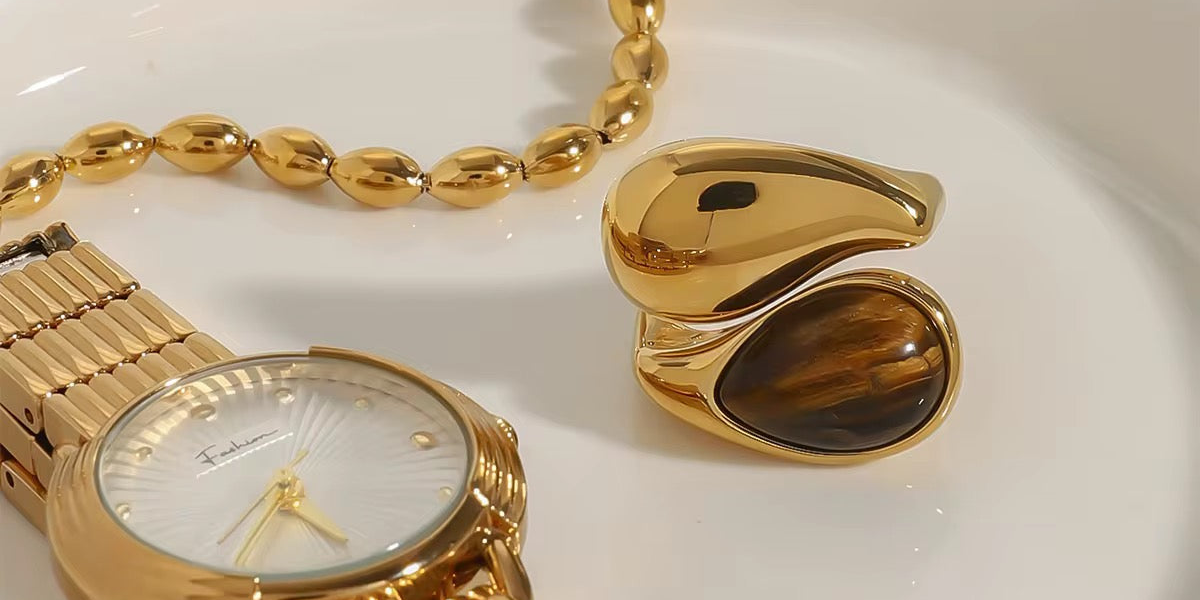
The short answer — almost all of an ordinary day is fine
For 18K PVD over stainless steel, the vast majority of water contact in a normal Pakistani day is nothing to plan around. The exposure actually worth a habit isn't the shower or the sink — it's a small number of specific moments where water combines with something else — chlorine, sustained sweat, or being left wet — for longer than a quick rinse. What "waterproof" means as a label, and how to tell a genuine claim from a marketing one before you buy, is covered separately in what the waterproof claim actually means. This guide is the one for what to actually do, activity by activity, with a piece you already own.
Wudu — the water exposure most guides never account for
For anyone wearing jewelry through five daily prayers, wudu is by far the most frequent, most repeated water contact a piece experiences — far more often than a shower, and almost never mentioned in international jewelry care content. Rings and bracelets go through the full washing motion each time, and hands are dried afterward with varying thoroughness depending on where wudu happens — home, office, or masjid.
Plain water itself isn't the concern on stainless steel PVD. What matters is what's mixed into it: soap residue left in a masjid washroom, or the combination of wudu water with whatever's already on the skin from the day — sweat, sanitiser residue, hand cream. None of that is dangerous on its own, but at five times a day, every day, a quick wipe-dry afterward is worth more than letting a ring air-dry between rakats.
Dishes, laundry, and cleaning — more frequent than gym or pool for most households
Dishwashing liquid, laundry detergent, and surface cleaners are mildly alkaline or contain surfactants that behave differently from plain water — they're built to get into small gaps, which is exactly the property that matters here. For most Pakistani households this is daily, sustained hand-in-water contact, often for longer stretches than a gym session.
This exposure is easy to underrate specifically because it doesn't feel like "getting jewelry wet" the way a pool does — it feels like a chore, so rings rarely come off for it. The practical habit isn't removing rings for every task; it's a dry wipe afterward, the same as any other exposure, so detergent residue doesn't sit against a setting overnight.
Monsoon rain — a Pakistan-specific version of getting caught in the water
Monsoon rain in Pakistan isn't clean rainwater the way a shower is — in most cities it picks up road runoff, dust, and pollution on the way down, which shifts its chemistry slightly from plain tap water. It's still not an aggressive exposure on its own for stainless steel PVD, but a piece that's been rained on and left to air-dry in a bag or pocket holds that residue against the coating far longer than a quick towel-dry would.
The gym specifically — where sweat and water overlap, not replace each other
A gym session isn't really a water exposure on its own — it's sweat plus whatever water touches the piece afterward in the shower, layered on top of each other with no gap in between. That combination is longer and more concentrated than either sweat or a shower alone through a normal day, which is why keeping jewelry on through a workout and straight into the shower shows more wear at contact points than the same piece worn through an ordinary day.
The habit that actually matters is sequencing, not avoidance: rinse and dry after the session, rather than letting sweat sit under a shower stream and air-dry on its own. Chlorine specifically, if the gym has a pool attached, is a distinct and stronger oxidiser than sweat or plain water and deserves its own rinse-and-dry habit separate from a regular workout.
Activity by activity — the quick reference
| Activity | Needs a second thought? | What actually matters |
|---|---|---|
| Wudu, five times daily | No | Dry after, not because of the water — because of what's mixed into it (soap, sweat residue) |
| Dishes and laundry | No | Dry wipe afterward; detergent shouldn't sit against a setting overnight |
| Normal shower | No | Occasional contact is fine; daily showering with it on shortens coating lifespan over months |
| Monsoon rain | No | The risk is a wet piece left in a pocket for hours, not the rain itself |
| Gym, no pool | Mild | Rinse and dry right after — don't let sweat sit under the shower stream and air-dry |
| Swimming pool (chlorinated) | Yes | Chlorine is a stronger oxidiser than sweat or plain water; rinse and dry immediately, remove where possible |
| Saltwater / sea | Yes | Higher chloride concentration than sweat; same treatment as chlorine exposure |
| Long soak — bath with salts or oils | Yes | Extended contact time plus added compounds is the actual risk factor, not water alone |
Almost nothing in an ordinary Pakistani day is a reason to take a stainless steel PVD piece off. The exposures worth an actual habit are the ones that aren't plain water — a pool, a long soak, or a piece left wet instead of dried. Everything else on this list is closer to a non-event than a risk.
What this looks like for a reactive base metal instead
Everything above assumes a stainless steel base. On brass or zinc alloy, the calculation changes — wudu, dishes, and even a normal shower become genuinely worth avoiding, because the base metal itself reacts to water rather than simply enduring contact with it. The mechanism behind why one base metal tolerates all of this and another does not is covered in full in what actually damages gold plated jewelry in Pakistan, which walks through the base-metal chemistry that this guide's verdicts are built on.
Frequently asked questions
Q1. Can I keep my rings on for wudu?
A: Yes, for 18K PVD over stainless steel. Plain water from wudu doesn't meaningfully affect the coating. Since it happens five times a day, a quick dry afterward — rather than letting rings air-dry between prayers — is a reasonable habit, mainly to avoid soap or hand-product residue sitting in a setting rather than because of the water itself.
Q2. Is it okay to wash dishes or do laundry with rings on?
A: For stainless steel PVD, yes. Detergents and cleaning products are a slightly more active exposure than plain water since they're designed to get into small gaps, but they're not aggressive enough to warrant removing rings for every chore. A dry wipe afterward covers it, same as any other daily exposure.
Q3. Does monsoon rain damage gold plated jewelry?
A: Not meaningfully on its own for stainless steel PVD, though Pakistani monsoon rain often carries more road dust and runoff than clean rainwater would. The real risk isn't the rain itself — it's a wet piece left to air-dry in a pocket or bag for hours afterward rather than dried promptly.
Q4. Can I wear gold plated jewelry to the gym?
A: Yes, for 18K PVD over stainless steel — a normal workout followed by a shower is manageable. The habit worth keeping is rinsing and drying right after the session rather than letting sweat sit under running water and then air-dry. If the gym has a pool attached, chlorine is a stronger, separate exposure worth its own rinse.
Q5. What's actually worth worrying about, if daily water contact mostly isn't?
A: Extended soak time combined with something other than plain water — a swimming pool, bath oils or salts, or a piece left wet in a pocket or bag for hours instead of dried promptly. Everyday contact — showers, wudu, dishes, rain, a normal gym session — isn't in that category for stainless steel PVD.
Q6. What jewelry can handle daily water exposure in Pakistan without a second thought?
A: 18K PVD over 316L stainless steel is built for exactly this — wudu, dishes, rain, and a normal gym routine, without the base metal reacting the way brass or zinc alloy would. Browse everyday essentials at mithraofficial.com — COD across Pakistan, parcel inspected before payment.
Most of the Day Isn't the Risk. The Few Hours That Aren't Plain Water Are.
Wudu, dishes, rain, a normal shower, a normal workout — none of it is something to plan a routine around. The exposures worth an actual habit are the ones that aren't plain water: a pool, a long soak, or a piece left wet instead of dried.
Browse Mithra's collection at mithraofficial.com — 18K PVD over stainless steel, COD across Pakistan.

Leave a comment
This site is protected by hCaptcha and the hCaptcha Privacy Policy and Terms of Service apply.