The short answer — and why the base metal decides everything
Yes, hand sanitiser damages gold plated jewelry — but not equally across all pieces. On a brass or zinc alloy base, repeated sanitiser exposure accelerates visible degradation within weeks. On a 316L stainless steel base with PVD coating, the damage is surface-level and significantly slower. The coating takes the hit. The base metal stays intact.
The distinction matters because in Pakistan, hand sanitiser went from an occasional pharmacy product to a multiple-times-a-day habit — at office entrances, hospital corridors, school gates, restaurants, masjid entrances during Ramadan, before and after wuzu in some contexts, and simply as part of the daily routine that hasn't left since 2020. A Pakistani woman who wears rings and bracelets daily is applying sanitiser to or near her jewelry dozens of times a week. What that does to the piece depends entirely on what the piece is made of.
What hand sanitiser actually contains — and which part damages jewelry
Most hand sanitisers available in Pakistan — Dettol, Lifebuoy, hospital-grade brands, and generic pharmacy versions — are between 60 and 80 percent ethanol or isopropyl alcohol by volume. The alcohol is the active ingredient. It kills bacteria and viruses by denaturing their proteins. It also, by the same chemical mechanism, attacks organic compounds on any surface it contacts — including the bond layer of plated metal coatings.
The other components in sanitiser — moisturisers like glycerin, fragrance compounds, water — are largely inert relative to jewelry surfaces. The damage agent is the alcohol. And at 60–80 percent concentration, it is significantly stronger than the 15–40 percent alcohol in most perfumes.
Hand sanitiser is not more dangerous to jewelry than perfume because it smells stronger. It is more dangerous because the alcohol concentration is two to four times higher, and because it is applied directly to the hands — exactly where rings and bracelets sit — at close range, multiple times per day.
The chemistry — what high-concentration alcohol does to plated surfaces
Gold plating — whether standard electroplating or PVD — sits on top of a base metal. The plating is a thin layer, typically between 0.5 and 3 microns thick. Between the plating layer and the base metal there is a bond interface — the point where the two materials meet at a molecular level.
Ethanol has a surface tension of approximately 22 mN/m, compared to water's 72 mN/m. That lower surface tension allows it to penetrate micro-gaps and surface imperfections in the plating layer far more aggressively than water. Once alcohol reaches the bond interface, two things happen depending on the base metal:
On brass or zinc alloy base: The alcohol accelerates oxidation at the interface. It carries dissolved oxygen into micro-penetration points and creates localised galvanic activity between the base metal and the plating. The visible result — dullness, patchiness, darkening at contact points — appears faster than with sweat or water exposure alone, because alcohol penetrates faster and the base metals are reactive.
On stainless steel base with PVD: The alcohol reaches the bond interface but finds chromium oxide rather than reactive copper or zinc. Chromium oxide is passive — it does not react with ethanol under normal conditions. The PVD coating layer itself experiences surface degradation from repeated alcohol contact, but the base metal beneath is chemically inert to the exposure. Degradation is slower, surface-only, and does not involve corrosion of the underlying material.
By base metal — the specific outcomes from regular sanitiser use in Pakistan
| Base Metal | Reaction to Repeated Sanitiser | Visible Timeline | Pakistan Daily Use Reality |
|---|---|---|---|
| 316L Stainless Steel (PVD coated) | PVD surface layer experiences accelerated wear at contact points. Base metal does not corrode. No skin reaction compounds. | Surface wear visible at high-friction points after several months of daily exposure | The most practical choice for daily Pakistani life that includes regular sanitiser use. PVD handles repeated alcohol contact significantly better than electroplated coatings. |
| 316L Stainless Steel (electroplated) | Plating layer degrades faster than PVD under repeated alcohol exposure. Base metal still inert. | Visible surface changes at clasp and inner band within 2–4 months of daily sanitiser use | Better than brass but the coating is more vulnerable than PVD. Manageable with correct habits. |
| Brass (copper-zinc alloy) | Alcohol penetrates plating gaps, oxidises copper at the interface. Combines with sanitiser's moisture content to accelerate copper chloride formation. | Green skin marks within 2–6 weeks of daily sanitiser exposure. Visible surface darkening at contact points within 1–2 months. | Not compatible with a daily sanitiser habit. A brass-base ring worn through Pakistan's working day will show degradation before the quarter is out. |
| Zinc alloy / Zamak | Zinc is more reactive to alcohol-accelerated oxidation than brass. White powder formation accelerates. Pitting begins at penetration points. | White residue and visible pitting within 3–6 weeks under regular alcohol exposure | The least durable option in sanitiser-heavy environments. Very common in budget Pakistani jewelry market. Avoid entirely for daily wear if sanitiser is part of the daily routine. |
| Sterling Silver | Silver itself is largely stable against ethanol. The 7.5% copper content reacts similarly to brass at penetration points. | Tarnish at contact points within weeks if copper fraction is exposed. Less acute than brass but not immune. | Better than brass, not as stable as stainless steel. The tarnishing from sanitiser is the same sulphide-and-oxidation chemistry that affects sterling generally, just accelerated. |
Which pieces are most at risk — and why
Rings
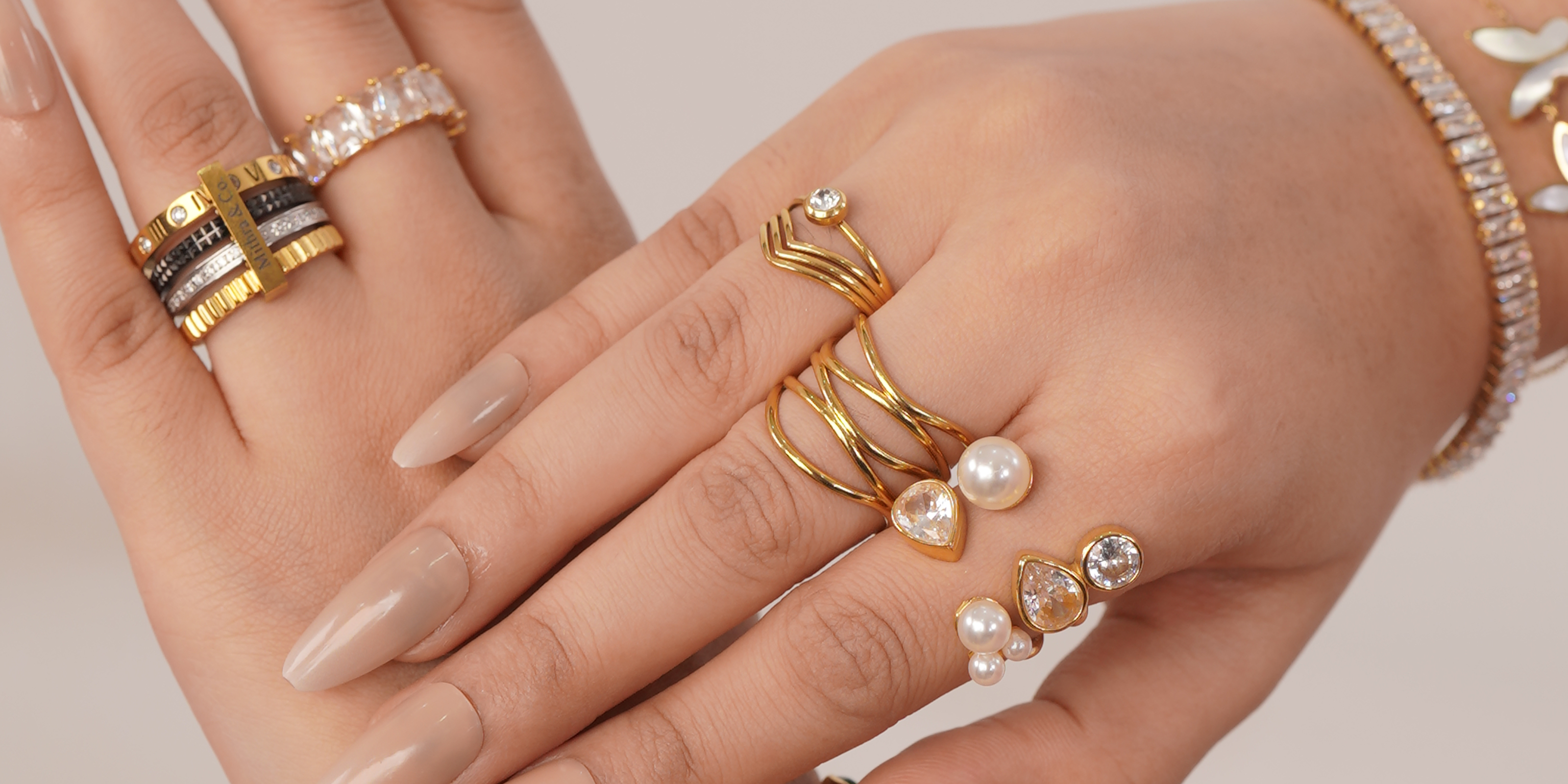
The highest-risk piece for sanitiser damage — for an obvious reason. When you apply hand sanitiser, it goes directly on and around whatever ring you are wearing. The inner band sits in direct contact with the wet alcohol. The stone setting (if there is one) traps sanitiser in the setting's recesses. And because rings are the piece you are least likely to remove for quick sanitiser applications — unlike bracelets, which you might push up — the exposure is both the most frequent and the most concentrated.
For anyone who wears rings daily through a Pakistani work or university routine that involves regular sanitiser use: either remove the ring before applying, or ensure the base metal is stainless steel. There is no care habit that compensates for brass base metal under this level of repeated direct alcohol contact.
Bracelets and bangles
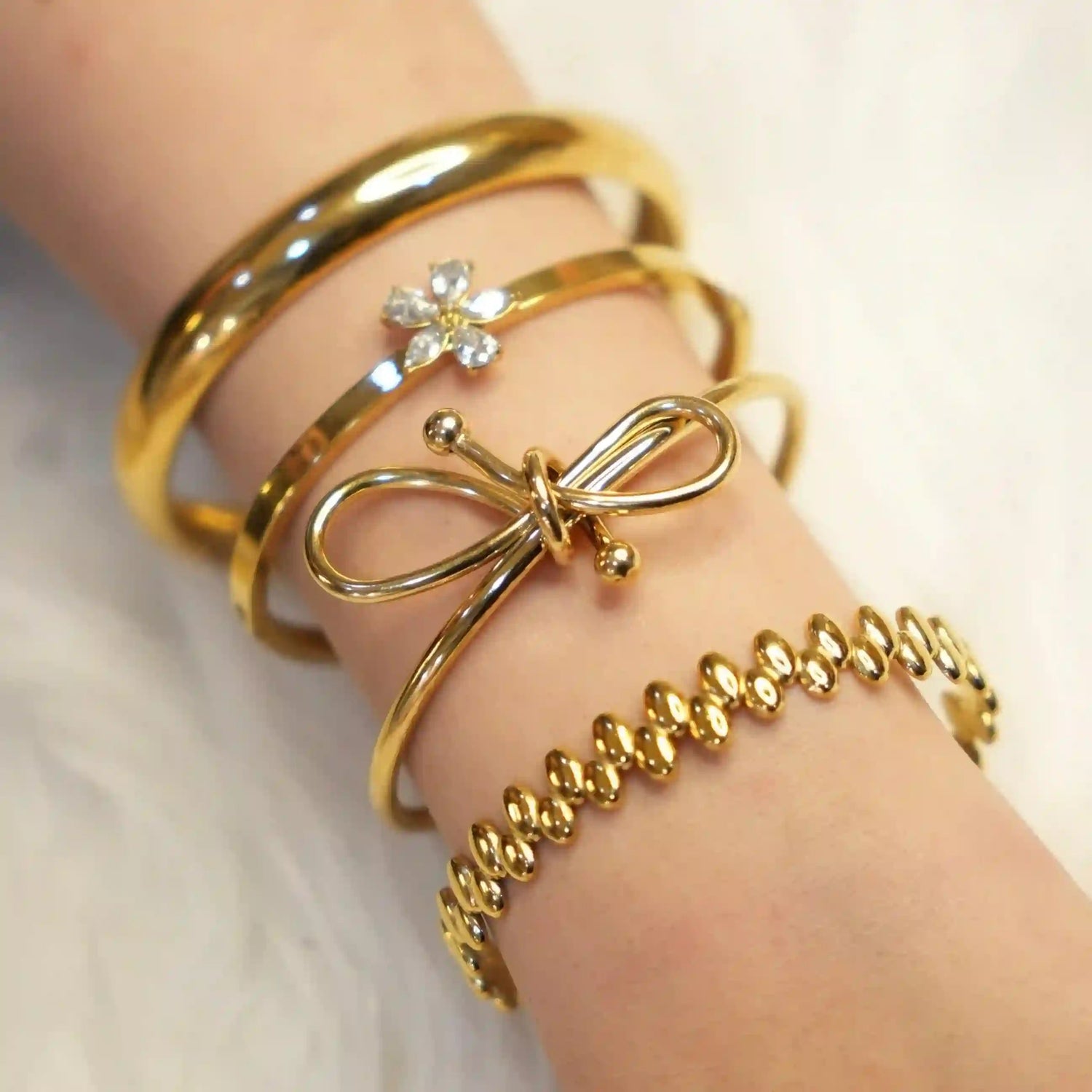
Wrists receive more sanitiser spray than any other jewelry-wearing area. The underside of a bracelet — where it contacts the inner wrist — traps alcohol against the skin at the pulse point, which is also a high-sweat and high-heat area. The compound effect of alcohol plus body heat plus sweat chemistry at the inner wrist is the most aggressive environment any bracelet experiences in daily Pakistani life.
Rings with stone settings
Stone settings collect and hold sanitiser in the setting's recesses. Alcohol sitting in a prong or bezel setting for even a few minutes at each application means the metal at the base of the setting — typically the thinnest and most vulnerable plated area — receives a concentrated dose that the rest of the ring does not. Over time, this is where stone settings on lower-quality pieces lose their finish first, and where prongs on budget pieces begin to look dull while the face of the ring still looks acceptable.
Chains and necklaces
Lower risk than rings and bracelets because hands rarely contact necklaces during sanitiser application. The risk increases for women who habitually touch their necklace — adjusting, lifting, playing with a pendant — while their hands are still wet from sanitiser. This is worth noting as a habit to break rather than manage.
The correct approach — by scenario
At a hospital, clinic, or pharmacy counter in Pakistan
These environments use sanitiser at every point of entry and every patient interaction. If you work in healthcare or visit frequently: remove rings and bracelets before entering sanitiser-heavy zones where possible, or switch to a single slim stainless steel band that you are comfortable exposing to regular alcohol contact. Do not wear stone-set or multi-piece jewelry in clinical environments where sanitiser is applied compulsively throughout the day.
At an office or institution
Office sanitiser stations typically dispense once at entry and periodically throughout the day. A stainless steel PVD piece handles this level of exposure without visible degradation within a normal quarterly wear cycle — provided you dry your hands before touching the jewelry and avoid direct spray contact where possible.
During Ramadan — masjid entry and prayers
Many masajid in Pakistan maintain sanitiser at entry points, particularly those that maintained the practice from the 2020 period. Combined with wuzu (which involves direct water contact with rings and bracelets), Ramadan represents a concentrated care challenge for jewelry. A plain slim band in stainless steel is the practical choice — it handles both the sanitiser contact and the repeated water exposure of five daily wuzu cycles without degrading.
What to do immediately after sanitiser contacts your jewelry
The damage from a single sanitiser application is not significant. The damage from 20–30 applications per day for months is cumulative. The most effective intervention is a simple one: dry your hands completely with a tissue or cloth before touching your rings or bracelets after sanitiser application. Not a 30-second wait — a physical drying step that removes the wet alcohol from the skin surface before the skin contacts the jewelry.
If sanitiser has already sprayed directly onto a ring or bracelet: rinse with plain water within a few minutes and pat completely dry. The water rinse removes the alcohol residue from the surface and the setting recesses before it can continue working on the plating. This is not foolproof — some penetration will have occurred — but it removes the continued-contact damage that happens when alcohol sits on a surface and slowly evaporates through repeated heat cycles during the day.
A weekly dry microfibre cloth wipe removes accumulated residue from setting recesses and inner band surfaces. This is the same habit recommended for perfume and sweat exposure — it is more important, not less, for pieces worn through sanitiser-heavy Pakistani environments.
How this compares to perfume and sweat — the full exposure picture
A Pakistani woman wearing gold plated rings in daily life is exposing them to three distinct chemical attack vectors simultaneously: sweat (sodium chloride, lactic acid, ammonia), perfume (15–40% ethanol, fragrance compounds), and hand sanitiser (60–80% ethanol). Each one damages plated surfaces through the same alcohol-penetration and oxidation mechanism — but at different concentrations and contact frequencies.
Sanitiser is the most concentrated alcohol source of the three, applied most directly to the highest-risk jewelry (rings and bracelets), at the highest daily frequency. It is the exposure that causes the most acute degradation on reactive base metals and the most measurable surface wear even on stainless steel over time.
The full exposure picture — perfume, sweat, and water — is covered separately: what perfume does to gold plated jewelry in Pakistan and what sweat does to each base metal.
Frequently asked questions
Q1. Does hand sanitiser ruin gold plated jewelry?
A: It accelerates degradation — the speed and severity depend on the base metal. On brass or zinc alloy, regular direct sanitiser contact causes visible tarnishing and skin reactions within weeks. On stainless steel with PVD coating, the surface coating experiences accelerated wear at contact points over months, but the base metal does not corrode. The ring does not ruin immediately. The cumulative daily exposure does meaningful damage over time, and the damage compounds with sweat and heat from Pakistan's climate.
Q2. Should I take my rings off before using hand sanitiser in Pakistan?
A: For brass-base rings: yes, every time. The direct alcohol contact is too aggressive for repeated daily exposure on a reactive base metal. For stainless steel rings: ideally yes, but if that's not practical — dry your hands with a cloth or tissue before the ring contacts the still-wet skin. The physical drying step removes most of the residual alcohol before it contacts the metal surface.
Q3. Why does my ring look dull after using hand sanitiser a lot?
A: The alcohol in sanitiser removes the thin surface oils that give plated jewelry its shine, and at higher concentrations it begins to degrade the plating layer itself at the most exposed points — the inner band, the setting recesses, the clasp area. The dullness is the early stage of coating breakdown. On a brass base, this dullness is followed by colour change and eventual skin reaction. On stainless steel, it is surface coating wear that progresses slowly and can be slowed significantly by reducing direct alcohol contact.
Q4. Is there a ring type that survives Pakistan's sanitiser-heavy daily routine?
A: A slim plain band in 18K PVD over 316L stainless steel is the most practical choice. No stone setting to trap alcohol. No reactive base metal to oxidise. The PVD coating handles repeated alcohol contact better than standard electroplating. A single slim band worn through a Pakistani professional routine — office sanitiser stations, hospital visits, Ramadan masjid use — will show surface wear at the inner band after several months of daily use, but will not leave skin marks, will not turn green, and will not degrade visibly at a rate that makes it look like a problem within a single season.
Q5. Can I use hand sanitiser if I'm wearing a stone-set ring in Pakistan?
A: You can, but it is the highest-damage scenario. The setting recesses collect and hold alcohol against the most vulnerable parts of the ring — the base of the prongs, the setting channel, the underside of the stone. Dry your hands before touching the ring after sanitiser, and do a weekly wipe of the setting recesses with a dry microfibre cloth to clear accumulated residue. For very frequent sanitiser use, remove the stone-set ring and replace it with a plain band for the duration.
Q6. Does alcohol-based sanitiser damage all jewelry or just gold plated?
A: All plated jewelry is affected — silver plated, rose gold plated, and two-tone pieces share the same vulnerability because the mechanism is about alcohol penetrating the coating and reaching the base metal. Solid gold (18K or above) and solid sterling silver are more resistant — the surface is not a coating over a reactive base but the actual material throughout. However, even solid silver tarnishes faster under repeated alcohol contact because the copper content (7.5% in sterling) still reacts. The impact is greatest on budget gold plated pieces with brass or zinc alloy bases, where the base metal is maximally reactive and the coating is thinner.
Sanitiser is not the enemy — the wrong base metal is
The same conclusion that applies to sweat applies to hand sanitiser: the damage is not caused by the sanitiser itself. It is caused by the base metal reacting to what the sanitiser contains. Ethanol at 70% concentration does nothing to chromium oxide on a stainless steel surface. The same concentration drives copper oxidation on a brass base within weeks under Pakistani daily-use conditions.
If you use hand sanitiser regularly — at work, at the masjid, at hospital visits, in daily Pakistani public life — the base metal question is not optional. It is the decision that determines whether your ring looks the same in October as it did in April, or whether it becomes a skin mark by August.


Leave a comment
This site is protected by hCaptcha and the hCaptcha Privacy Policy and Terms of Service apply.