

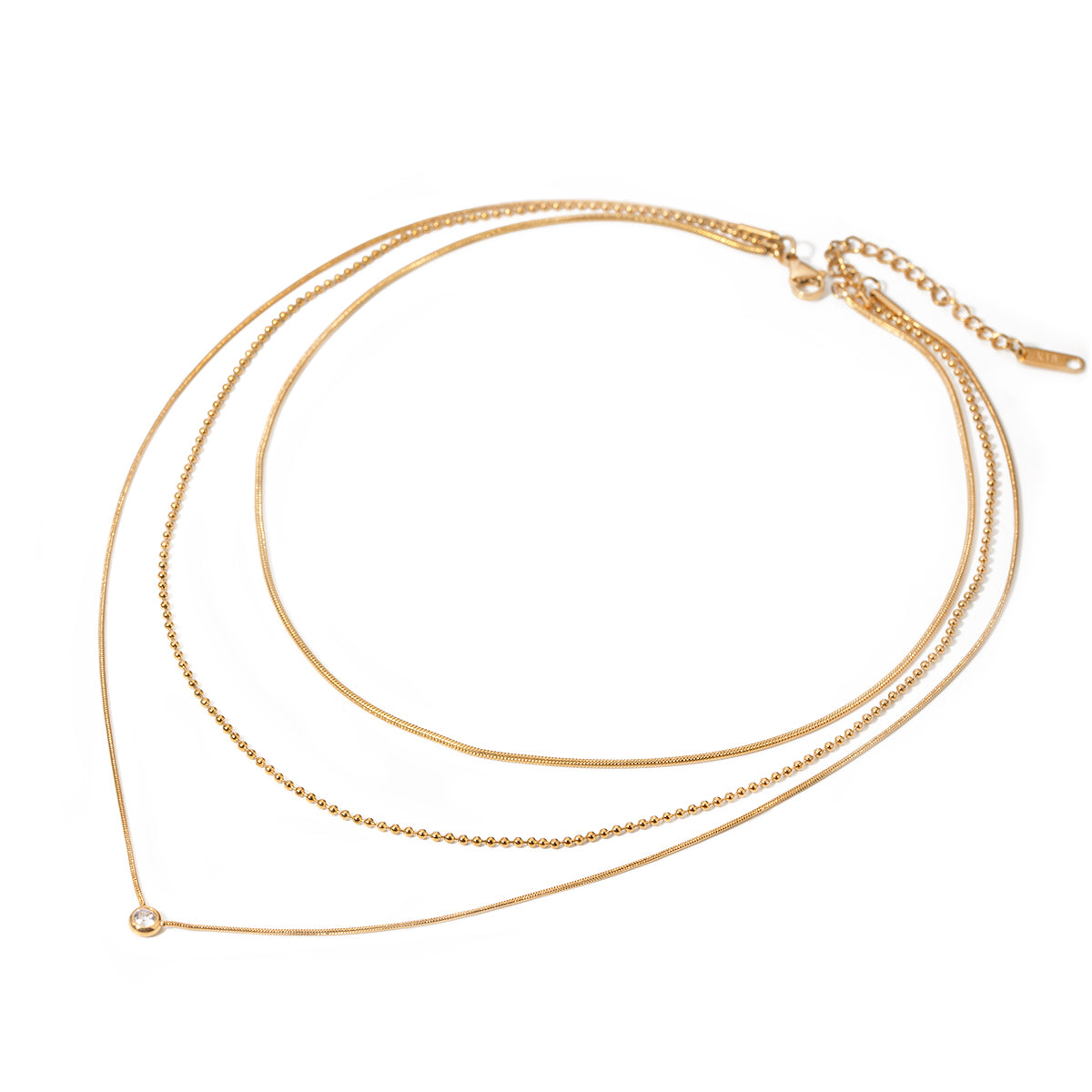
Three chains. Three lengths. One look that makes everything else in your wardrobe feel more intentional.
The Foundational Rule: Length Separation Is Everything
The entire principle of layered necklaces is visible separation — each layer should sit at a clearly distinct level on your chest. If two chains are the same or similar length, they'll overlap and tangle. The general rule is a minimum 2-inch gap between each layer.
- 14" — Choker Sits at the base of the neck. First layer — creates the anchor point. Works with crew necks and off-shoulder styles.
- 16" — Collar / Princess Falls at the collarbone. The most versatile and most purchased length. Ideal as Layer 1 if skipping the choker.
- 18" — Princess / Mid-chest Falls 1–2 inches below the collarbone. Classic second layer. Works with almost every neckline.
- 20" — Matinee / Low-chest Falls mid-chest. Best third layer. Adds visual depth without competing with shorter pieces.
- 24"+ — Opera / Statement Long pendant or lariat territory. Works as a solo statement or dramatic third layer — not always layerable depending on outfit.
Three Starter Combinations — Tested for Pakistani Wardrobes
Rather than describing abstract principles, here are four concrete layer combinations that work — styled for the outfits Pakistani women actually wear.
- Everyday / Casual L1: 16" thin gold rolo chain (no pendant) · L2: 18" delicate paperclip chain · L3: 20" chain with a simple pendant (bar, coin, or teardrop)
- Office / Formal L1: 16" snake chain or box chain · L2: 18" cable chain with a small pendant · Two layers only — cleaner for professional settings.
- Evening / Events L1: 14" choker (chain or delicate collar) · L2: 18" pendant necklace — larger charm · L3: 22–24" long chain or lariat for drama
- Kurta / Ethnic L1: 16" plain gold chain — sits above the neckline · L2: 18" chain with a small clover or geometric pendant · Keep it minimal — let the kurta be the statement.
Which Chain Styles Layer Well Together
Not every chain pairs with every other chain. The key is to vary the texture or weight across layers — two identical chain types look accidental, not intentional.
The visual weight rule: place your heaviest, thickest chain closest to your neck (Layer 1) and graduate to thinner, lighter chains below. This creates a visual taper that looks considered. Reversing this — thin on top, thick on bottom — looks unbalanced.
Pairings that work: rope chain + cable chain, box chain + rolo chain, figaro + paperclip. Pairings to avoid: two rope chains of different lengths (too similar in texture), or Cuban link + thin snake chain (too different in visual weight, no gradient).
How to Keep Layered Necklaces from Tangling
-
Use a clasp spacer or layering clasp. These small connectors attach to the clasp of each necklace and hold them at different positions — they physically prevent tangling because the chains can't move independently. Available online in Pakistan for Rs 200–500.
-
Vary the chain weight. Heavy chains naturally stay in place; it's lightweight chains that migrate and tangle. If your top layer is the lightest chain, it will wander. Reversing the weight order prevents this.
- Store layered correctly. After wearing, separate the chains before storing. Don't drop them into a drawer together — even overnight storage tangled causes kinking. Hang individually on a jewelry tree or store each in its own pouch.
- Put necklaces on one at a time, from shortest to longest. Fasten each one before reaching for the next. Trying to put on all three at once is the primary cause of immediate tangling.
Dos and Don'ts of Layered Necklaces for Pakistani Women
- Do Maintain at least 2" between each layer · Mix chain textures · Keep all layers the same metal tone · Use a layering clasp for daily wear · Pair with lower necklines · Let one layer have a pendant, the others plain.
- Don't Layer necklaces with a high-neck or polo collar · Mix gold and silver in the same stack · Put pendants on more than one layer · Use three chains of the same length · Layer statement necklaces · Store all chains loose together.
Gold Plated Layered Necklaces and Pakistan's Climate
Wearing multiple necklaces increases the surface area of plated metal in contact with your skin and exposed to air. In Pakistan's heat, this means sweat reaches more of the jewelry surface. For this reason, base metal quality matters even more when you're layering.
A stainless steel base with PVD plating is significantly more resistant to sweat oxidation than a brass-base chain. If you're building a layered look for daily use in summer — particularly in Karachi — every chain in the stack should ideally be stainless steel based. Mixing a quality piece with a low-quality chain means the weakest piece will tarnish first and make the entire look feel worn-out.
Remove all layers together before exercise, swimming, and sleeping. Even quality chains left tangled against each other during sleep experience micro-friction wear at the contact points.
Frequently Asked Questions
-
Q1. Pre-made set or build your own?A: Pre-made sets are a good starting point — lengths are pre-calibrated and chains are usually coordinated in weight. The downside is they look obviously "matched" and give less flexibility. Building your own lets you mix chain styles and add or remove layers depending on the occasion.
-
Q2. How many layers max?A: Three is the practical maximum. Four layers requires extremely specific length graduation and very fine chains — it tends to look cluttered. For everyday and professional settings, two layers is more appropriate than three.
-
Q3. Best neckline for Pakistani outfits?A: V-necks (on both Western and kurta styles), boat necks, and round crew necks all work well. High necks, mandarin collars, and heavily embellished necklines compete with layered chains. A plain or lightly embroidered kurta with a round neck is one of the best base outfits.
-
Q4. Mixing brands — does it affect the look?A: It depends on the gold tone. Even within 18K gold plating, the specific tone can vary between manufacturers — some are warmer, some cooler. Buy chains from the same brand when possible. If mixing brands, place them side by side in natural light before wearing to check compatibility.
-
Q5. How to layer with a dupatta?A: A dupatta tends to lift and disturb layered necklaces. Options: pin the dupatta away from the neckline, wear a shorter dupatta draped across one shoulder, or keep your stack to two layers worn close to the neck (14–16") so the dupatta drapes over the longer chain rather than tangling with the whole stack.
Wear It, Don't Just Own It
A layered necklace look is the kind of thing that goes from "I could never pull that off" to "I wear this every day" once you understand the length rules. Two or three chains, separated by at least two inches, graduated in weight — that's the whole framework.
Start with a 16" and an 18" chain of different textures. That's your foundation. Everything else builds from there.
Shop Necklaces at Mithra & Co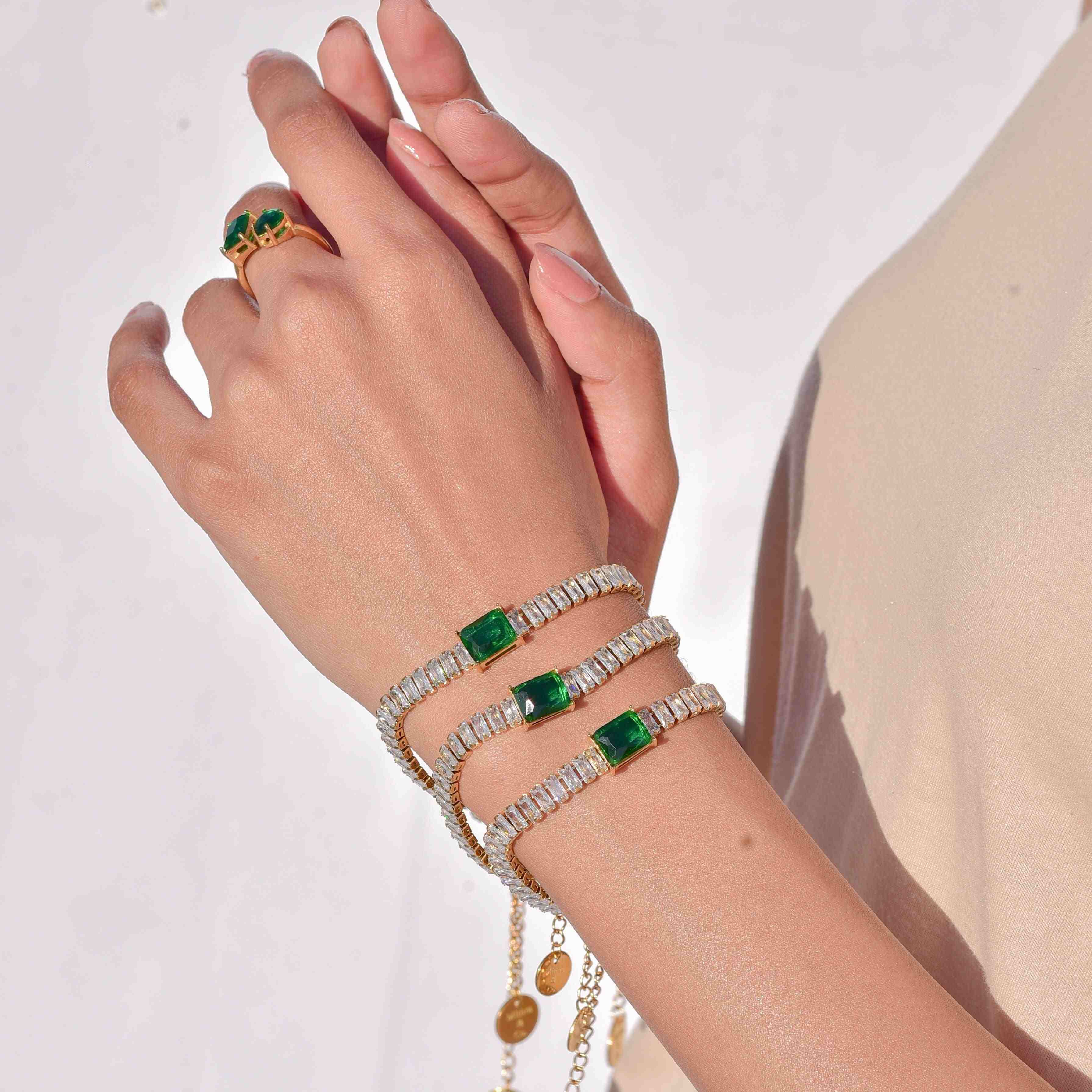

Leave a comment
This site is protected by hCaptcha and the hCaptcha Privacy Policy and Terms of Service apply.