

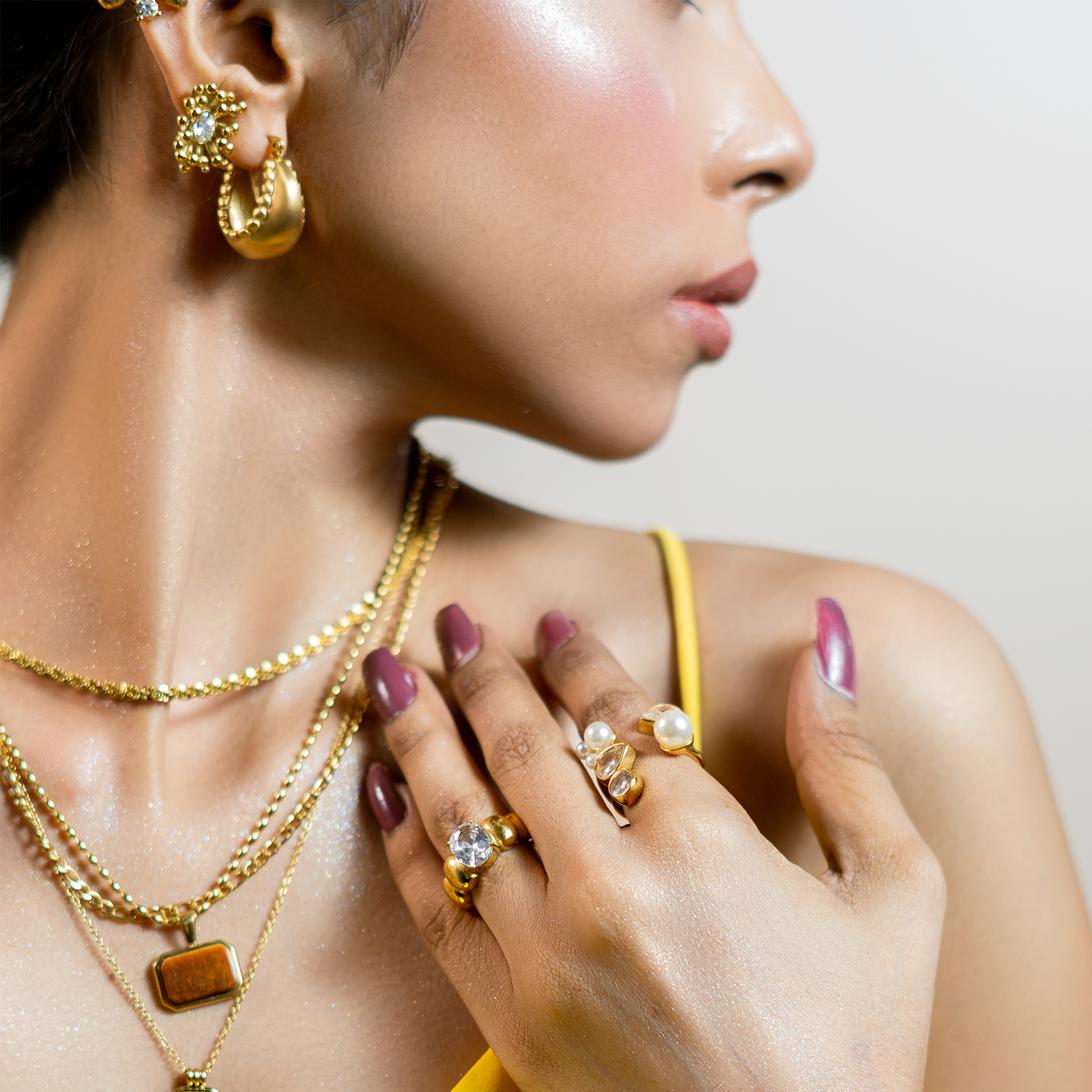
The shaadi guest guide covers what to wear to a wedding function in June. This is a different problem. This is the other 29 days of June — the ones where you are going to work, running errands, sitting in traffic, making groceries in 41-degree heat with 80 percent humidity. The jewelry you reach for on those days is not the shaadi set. It is the chain that has been on your neck for three weeks without coming off, the ring that survived the last load of dishes, the bracelet you forgot you were wearing. That jewelry has requirements. Most of it is failing them.
What Pakistani summer actually does to jewelry
Pakistani summer is not one condition — it is a continuous combination of conditions that runs from May through September and concentrates in June and July. Karachi's coastal humidity runs at 70 to 90 percent continuously through this period. Lahore's temperature peaks at 45°C or above with monsoon humidity hitting 80 percent or higher. Islamabad and Rawalpindi combine heat with afternoon monsoon storms. Every city produces the same outcome for reactive base metal jewelry: accelerated coating breakdown, green marks, skin reactions, and pieces that look older in three months than they should after three years.
The specific combination that damages jewelry in Pakistani summer is not heat alone, and not humidity alone — it is sweat in contact with a reactive base metal, accumulated continuously over weeks of daily wear. Sweat contains sodium chloride and urea. Both are chemically reactive to brass and zinc alloy. The reaction produces copper salts that deposit on the skin and accelerates the oxidation that strips coating from the surface.
Daily summer wear — the base metal verdict
Brass contains copper. Copper reacts with sweat continuously in Pakistani summer conditions. Green marks at the wrist, neck, and finger contact points appear within weeks of continuous summer wear. The coating may look intact on the outside while the copper oxidation reaction is already happening underneath at micro-gap points. No care routine fully compensates for a reactive base metal in Karachi or Lahore summer.
Zinc alloy releases nickel ions under sweat exposure in addition to the copper reaction. This means skin reactions — redness, itching, raised skin at contact points — in addition to the green mark problem. Zinc alloy base jewelry is the most commonly sold in Pakistani markets at lower price points and the most problematic for continuous summer wear.
316L stainless steel does not contain copper and does not release reactive nickel ions under normal wear conditions. The passive oxide layer on the surface reforms when disrupted. Sweat accumulation on a stainless steel base piece does not initiate the copper oxidation cascade. No green marks. No skin reactions from the base metal. The PVD coating still requires care to maintain its lifespan, but the base metal is not actively working against you in Pakistani summer.
PVD coating at 3 to 5 microns is denser and lower-porosity than standard electroplating. This means sweat reaches the base metal surface more slowly, buying more time before any surface-level chemical contact. On a stainless steel base, this matters less because the base metal is inert. On a brass base, denser coating only delays the inevitable — it does not prevent it.
Pakistani summer jewelry — what to wear and what to leave off
- Wear daily through summer18K PVD over stainless steel — rings, chains, bracelets, and earrings on a stainless steel base handle continuous summer wear without the reactions that brass produces. These are the pieces that can stay on through wuzu, through outdoor heat, through gym, through the kitchen, through everything June through September produces.
- Wear with managementSterling silver pieces — silver tarnishes under humidity but does not produce green marks or skin reactions the way brass does. Remove before sleeping and before prolonged sweat exposure. Wipe after outdoor wear. Silver is manageable in Pakistani summer with consistent care; brass is not. If the occasion is a wedding function rather than daily wear, the guide to jewelry for Pakistani wedding guests covers the function-by-function decision — mehndi, baraat, and walima — separately.
- Leave off through summerBrass base pieces at any price point. The coating lifespan shortens dramatically in Pakistani summer conditions and the skin reactions that follow are not worth the aesthetic result. If the piece cannot be identified as stainless steel or silver base, it should not be the summer daily wear choice.
Summer-specific care habits — Pakistan
The care habits that matter most in Pakistani summer are different from the general care guide because the exposure conditions are more intense:
A dry microfibre cloth wipe after any day involving outdoor time, commuting, or physical activity removes the sweat accumulation before it sits overnight. This one habit extends PVD lifespan more than any other single action in summer conditions.
Apply sunscreen to the neck, chest, and wrists before putting jewelry on. Let it absorb completely. Sunscreen sitting between skin and jewelry for eight hours of outdoor summer exposure is the fastest coating degradation scenario for any plated piece.
Alcohol in perfume accelerates surface breakdown. In summer when pieces are worn continuously and the heat opens the surface pores of any coating, direct perfume contact is more damaging than in winter. Apply perfume first, let it dry, then put jewelry on.
Pakistani summer storage means the room temperature in a non-air-conditioned space reaches 35°C or above. Heat combined with humidity accelerates surface change even for stored pieces. Store in air-conditioned rooms or in airtight bags with silica gel in non-air-conditioned storage.
For the full summer event jewelry guide — what to wear to shaadi functions specifically in Pakistan's summer heat — the summer shaadi jewelry guide covers the event-specific protocol in full detail.
Frequently asked questions
Q1. What jewelry can I wear in Pakistan's summer heat without it turning green?
A: 18K PVD coating over 316L stainless steel is the only fashion jewelry material combination that handles Pakistani summer conditions — continuous heat, high humidity, and daily sweat accumulation — without producing green marks. The green mark reaction is copper oxidation from brass or zinc alloy base metals reacting with sweat. Stainless steel contains no copper and does not produce this reaction. The base metal is the only variable that matters for the green mark question — coating thickness and plating quality affect longevity but cannot prevent a reactive base metal from reacting to sweat.
Q2. Can I wear gold plated jewelry in Karachi summer without it fading fast?
A: 18K PVD over stainless steel handles Karachi's summer humidity conditions significantly better than standard electroplated brass. PVD coating's lower porosity means sweat reaches the base metal surface more slowly, and the stainless steel base does not react when it does. Standard electroplated brass in Karachi summer fades within weeks of daily wear because the coating is thinner, more porous, and sitting on a reactive base that accelerates the degradation. The base metal matters more than the karat or coating method for summer durability.
Q3. Should I remove my jewelry in Pakistani summer when sweating?
A: On stainless steel base pieces — no, you do not need to remove them. The base metal is inert and handles sweat contact correctly. Wipe the pieces with a dry microfibre cloth in the evening to remove accumulated sweat residue before storing. On brass or zinc alloy base pieces — yes, removing during high sweat periods extends the coating lifespan, but it does not prevent the eventual base metal reaction once coating wear begins.
Q4. What is the best bracelet to wear in Pakistani summer?
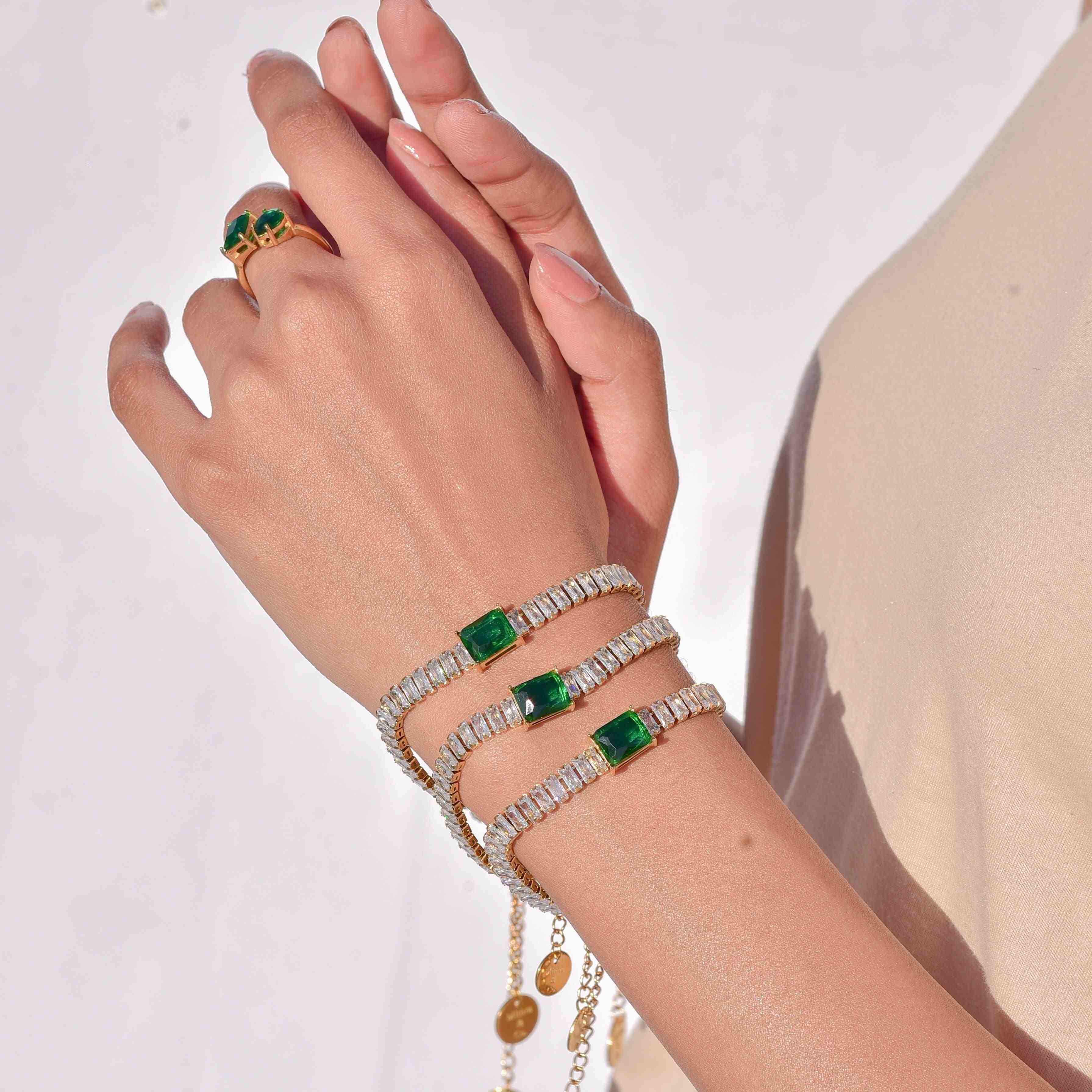
A: A slim chain bracelet or a slim cuff in 18K PVD over stainless steel. Slim designs accumulate less sweat underneath than wider pieces, reducing the continuous chemical contact at the inner wrist. Tennis bracelets with stone settings trap more product in the settings — they require more active care in summer but are manageable on a stainless steel base. Avoid wide cuffs in brass or zinc alloy — the continuous inner surface contact in summer heat accelerates the green mark reaction faster than any other bracelet type. Browse summer-appropriate bracelets at mithraofficial.com.
Q5. How do I store jewelry properly in Pakistani summer to prevent tarnishing?
A: Store in a cool, dry location away from bathroom humidity — ideally in an air-conditioned room. Clean each piece before storing to remove sweat residue that accelerates tarnishing in the enclosed storage environment. Use individual fabric pouches for daily storage and airtight bags with silica gel packets for any piece not being worn for more than two weeks. The silica gel absorbs the humidity that drives tarnishing chemistry in Pakistani summer storage conditions — replace it every four to six weeks in Karachi and during monsoon months in Lahore.
The jewelry that survives summer is the jewelry still correct in September
Not the piece that looks right on June 1st. The piece that still looks identical at the end of August after ten weeks of continuous wear in Pakistani heat, humidity, sweat, and sun. That is the piece worth buying for summer. Everything else either gets retired mid-season or becomes the thing you wish you had not worn.
18K PVD over stainless steel is the only material combination that handles a full Pakistani summer without green marks, skin reactions, or visible surface degradation. Shop the full collection at mithraofficial.com — pieces built for the heat, humidity, and continuous wear that June through September requires. COD nationwide, free delivery on orders above Rs. 5,000.

Leave a comment
This site is protected by hCaptcha and the hCaptcha Privacy Policy and Terms of Service apply.