

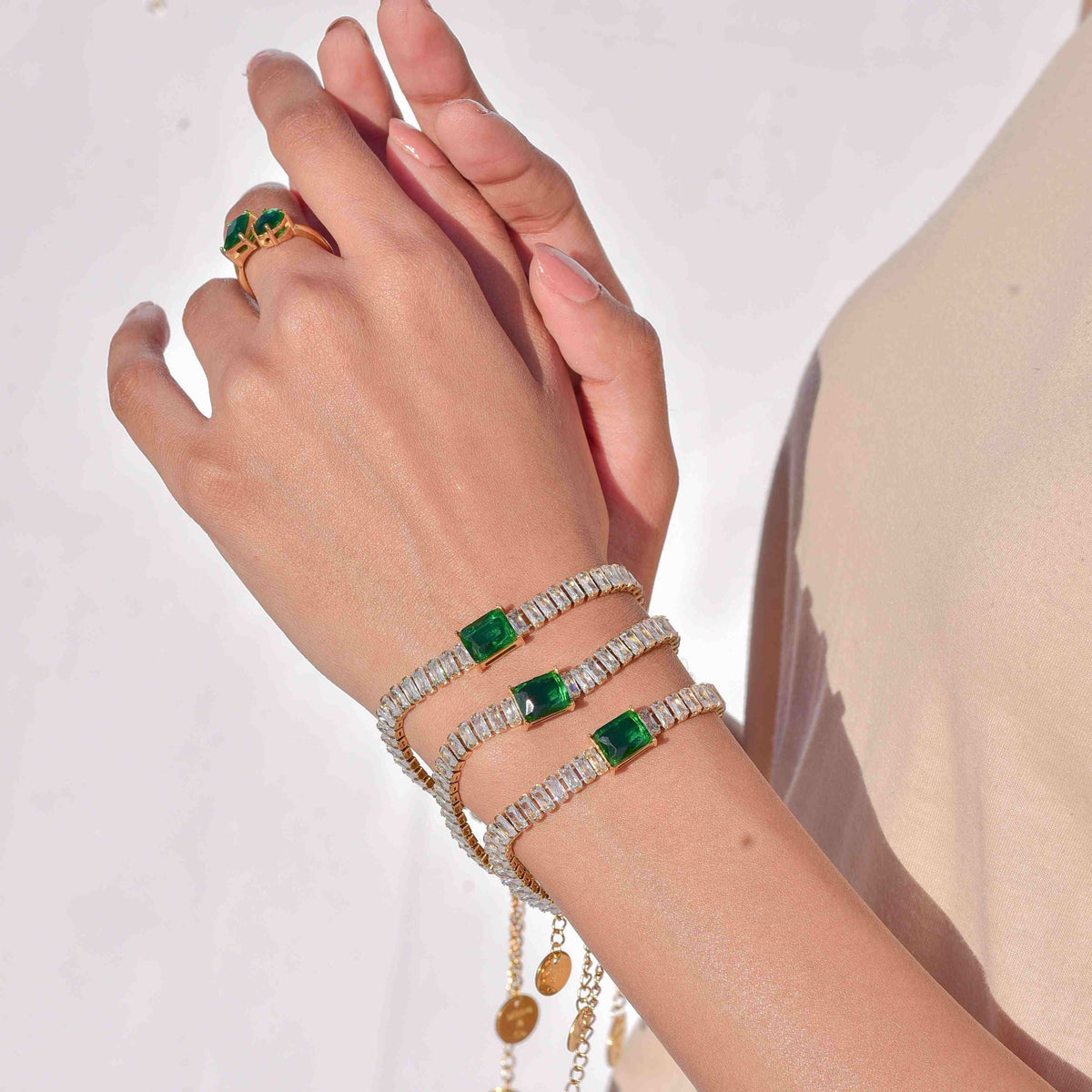
You've seen it on every wrist that looks effortlessly put together — a clean, interlocked chain sitting low, catching the light. That's a chain link bracelet. And in Pakistan's heat, humidity, and daily hustle, many low-quality bracelets struggle to hold up over time.
What is a chain link bracelet — and why the link style is what this guide covers
A chain link bracelet is defined by its construction: individual metal links, pressed or cast, connected in a repeating pattern. The base metal and coating method decide how long it lasts — that's covered in full in the bracelets buying guide, including the lifespan table by bracelet type. What that pillar doesn't cover is the actual link shape — Cuban, Figaro, Rolo, box — and that's the part that decides how a chain link bracelet drapes, what it pairs with, and which shape suits your wrist. That's what this guide is for.
Chain link styles — which shape is right for you
The style of the link affects how the bracelet drapes, how much it catches light, and what outfits it complements. The four most common chain link styles in Pakistan's market:
Cuban Link
Flat, interlocking oval links. Bold and structured. Works with casual and statement looks. The most durable link style — lower flex reduces stress on individual links.
Figaro Link
Alternating small and large links. Slightly more delicate. Very popular for stacking. Traditional pattern with a modern feel in gold plating.
Rolo / Belcher
Round, symmetrical links of equal size. Clean and minimal. Sits comfortably on the wrist. Pairs well with most outfits — best for minimalist aesthetics.
Box Chain
Square links connected at right angles. Very sleek and modern. Less flexible than others. Often looks more refined than expected — a strong everyday choice.
How to wear a chain link bracelet every day in Pakistan
The chain link bracelet works because it's structurally neutral — it doesn't demand attention, it supports what you're already wearing. Wearing it well still requires a few intentional choices.
Fit. A chain link bracelet should sit with about one finger of space between the bracelet and your wrist. Too tight and the clasp wears faster — too loose and the links rub against each other constantly. If you haven't measured your wrist before ordering online, the bracelet size guide covers exactly how.
Stacking. Chain link bracelets stack well with other chain styles but may clash with heavily textured bangles. A reliable stack: one chain link bracelet, one dainty chain bracelet, and a simple cuff. Keeping stacks to three or fewer reduces tangling risk.
Outfit pairings. With a kurta shalwar: a single rolo or box chain on a bare wrist. With western casualwear: stack a Cuban link with a thin chain. With formal wear: a single Figaro link in a wider width — minimal stacking keeps the focus clean.
Why the base metal matters more than the link style for daily Pakistani wear
Two chain link bracelets can look identical and perform completely differently under Pakistani summer heat, sweat, and humidity — the difference is entirely the base metal underneath the plating, not the link shape. A stainless steel base with PVD plating holds up under daily contact at the clasp and inner wrist; a brass base under standard electroplating shows wear and can cause skin reactions within weeks. The full mechanics of why — the chemistry of sweat on copper-based alloys, and the difference between PVD and standard electroplating — are covered in the green mark guide and the gold plating types guide.
The link style decides what the bracelet looks like. The base metal decides whether it's still worth wearing in six months. Most buyers spend all their attention on the first and none on the second.
How to choose the right chain link bracelet online
Link style first. Pick the shape that matches how you actually dress day to day — Cuban and box for structured looks, Rolo and Figaro for softer, stackable ones.
Base metal and plating second. Look for "18K PVD gold plated over stainless steel" stated explicitly on the product page. If the base metal isn't mentioned anywhere, that omission is itself information.
Clasp style. A lobster clasp or box clasp is more secure than a spring ring clasp, especially for daily wrist movement.
Weight. Very lightweight bracelets often use thinner gauge links, which dent more easily over time.
Frequently asked questions
Q1. Will a gold plated chain link bracelet turn my wrist green in Pakistan's summer?
A: Green skin marks come from copper in the base metal reacting with sweat — specifically from brass or zinc alloy bases, not from the link style. A stainless steel base bracelet does not contain copper and will not cause this reaction under normal conditions. The full chemistry is covered here if you want the complete explanation.
Q2. Can I wear a chain link bracelet to the gym or in Karachi's heat?
A: For stainless steel PVD-plated pieces, light daily activity including commuting in Karachi's summer is generally fine. For heavy gym sessions or swimming, removal is recommended to preserve the coating lifespan regardless of link style.
Q3. Which chain link style is best for stacking with other bracelets?
A: Figaro and Rolo links are the most stack-friendly — their profile sits flat and doesn't compete visually with a second or third piece. Cuban link is bolder and usually works best worn alone or with one thin complementary chain rather than in a full stack.
Q4. What is the difference between 18K gold plated and 18K PVD gold plated?
A: "18K gold plated" describes the colour and purity of the coating — it says nothing about how it was applied. PVD is the application method, and it produces a harder, more adhesive layer than standard electroplating. The gold plating types guide breaks down every method side by side.
Q5. How long does a chain link bracelet actually last in Pakistan?
A: It depends on the base metal and coating, not the link style — 18K PVD over stainless steel is the combination built for daily Pakistani wear. The bracelets buying guide has the full lifespan breakdown by bracelet type.
The link style is the look. The base metal is whether it lasts.
Cuban, Figaro, Rolo, or box — pick the shape that matches how you dress. Then make sure the base metal and plating method are actually stated on the product page, because that's the part that decides whether this bracelet is still on your wrist in a year.
Browse chain link bracelets at Mithra & Co

Leave a comment
This site is protected by hCaptcha and the hCaptcha Privacy Policy and Terms of Service apply.