

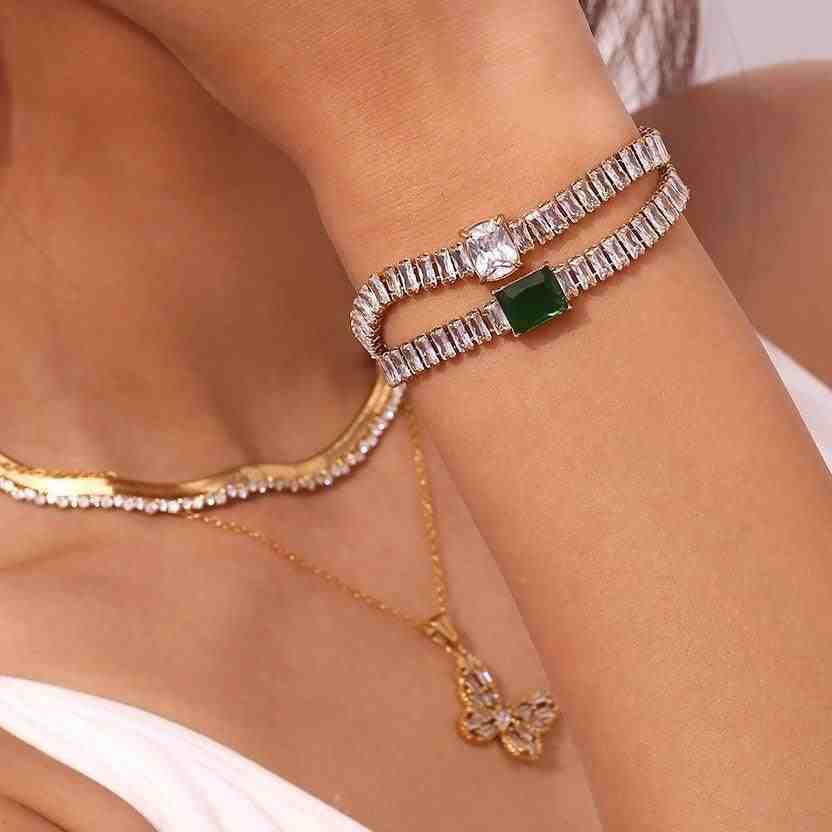
The green mark is not a skin problem — it is a metal problem
The green mark left by a ring or bracelet is one of the most common jewelry complaints in Pakistan and one of the most misunderstood. Most people assume it is an allergic reaction, a sensitivity, or something specific to their skin chemistry. In almost every case, it is none of those things. It is a predictable chemical reaction between a specific base metal and the natural chemistry of human sweat — and it happens to everyone who wears that metal long enough, regardless of skin type.
Understanding why it happens makes it entirely preventable. The fix is not a different skin care routine. It is a different base metal.
What is actually causing the green mark
The green discolouration comes from copper oxidation. When copper — or a copper-containing alloy like brass — comes into contact with sweat, a chemical reaction produces copper salts. Copper chloride and copper carbonate are the most common. Both are green. Both transfer onto skin at the contact point.
Most affordable jewelry in Pakistan uses brass as its base metal — an alloy of copper and zinc. Brass is inexpensive, easy to shape, and holds plating reasonably well when new. The problem is what happens once the surface plating wears through at the contact points — the inner band of a ring, the underside of a bracelet, the back of an earring post. At those points, the brass base is in direct contact with skin, and the copper in the brass reacts with sweat immediately.
Sweat contains sodium chloride — salt — along with urea and mild organic acids. All three accelerate the oxidation of copper. In Pakistan's climate, where heat and humidity increase both sweat volume and sweat concentration, this reaction happens faster and more visibly than in cooler, drier environments. A ring that produces no green mark in a mild climate can leave a clear mark within hours of wear in Karachi in July.
Why the plating does not protect you permanently
Gold plating sits on top of the base metal. When the plating is intact, it acts as a barrier between the copper alloy underneath and the skin. This is why a new piece of brass-based gold plated jewelry often produces no green marks initially — the gold layer is doing its job.
The problem is that plating wears. At contact points — the inner band of a ring, the underside of a bracelet, the clasp area of a necklace — friction is continuous and concentrated. Standard electroplating on brass is typically 0.5 to 1 micron thick. Under daily wear conditions, that layer begins wearing through at high-friction points within weeks to months. Once it breaks through, the copper underneath is exposed, and the green marks begin.
This is not a manufacturing defect. It is the predictable behaviour of a thin surface coating on a reactive base metal under real wear conditions. The plating did not fail — it was always going to reach this point. The question is how quickly, and what sits underneath when it does.
For a full comparison of plating types and how long each lasts under Pakistani daily wear conditions, the gold plating types guide covers every option side by side.
The base metals that cause green marks — and the one that does not
| Base Metal | Contains Copper? | Green Mark Risk | Skin Reaction Risk |
|---|---|---|---|
| Brass | Yes — 60 to 70% | High — begins when plating wears | High — nickel often present |
| Zinc alloy | Sometimes | Moderate to high | Moderate — composition varies |
| Copper | 100% | Very high — immediate on skin contact | High |
| Sterling silver | Yes — 7.5% | Low — tarnishes but rarely marks skin green | Low unless nickel present |
| Stainless steel | No | None — does not oxidise against skin | Very low — biologically inert |
Stainless steel does not contain copper. It does not oxidise under sweat conditions. It does not react with sodium chloride, urea, or the organic acids in perspiration at body temperature. This is why stainless steel based jewelry — regardless of what coating sits on top — does not produce green marks even when the surface coating wears at contact points. The base material underneath has nothing to react with skin chemistry.
This is the same reason stainless steel is used in surgical instruments, medical implants, and food preparation equipment — its biological inertness under repeated exposure to body chemistry is not a marketing claim, it is the material's fundamental property.
Why Pakistan's climate makes this worse
The green mark reaction requires three things: copper-containing metal, sweat, and time. Pakistan's climate provides ideal conditions for all three to intensify simultaneously.
Coastal cities like Karachi sit at 70 to 90 percent humidity for much of the year. Higher humidity means more moisture on skin surface at all times — even without active sweating. Interior cities like Lahore experience extreme summer heat that increases sweat volume significantly. Both conditions accelerate the copper oxidation reaction compared to cooler, drier environments where the same piece of jewelry might show no marks at all.
A brass-based ring that a buyer in a mild European climate wears for two years before seeing any green marks may produce visible marks within two to four weeks of daily wear in Karachi's summer. The jewelry is not lower quality — the environmental conditions are more demanding. The solution is the same in both cases: a base metal that does not react, rather than trying to manage the reaction after it begins.
How to tell if your jewelry will cause green marks before wearing it
There is no reliable at-home test for base metal composition in finished jewelry. However, there are signals worth checking before purchase:
- Check the product listing for base metal disclosure. Reputable brands specify whether the base is stainless steel, brass, zinc alloy, or another material. If the listing only says "gold plated" without specifying what it is plated on, the base is almost certainly brass or zinc alloy — the cheaper options that generate more margin.
- Look for nickel-free, lead-free, cadmium-free certification. Brands that specify these exclusions are more likely to be using stainless steel, since brass-based manufacturers rarely test or certify at this level.
- Check the price relative to the market. Genuinely stainless steel based jewelry carries a small cost premium over brass-based alternatives. Very low price points are almost always brass or zinc alloy. This is not universal but it is a reliable directional signal.
- Ask directly. A brand confident in its materials answers this question specifically. Vague answers about "high quality metals" or "premium plating" without naming the base material are a reliable signal that the base is not stainless steel.
What to do if your current jewelry is causing green marks
If a piece you already own is producing green marks, the marks themselves are harmless — copper salts are not toxic at the concentrations involved in jewelry contact. They wash off with soap and water. The discolouration is cosmetic, not medical.
However, the reaction will not stop. Once the plating has worn through at the contact point and the copper base is exposed, the green marks are a permanent feature of wearing that piece. No amount of cleaning, coating spray, or clear nail polish applied over the surface provides durable protection — these interventions slow the reaction temporarily but do not stop it, and most coating sprays introduce their own skin reaction risks.
The practical options are straightforward: wear the piece only for short durations where sweat exposure is minimal, accept the marks as part of wearing that piece, or retire it. The one thing that does not work is continuing daily wear and expecting the marks to stop.
For pieces you want to keep wearing, the jewelry care guide covers the habits that extend surface life before breakthrough occurs — removing jewelry before activities that generate heavy sweat, wiping pieces dry after wear, and storing separately. These extend the period before copper exposure but do not prevent it indefinitely on a brass base.
Why PVD coating on stainless steel is different from standard gold plating on brass
Most gold plated jewelry available in Pakistan uses electroplating — a process that deposits a thin gold layer onto the brass base through an electrical current. The layer is thin, the adhesion is surface-level, and the brass underneath is always one friction point away from exposure.
PVD coating — physical vapour deposition — bonds the gold finish to the stainless steel base at a molecular level inside a vacuum chamber at high temperature. The bond is structural rather than surface-level. The layer is three to five times thicker than standard electroplating. And the base underneath is stainless steel — which produces no green marks even when the surface eventually wears at high-friction contact points.
This combination — PVD coating over stainless steel — means the green mark problem does not apply at any point in the piece's life. Not when new, not after the surface wears, not after years of daily use in Pakistan's heat and humidity. The base material simply does not react. The full detail on how PVD coating performs under daily wear conditions covers what to expect across different jewelry types and wear patterns.
Questions about green marks from jewelry in Pakistan
Q1. Is the green mark from jewelry dangerous?
A: No. The green discolouration is copper salts — copper chloride and copper carbonate — produced by the reaction between copper-containing base metals and sweat. At the concentrations involved in jewelry contact, copper salts are not toxic. They wash off with soap and water. The marks are a cosmetic issue, not a medical one, though prolonged skin irritation from nickel in low-quality alloys can cause contact dermatitis in sensitive individuals — a separate issue from the green marks themselves.
Q2. Why does my ring leave a green mark but my friend's similar ring does not?
A: The most likely explanation is different base metals rather than different skin chemistry. Sweat composition does vary between individuals — higher salt concentration accelerates the reaction — but the primary variable is the base metal. A stainless steel ring produces no green marks regardless of the wearer's sweat chemistry. A brass ring produces green marks on essentially everyone given enough wear time and sweat exposure, regardless of skin type.
Q3. Does clear nail polish on the inside of a ring stop green marks?
A: Temporarily. Clear nail polish creates a barrier between the copper alloy and skin, which delays the reaction. The barrier wears through within days to weeks of regular wear at high-friction contact points, and the reaction resumes once it does. It is a short-term intervention, not a solution. The nail polish also introduces its own chemistry — plasticisers and solvents — against skin, which is not ideal for daily wear.
Q4. Can I wear gold plated jewelry in Pakistan's heat without green marks?
A: Yes, if the base metal is stainless steel. Heat and humidity accelerate the copper oxidation reaction that causes green marks, which is why Pakistan's climate makes the problem more visible and faster-developing than cooler environments. Stainless steel based jewelry is biologically inert — it does not react to sweat, heat, or humidity regardless of conditions. The base metal determines whether green marks occur, not the climate or the plating.
Q5. Where can I buy gold plated jewelry in Pakistan that does not cause green marks?
A: Look specifically for jewelry that discloses stainless steel as the base metal — not just "gold plated" or "high quality metal." Mithra delivers 18K PVD gold plated jewelry on a stainless steel base across Pakistan including Karachi, Lahore, Islamabad, and Rawalpindi, with cash on delivery available nationwide. Every product page specifies the base material. Browse the full collection here.

Leave a comment
This site is protected by hCaptcha and the hCaptcha Privacy Policy and Terms of Service apply.