

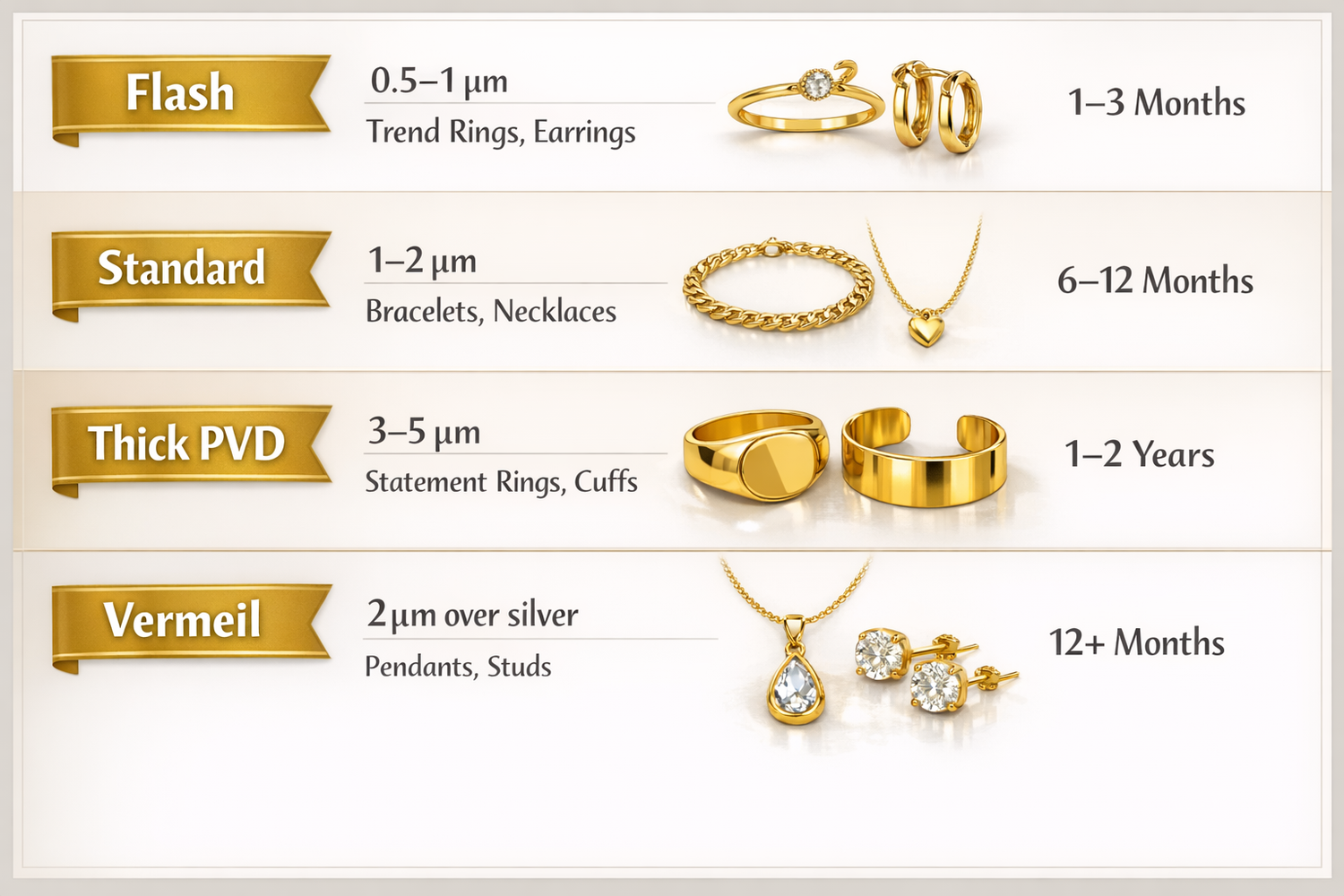
What gold plating actually means — and why the type matters
Gold plated jewelry is not a single category. The term covers four structurally different methods — standard electroplating, PVD coating, gold-filled, and gold vermeil — each with a different base metal, gold thickness, wear profile, and price point. Choosing between them is not about which looks best in a product photo. It is about which construction holds up under your actual wear conditions.
In Pakistan's climate — high humidity in Karachi, intense heat in Lahore and Islamabad, and daily sweat exposure year-round — this distinction is particularly important. A piece that lasts two years in a cool, dry climate may perform very differently under frequent wear in Pakistani summer. what to check before buying jewelry online helps you identify the construction details product listings should make clear — and for the full picture of how sweat, perfume, sanitiser, and water interact with different jewelry materials, see what damages gold plated jewelry in Pakistan.
The four gold plating types compared
18K PVD gold plated (stainless steel base)
PVD (physical vapour deposition) applies the gold finish inside a vacuum chamber where vaporised metal forms a bonded coating on the stainless steel surface. The coating is engineered to provide a harder, denser surface than many conventional electroplated finishes. The stainless steel base is corrosion-resistant and does not behave like brass or copper under sweat and moisture, reducing the risk of the green skin marks associated with exposed reactive base metals.
For daily wear in Pakistan, 18K PVD over stainless steel is a practical choice in the fashion jewelry category. It is designed to handle sweat, humidity, and regular friction better than many conventional plated options at a comparable price point. Pieces built this way are what why gold plated jewelry fades helps put into context under the same daily conditions. How this specific coating performs over time — realistic lifespan by piece, scratch resistance, and care requirements — is covered on its own in PVD coating durability and lifespan guide.
Gold filled (brass base)
Gold-filled jewelry has a mechanically bonded gold layer — typically a significant percentage of the total weight — applied to a brass core under heat and pressure. The gold layer is substantially thicker than typical electroplating, which is why gold-filled pieces can outlast standard plated jewelry by a wide margin. However, the brass base remains reactive. Over time — particularly under Pakistan's humidity and sweat conditions — the brass core can oxidise if the gold layer becomes thin at high-friction points.
Gold-filled is a reasonable middle-ground choice for moderate-use pieces such as pendants, earrings, and necklaces that see less friction than bracelets and rings. It may be less practical for daily-wear rings or bracelets in a warm climate where friction is high.
Gold vermeil (sterling silver base)
Vermeil is gold plated over sterling silver, with a minimum gold thickness of 2.5 microns by international standard. The sterling silver base gives it a more premium feel than brass-base plating, and the thicker gold layer means it can hold its colour longer than standard electroplating. The limitation is the base metal — sterling silver can tarnish when exposed to moisture, air, and sulphur compounds. Once the gold layer wears thin at contact points, the silver underneath can darken.
Vermeil is best suited to lower-friction pieces — earrings, pendants, and occasional-wear rings — where the gold layer stays intact longer. For daily wear in Pakistan's humidity, it requires more consistent care than PVD over stainless steel to maintain its appearance.
Standard gold plating (brass or copper base)
Standard electroplating deposits gold onto the surface using a chemical bath and electrical current. The resulting layer is relatively thin and sits on top of the base metal rather than forming the same type of bonded coating associated with PVD. Under friction, sweat, and repeated wear, that surface layer can lift and wear away. The brass or copper base beneath can then react with skin moisture and oxidise — producing the green marks and dullness associated with lower-quality plated jewelry.
Standard plating is appropriate for occasional or fashion wear where longevity is not the priority. It is less suitable for daily wear in Pakistan's climate — and under the specific conditions of a Pakistani shaadi evening, sunscreen, continuous sweat, and fabric friction can accelerate surface wear. The jewelry for Pakistani shaadi summer heat article explains those conditions in detail. PVD versus standard plating durability explains much of the difference in wear performance.
Side-by-side comparison
| Type | Base metal | Gold thickness | Daily wear lifespan | Sweat and humidity resistance | Pakistan daily wear verdict |
|---|---|---|---|---|---|
| 18K PVD over stainless steel | Stainless steel | 0.5–1.5 µm (vacuum molecular bond) | 1–3+ years | High | Best choice |
| Gold filled | Brass | ~2.5 µm+ (mechanically bonded) | 1–2 years | Medium | Good for low-friction pieces |
| Gold vermeil | Sterling silver | 2.5 µm minimum (electroplated) | 6–18 months | Low to medium | Occasional wear only |
| Standard electroplating | Brass or copper | 0.5–2 µm (surface deposit) | 2–8 weeks | Low | Fashion or seasonal pieces only |
| Solid 18K gold | Gold alloy | Solid throughout | Lifetime | Very high | Investment pieces |
For the full buying-decision breakdown between solid 18K gold, standard 18K plated brass, and 18K PVD stainless steel — including cost-per-year math and which type suits which use case — see 18K gold versus plated jewelry costs.
Which type to choose based on how you wear jewelry
The right plating type is not determined by budget alone — it is determined by wear frequency, which part of the body the piece sits on, and how much chemical and friction exposure it receives daily.
For daily wear in Pakistan — rings and bracelets
Rings and bracelets receive high friction compared with most other jewelry categories. Rings contact hard surfaces constantly — phones, keyboards, bags, and other everyday objects. Bracelets on the dominant hand can also experience near-continuous mechanical contact throughout the day. For these pieces, 18K PVD over stainless steel is a practical option for frequent Pakistani wear. Gold-filled may work for lower-friction bracelet use, while standard plating and vermeil generally require more careful wear and maintenance.
If you are buying for daily wear, gold plated bracelets for daily wear are worth filtering for specifically — the base metal matters as much as the finish. The same applies to rings: PVD gold plated rings for daily wear on a stainless steel base are a strong fit for frequent finger wear.
For daily wear — earrings and necklaces
Earrings and necklaces generally experience less mechanical friction than wrist and finger jewelry. This is where gold vermeil and gold-filled can perform well on lower-contact pieces when care is consistent. PVD over stainless steel still offers a strong durability combination when sweat resistance and lower maintenance are priorities.
How to care for each plating type
Care habits can significantly extend or reduce lifespan. The same PVD piece may last much longer with sensible habits than with constant chemical exposure and heavy friction. Each plating type has a different vulnerability point, so care priorities differ by construction.
PVD over stainless steel
The stainless steel base is forgiving — it does not react to moisture or sweat the way brass can. The priority here is protecting the coating surface from chemical exposure and friction. Put jewelry on after perfume and skincare, not before. Remove before activities involving sustained sweat and movement when practical. Wipe dry with a soft cloth after wearing and store in a sealed pouch away from other pieces.
Gold filled
The thicker gold layer is resistant to surface wear, but the brass core remains the vulnerability. Once the gold layer thins at edges and contact points, moisture can reach the brass and oxidation can begin. Avoid prolonged water exposure — showers, swimming, and dishwashing — more strictly than with PVD pieces. Store dry and separately. In Pakistan's humidity, remove gold-filled pieces before sleeping if they experience heavy sweat or prolonged moisture exposure.
Gold vermeil
Sterling silver can tarnish faster under air and moisture exposure, meaning vermeil benefits from active storage care. Keep vermeil pieces in an airtight pouch between wears rather than leaving them on an open tray. Avoid unnecessary water contact. Clean only with a dry soft cloth unless the manufacturer specifies another method, as aggressive cleaning can affect the gold layer.
Standard electroplated
The thin surface layer is vulnerable to friction before chemical exposure becomes the main concern. The most important care rule is removing the piece during activities that involve repeated surface contact — gym, manual tasks, and sleeping. Once the layer wears at edges or contact points, gentle cleaning will not restore the original gold colour. Treat standard plated pieces as seasonal or occasion wear rather than daily wear in demanding Pakistani conditions.
Frequently asked questions
Q1. What is the most durable gold plating type for daily wear in Pakistan?
A: 18K PVD over stainless steel. The coating is engineered for higher surface durability than conventional electroplating, while the stainless steel base offers strong resistance to sweat, moisture, and corrosion. It is one of the strongest combinations for frequent fashion-jewelry wear in Pakistan.
Q2. What is the difference between gold filled and gold vermeil?
A: Gold-filled has a mechanically bonded gold layer over a brass base — thicker gold content, but a reactive base metal underneath. Vermeil is electroplated gold over sterling silver — a more premium base metal, but one that can tarnish when exposed to moisture and air after the plating becomes thin.
Q3. Can I wear gold plated jewelry every day in Pakistan?
A: Yes, with the right construction and realistic care expectations. 18K PVD over stainless steel is better suited to frequent daily wear than standard electroplated brass. The plating method, base metal, friction level, and care habits all affect the outcome.
Q4. Is gold plated jewelry safe for sensitive skin?
A: It depends on the base metal and the individual wearer. Stainless steel based PVD pieces are generally a better choice for people who have problems with reactive brass or copper-base jewelry, while vermeil and gold-filled have different base-metal considerations. Anyone with known metal sensitivity should check the specific material composition before buying.
Q5. How thick should gold plating be for daily use?
A: Thickness alone does not determine durability. The base metal, coating process, bond strength, construction, and wear conditions all matter. PVD uses a different coating process from conventional electroplating, so comparing only micron thickness can be misleading.
Q6. Can gold plated jewelry be replated?
A: Yes, but typically through professional jewellers with appropriate electroplating equipment. Home replating kits are unreliable and may not produce a durable result. For many fashion-jewelry pieces, replacing the item can be more practical than professional replating.
Q7. Which gold plating type is best value for money in Pakistan?
A: 18K PVD over stainless steel can offer a strong cost-per-wear ratio for frequent daily use in Pakistan because it combines a durable coating with a corrosion-resistant base. Gold-filled and vermeil can make sense for lower-friction pieces where their specific material properties are useful. For the full cost comparison including solid 18K gold, 18K gold worth buying for daily wear covers the annual cost math in full.


Leave a comment
This site is protected by hCaptcha and the hCaptcha Privacy Policy and Terms of Service apply.