

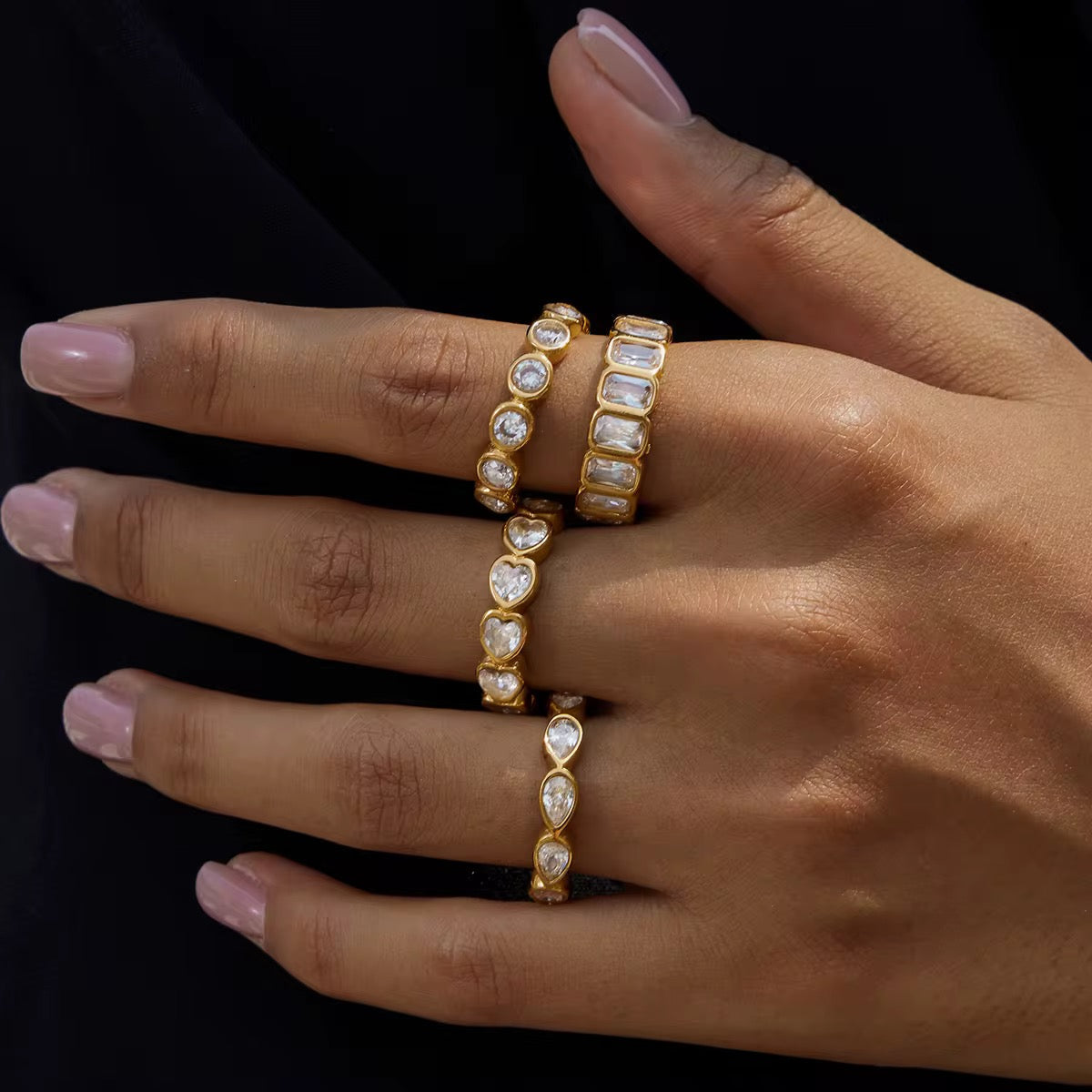
Why "hypoallergenic jewelry" is not a regulated claim in Pakistan
When a product listing says "hypoallergenic jewelry," it means whatever the seller decided it means. There is no certification body, no testing standard, and no regulatory definition governing hypoallergenic claims on jewelry in Pakistan or in most markets globally. The same word appears on a piece made from 316L surgical stainless steel — a genuinely biocompatible material used in medical implants — and on a piece made from nickel-heavy zinc alloy with a thin gold wash over it. Both call themselves hypoallergenic. Neither is lying in any enforceable sense.
This matters because nickel sensitivity is real, extremely common, and something a label alone will not protect you from. Understanding what hypoallergenic actually means for a given piece requires understanding the base metal and how that metal behaves against skin — not the marketing language on the listing.
What is actually causing jewelry reactions in Pakistan
Most jewelry reactions in Pakistan are not allergies in the clinical sense. They are contact dermatitis — a localised inflammatory response triggered by a specific substance making sustained contact with skin. The substance, in the overwhelming majority of jewelry-related cases, is nickel.
Nickel is in almost every metal alloy used in low to mid-range jewelry. Brass — an alloy of copper and zinc — frequently contains nickel as a hardening agent. Zinc alloy, white metal, and most non-specified base metals used in affordable jewelry all carry nickel at varying concentrations. When these metals contact skin under Pakistani daily wear conditions — heat, sweat, friction — nickel ions leach from the alloy surface onto skin. In individuals who have developed a sensitivity to nickel, this triggers redness, itching, and irritation at the contact point.
This is different from the green marks that copper-containing alloys produce. Green marks are copper oxidation — a cosmetic reaction that happens to essentially everyone who wears brass long enough. Nickel reactions are an immune response — they do not happen to everyone, but when they develop, they are triggered by progressively smaller exposures over time. For a detailed explanation of green marks specifically, the guide on why jewelry turns skin green in Pakistan covers the copper oxidation chemistry in full.
The base metals that cause reactions — and the one that does not
| Base Metal | Nickel Present? | Reaction Risk | Pakistan Daily Wear Verdict |
|---|---|---|---|
| Brass | Often — used as hardener | High — leaches under sweat | Not suitable for sensitive skin |
| Zinc alloy | Frequently | Moderate to high | Composition varies — unreliable |
| Copper | Rarely | Low for nickel — high for green marks | Green marks certain — reactions less likely |
| Sterling silver | Sometimes — depends on alloy | Low to moderate | Check nickel content — not guaranteed safe |
| 316L stainless steel | Yes — but bound in matrix | Very low — does not leach under wear | Correct choice for sensitive skin daily wear |
| Titanium | No | Negligible | Correct — rarely available in Pakistan |
The critical point in that table is the 316L row. It says nickel is present — because it is, at approximately 10 to 14 percent of the alloy — but the reaction risk is very low. This seems contradictory until you understand why: the nickel in 316L is bound inside the steel matrix at a crystalline level. It does not leach. It does not become bioavailable at the skin surface under normal wear conditions. This is why 316L is used in surgical instruments, orthopaedic implants, and body piercings that stay in contact with open tissue for months. The metal is classified as biocompatible not because it lacks nickel, but because the nickel it contains stays where it is.
This is entirely different from the nickel in brass or zinc alloy, where it sits in a looser alloy structure that sweats it out under heat and moisture.
Why Pakistan's climate makes nickel sensitivity worse
Nickel leaching from reactive alloys requires two conditions: the alloy must be accessible to the skin surface, and there must be moisture to carry the ions. Pakistan provides both in abundance for most of the year.
Sweat is the delivery mechanism. It is mildly acidic, contains sodium chloride, and in sufficient concentration actively pulls metal ions from alloy surfaces. In Karachi, ambient humidity runs at 70 to 90 percent for months. In Lahore, peak summer temperatures push sweat volumes high enough that jewelry sits in a near-continuous moisture environment at the skin contact point. A ring that causes no reaction on a dry finger in winter may cause visible irritation within days of the same daily wear in July, on the same hand, with the same piece — because the sweat conditions that drive nickel leaching are present in summer in a way they were not in January.
This is also why nickel sensitivity often seems to "appear from nowhere." A person wears a brass ring for two winters without issues, then develops a reaction in their first Karachi summer. The metal has not changed. The sweat conditions have.
Who is most likely to need genuinely hypoallergenic jewelry
Nickel sensitivity is not something you are born with — it develops after cumulative exposure. The immune system builds a response over repeated contact, and once that sensitivity exists, it does not go away. Some situations raise the likelihood of having already developed it, or of developing it faster:
If you have noticed redness, itching, or irritation from jewelry before. Particularly on the wrist from bracelets, on earlobes from earrings, or on the inner finger from rings — and particularly with inexpensive pieces — this is the most common presentation of existing nickel sensitivity. The reaction typically appears 12 to 48 hours after contact begins and resolves after the piece is removed.
If you react to other nickel-containing items. Watch clasps, jeans buttons, belt buckles, and spectacle frames all frequently contain nickel. If you have noticed reactions from any of these — red marks, persistent irritation, skin changes at the contact point — you have likely already developed nickel sensitivity and should treat all jewelry accordingly.
If you have newly pierced ears or have had piercings done with low-quality studs. Healing piercings are more permeable and more immunologically active than intact skin. Nickel exposure through a healing piercing is one of the most common routes for sensitivity to develop — and once developed, it extends to all jewelry contact points, not just ears.
If you wear jewelry daily and work in outdoor or high-sweat environments. Construction, teaching, healthcare, outdoor retail — any work environment that produces sustained daily sweating creates the conditions for accelerated nickel leaching from reactive alloys. The cumulative exposure over a working year is significant.
Individual sensitivity still varies. If you suspect nickel sensitivity, a dermatologist can confirm it with a patch test — a small adhesive containing known allergens applied to skin for 48 hours. This post does not diagnose reactions. It explains the material science behind them so the buying decision is clearer.
What "gold plated" means in the context of skin reactions
Gold plating does not make jewelry hypoallergenic. The plating sits on top of the base metal. As long as the plating is intact at every skin contact point, it acts as a barrier. The problem is that plating wears — and it wears fastest precisely at the points where skin contact is most sustained.
The inner band of a ring. The underside of a bracelet at the wrist. The earring post. The clasp of a necklace. These are the high-friction, high-sweat, high-contact points where standard electroplating on brass wears through first. Once it does, the base metal is directly against skin — and if that base metal is a reactive alloy, the reaction begins there.
Standard electroplating on brass is typically 0.5 to 1 micron thick. Under Pakistani daily wear conditions — heat, sweat, friction — breakthrough at contact points can occur within weeks to a few months on cheaper pieces. The gold colour remains visible on the visible surface of the piece, which is why buyers often feel blindsided: the jewelry still looks gold, but the skin contact points have long since lost their barrier.
PVD coating over 316L stainless steel is a different situation at both levels. The PVD layer — Physical Vapour Deposition — is three to five times thicker than standard electroplating and bonded at a molecular level rather than deposited as a surface film. It wears more slowly at contact points. And when it does eventually wear — because every coated surface changes over time under daily use — the material underneath is 316L, which does not leach nickel. The reaction risk does not materialise at any stage of the piece's life.
The earring post problem — and why it matters most
Earring posts deserve specific attention because they represent the highest-risk contact point for nickel sensitivity in jewelry. The post sits inside a piercing — in direct, sustained, occluded contact with skin that has less barrier function than surface skin, particularly in the first year after piercing.
Some manufacturers use stainless steel for the visible body of an earring — the decorative front — and use a cheaper alloy for the post and butterfly backing, which are less visible and cost less to produce. If the post is not specified as the same 316L base material as the rest of the piece, the assumption that the earring is safe for sensitive ears is not reliable.
When buying earrings for sensitive skin in Pakistan, the question is not just "what is the earring made of" — it is "what is the post specifically made of." Both should be 316L. A 316L decorative front on a brass post is not a hypoallergenic earring for someone with nickel sensitivity.
What to check before buying
What is the base metal, specifically. The answer should name a material: 316L stainless steel, titanium, solid gold 14k or higher. "Gold plated," "high quality metal," "premium alloy," or "nickel-free plating" without naming the base are not sufficient answers. The base metal is what your skin contacts when the plating wears — and it is the only thing that determines whether a reaction occurs.
Is the plating PVD or electroplated. PVD on stainless steel is the correct answer for sensitive skin daily wear in Pakistan. Standard electroplating on any base wears faster, particularly at the skin contact points where reactions would occur.
Are the earring posts and backing the same base material. If the listing specifies stainless steel but does not confirm this extends to the post, ask. The post is the highest-risk contact point.
Does the seller disclose base material clearly and specifically. Sellers who use 316L state it because it is the reason their product is worth buying at its price point. Listings that use "hypoallergenic" as a marketing claim without specifying what the base metal is are using the word as decoration. The absence of clear material disclosure is itself a signal.
How to care for hypoallergenic jewelry to maintain its properties
316L stainless steel does not require special care to remain biocompatible — its properties are structural, not surface-level. But the PVD coating on top does benefit from consistent habits, particularly in Pakistani conditions.
Wipe pieces with a soft dry cloth after wear, especially during summer months when sweat accumulates at the contact points. Remove jewelry before swimming in chlorinated pools — chlorine compounds are aggressive to all metal surfaces including stainless steel's passive oxide layer, and pool exposure is not recommended for any plated piece regardless of base metal. Store pieces separately to avoid surface scratching between pieces.
Clean with mild soap and a soft cloth when needed. No abrasive materials, no ultrasonic cleaners, no chemical jewellery cleaning solutions — these all degrade PVD coating faster than normal wear does. The guide on how to clean gold plated jewelry at home in Pakistan covers safe methods and what to avoid in detail.
If you wear the same piece daily, give it occasional rest days. Not because 316L degrades rapidly, but because any material under continuous daily sweat and friction contact performs better over a longer lifespan with periodic breaks.
What "hypoallergenic" actually means for Mithra's pieces
Every piece at Mithra & Co uses a 316L stainless steel base with 18K PVD coating. The 316L base is the same material grade used in surgical instruments and medical implants. Its nickel is structurally bound in the steel matrix and does not leach under normal wear conditions. It is classified as biocompatible by medical material standards — not as a marketing claim, but as a verifiable material property.
What this means in practice: pieces do not produce green marks at any point in their lifespan because the base metal does not contain reactive copper. They do not cause nickel leaching reactions under normal daily wear conditions because 316L does not leach. They handle Pakistan's heat, humidity, and daily sweat exposure without the skin reactions that brass and zinc alloy pieces produce.
What this does not mean: zero reaction for every individual in every condition. Skin sensitivity is individual. Some people with extreme nickel sensitivity react to 316L in very prolonged, occluded wear — most do not. If you are experiencing persistent skin reactions to jewelry and are unsure of the cause, a dermatologist is the correct next step. This post explains material science — it does not diagnose.
Browse Mithra's full collection at mithraofficial.com — 18K PVD over 316L stainless steel, COD across Pakistan including Karachi, Lahore, Islamabad, and Rawalpindi, with free delivery on orders above Rs. 5,000.
Frequently asked questions
Q1. What does hypoallergenic jewelry actually mean in Pakistan?
A: It means a piece is unlikely to cause an allergic or contact reaction — but the claim is unregulated and means nothing without knowing the base metal. True hypoallergenic jewelry uses a base metal that does not leach reactive substances against skin: 316L surgical stainless steel, titanium, or solid gold 14k or higher. A piece labeled "hypoallergenic" on a brass or zinc alloy base is using the word as marketing without material substance behind it. The base metal is the only thing that matters.
Q2. Why does gold plated jewelry cause reactions if it is coated in gold?
A: The gold plating wears at skin contact points — the inner band of rings, the underside of bracelets, earring posts. Once the plating breaks through at those points, the base metal is directly against skin. If that base metal is brass or zinc alloy containing nickel, the nickel leaches into the skin surface under sweat and friction. The jewelry still looks gold on the visible surface because plating wears last at the decorative face — but the contact points, where reactions occur, may have lost their barrier weeks earlier.
Q3. Can I wear hypoallergenic jewelry for wuzu every day?
A: 18K PVD over 316L stainless steel handles daily wuzu correctly. The base metal does not react to repeated brief water contact and does not produce skin reactions under the frequency of daily wuzu cycles across months of wear. The PVD coating at the contact points will show gradual surface change over a long lifespan — this is normal for any coated surface under repeated water exposure — but the base metal underneath does not leach in ways that cause reactions. For reactive base metals on brass, daily wuzu accelerates both coating degradation and base metal exposure, and is not recommended without removal.
Q4. I have never had a jewelry reaction before. Do I still need hypoallergenic jewelry?
A: Not necessarily — but nickel sensitivity develops after cumulative exposure, not at the first contact. A person can wear brass jewelry for years without reaction and then develop sensitivity after sufficient cumulative nickel exposure, particularly under high-sweat conditions. In Pakistan's climate, the conditions that accelerate nickel leaching — heat, humidity, daily sweat — are present for most of the year. Choosing a stainless steel base removes the exposure risk entirely, which means sensitivity cannot develop from the jewelry itself.
Q5. Where can I buy genuinely hypoallergenic jewelry in Pakistan with COD?
A: Look for sellers that specify 316L stainless steel as the base metal — not just "hypoallergenic" or "nickel-free plating" without naming what the base is. Mithra delivers 18K PVD gold plated jewelry on a 316L stainless steel base across Pakistan including Karachi, Lahore, Islamabad, and Rawalpindi, with cash on delivery available nationwide. Every product page specifies the base material. Browse the full collection here.

Leave a comment
This site is protected by hCaptcha and the hCaptcha Privacy Policy and Terms of Service apply.