

The structural difference — rigid versus flexible
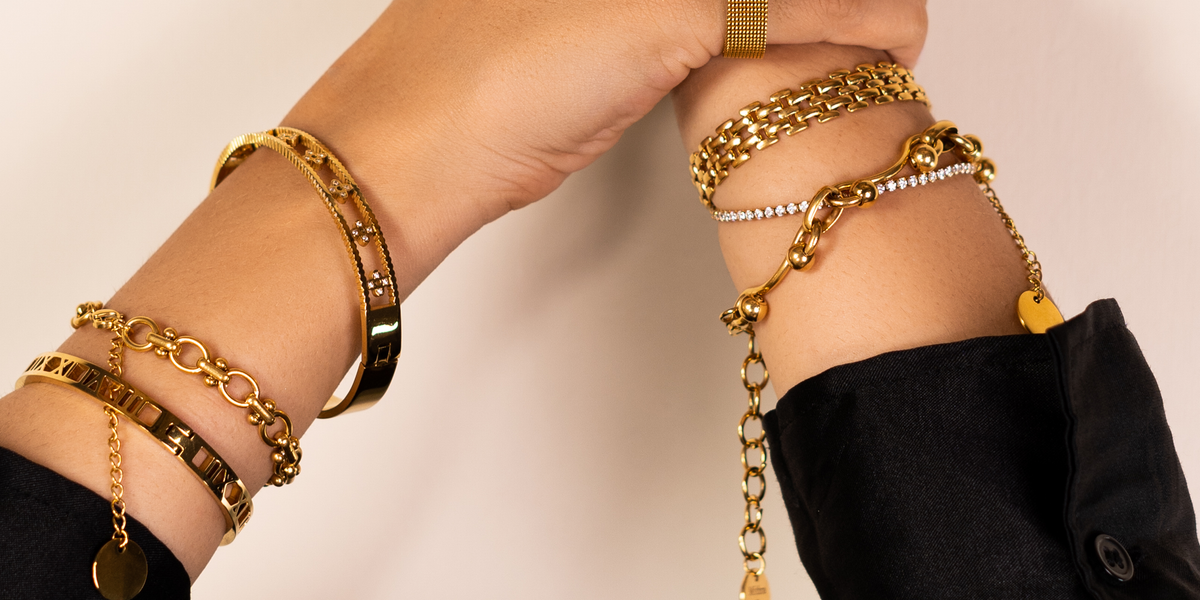
A bangle is a rigid ring with no clasp — it slides over the hand and sits on the wrist. A bracelet is a flexible, linked, or chain-based piece that fastens with a clasp, lobster claw, or adjustable closure. That structural difference — rigid and fixed-diameter versus flexible and adjustable — is what drives every practical decision about when to wear which.
In Pakistani usage, the word bangle often refers to both, and choori is used interchangeably with bangle in conversation. For the purposes of buying decisions, the distinction that matters is not the name — it is whether the piece requires a specific wrist diameter to fit correctly or whether it adjusts to fit.
Sizing — the practical difference that catches most buyers
Bangles require measurement. A bangle that is too small does not go on. A bangle that is too large slides off. The measurement is the widest part of the hand — the knuckle width — because the bangle must pass over the knuckles to reach the wrist. Most Pakistani women's hands fall between 5.5 cm and 7 cm at the knuckle width, which maps to bangle inner diameter sizes from 2.2 to 2.8 inches in standard Pakistani sizing.
Bracelets with adjustable closures or extension chains fit a wide range of wrist sizes without measurement. This is why bracelets are significantly safer to buy online — a bracelet with an extension chain typically fits wrist circumferences from 14 cm to 19 cm, which covers most adult women. A bangle bought online without measurement is a 50-50 proposition on whether it actually fits.
If you are buying for yourself and know your size — bangles are straightforward. If you are buying as a gift, or if you are unsure of your own size, an adjustable bracelet is the correct choice unless you have a confirmed measurement. Measure your jewelry size at home. The guide covers how to measure wrist circumference and hand width at home before ordering.
Stacking — how bangles and bracelets behave differently when layered
Bangles stack by definition. Multiple rigid bangles worn together produce the sound and visual rhythm that is part of their cultural function in Pakistani dress — the movement, the layering, the weight on the wrist. One bangle worn alone is less common than a set of three, five, or more worn together.
Bracelets can be stacked but each piece sits independently — a chain bracelet next to a cuff next to a tennis bracelet works as a deliberate composition rather than a set. The visual result is different from stacked bangles: bracelets create an intentional mix, bangles create a uniform repeat. Which reads correctly depends on the outfit.
For Pakistani occasion wear — mehndi, Eid, family functions — stacked bangles in gold tone are the traditional default. For daily wear, office, and contemporary styling, a single bracelet or a two-piece mix reads as more considered and less festive. The occasion determines the correct register, not personal preference alone.
Occasion fit — which works where in Pakistani context
| Occasion | Bangles | Bracelets | Notes |
|---|---|---|---|
| Daily wear / office | One slim bangle acceptable — stacked reads as festive in formal contexts | Single chain or cuff — correct for all professional settings | Noise from stacked bangles is the practical concern in office and academic environments |
| University / campus | Two to three slim bangles — reads as casual and appropriate | Any bracelet — fully appropriate | Both work; bracelet is quieter for exam settings |
| Mehndi / Eid | Stacked sets — correct and expected | A cuff or tennis bracelet as accent — works alongside bangles | Bangles are the traditional default for festive Pakistani functions |
| Baraat / walima guest | Slim stacked set — appropriate for guests | Tennis bracelet or chain bracelet — reads as polished and formal | Avoid heavy bangle sets that read as bridal-adjacent |
| Casual daily | One to three bangles — completely appropriate | Any bracelet — fully appropriate | Personal preference drives the choice at this level |
Wuzu — the Pakistani daily wear consideration
Wuzu requires water to reach the skin on the arms to the elbow. The fiqh question around jewelry during wuzu has different scholarly positions — the practical question for daily wear is whether the piece needs to be removed or whether water can reach underneath it.
Bangles sit loosely on the wrist by definition — water reaches the skin underneath during wuzu without removal. A bangle that fits correctly has space between the inner diameter and the wrist, which allows water contact. A bracelet with a flat clasp sitting tight against the skin may need to be moved or removed to ensure water contact. The structural looseness of a correctly fitted bangle is actually an advantage for wuzu specifically.
The base metal question applies here the same way it does for all daily wear: stainless steel handles repeated water contact without the oxidation and skin reaction that brass produces under the same conditions. how water affects jewelry materials covers the wuzu compatibility question in full.
Material — why it matters more for bangles than bracelets
Bangles sit against the inner wrist continuously — skin contact is uninterrupted across the full inner circumference for the entire wear period. Bracelets move, lift slightly with motion, and the clasp area creates a natural ventilation point. This means a reactive base metal in a bangle produces skin reactions faster than the same base metal in a bracelet, because the contact is continuous and trapped against the skin without gaps.
For daily wear bangles specifically, stainless steel base is the correct material choice for anyone who has experienced green marks or skin irritation from Pakistani fashion bangles previously. The copper oxidation reaction that produces green marks is more pronounced under continuous contact conditions — which is exactly what a bangle produces. why jewelry turns skin green explains the copper reaction chemistry that bangles accelerate through continuous skin contact.
For the full comparison of base metals and which performs correctly under Pakistani daily wear conditions, gold plated bracelet guide for Pakistan covers the material decision specifically for wrist wear.
Gifting — which is the safer choice
Bangles as gifts require the recipient's hand measurement. Without it, the probability of the bangle fitting correctly is low enough that gifting a bangle to someone whose hand width you do not know is a practical risk. A bangle that does not go on is not returnable as an exchange if the packaging has been opened in the attempt.
Bracelets with adjustable closures or extension chains are the correct gift choice when you do not have a confirmed wrist measurement. An adjustable bracelet in a correct metal and style is a gift that works. A bangle in the wrong size is a gift that creates a problem. For any jewelry gift in Pakistan where the recipient's sizing is not confirmed, adjustable bracelets are the lower-risk choice across every occasion.
Frequently asked questions
Q1. What is the difference between a bangle and a bracelet in Pakistan?
A: A bangle is a rigid ring with no clasp that slides over the hand — it requires a specific hand width to fit correctly and sits loosely on the wrist. A bracelet is a flexible or chain-based piece with a clasp or adjustable closure that fits a range of wrist sizes. In Pakistani conversation, both are sometimes called bangles or chooriyan, but the structural distinction — rigid and fixed versus flexible and adjustable — drives every practical decision about sizing, stacking, and occasion fit.
Q2. How do I measure my bangle size in Pakistan?
A: Measure the widest part of your hand — across the knuckles with fingers together — in centimetres. This is the hand width that the bangle must pass over. Most Pakistani women's hand widths fall between 5.5 cm and 7 cm, mapping to bangle inner diameters between 2.2 and 2.8 inches. If buying online, confirm the inner diameter measurement in the product listing before ordering — bangle size is often listed in inches in Pakistani listings (2.4, 2.6, 2.8) corresponding to hand width ranges.
Q3. Can I wear bangles in the office in Pakistan?
A: One or two slim bangles are appropriate in most Pakistani office settings. Stacked bangles that produce sound with arm movement — the traditional clinking of multiple metal bangles — are typically not appropriate in formal office, academic, or corporate environments because the sound is distracting. A single slim bangle or a quiet bracelet is the correct choice for professional settings where sound matters.
Q4. Do bangles need to be removed for wuzu?
A: A correctly fitted bangle sits with space between the inner diameter and the wrist, which allows water to reach the skin during wuzu without removal. A bracelet with a flat clasp sitting tight against the skin may need to be moved to ensure water contact underneath. The standard scholarly guidance is that water must reach the skin — a loose-fitting bangle typically satisfies this without removal, but the fit of the specific piece matters.
Q5. Why does my bangle leave a green mark on my wrist?
A: Green marks from bangles are copper oxidation — the copper in brass or zinc alloy bangles reacts with sweat to form copper salts that deposit on the skin as green discolouration. Bangles produce this reaction more visibly than bracelets because the continuous skin contact across the full inner circumference accelerates the oxidation. The fix is switching to a stainless steel base bangle — stainless steel contains no copper and does not produce this reaction under any normal wear condition. stainless steel bangles and bracelets — COD available nationwide.

Leave a comment
This site is protected by hCaptcha and the hCaptcha Privacy Policy and Terms of Service apply.