

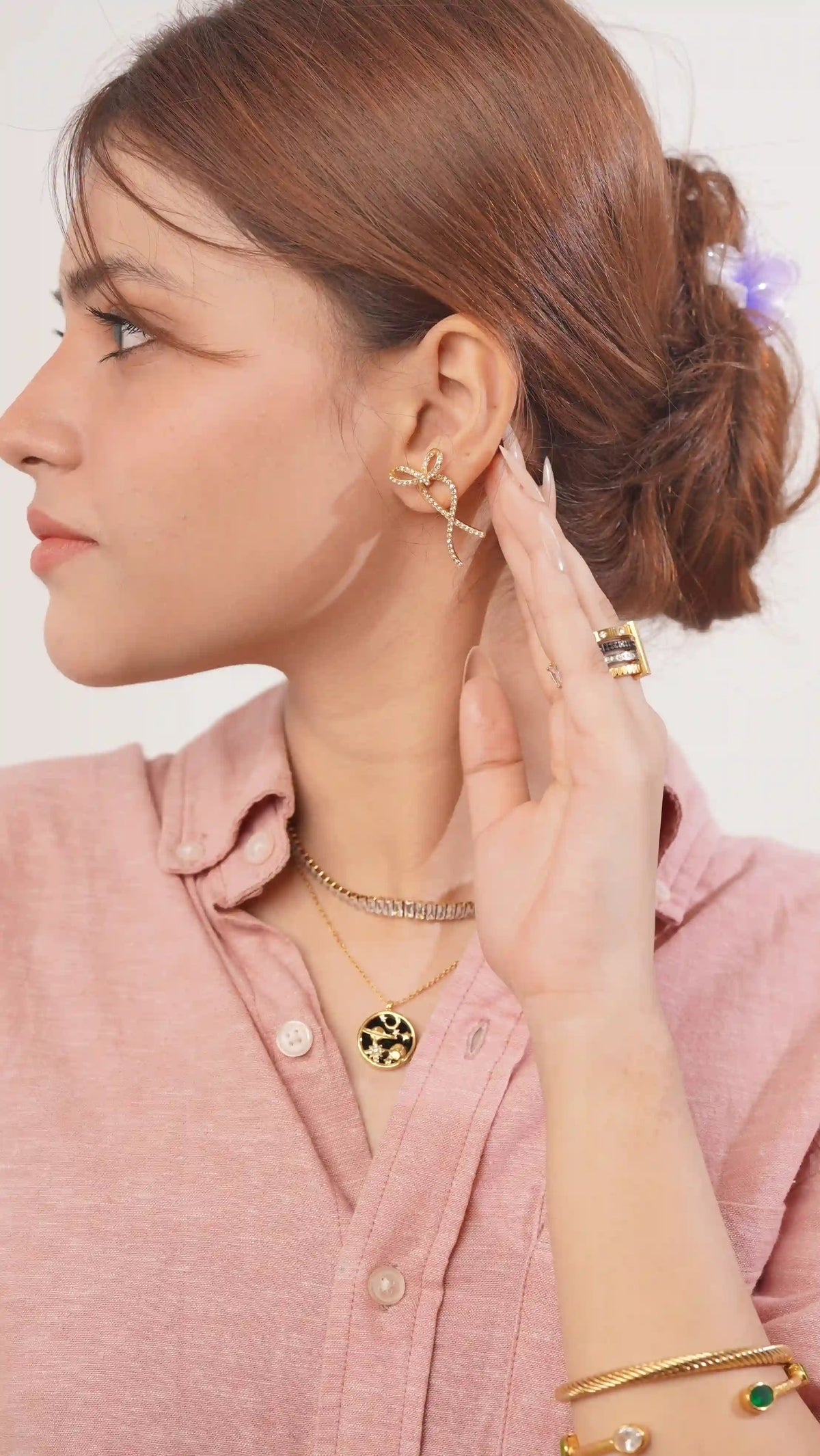
University in Pakistan is a specific kind of daily wear test. Eight to ten hours on campus. Wuzu between classes. Rickshaw rides and sun exposure in Karachi. Walking between departments in Lahore's summer heat. The jewelry that survives all of this without turning your skin green, losing its finish, or requiring you to remove it every few hours is a much shorter list than most students realise when they start building a collection.
Why Most Student Jewelry Collections Fail Within the First Semester
The pattern is consistent. A student starts university with a few pieces — some gifted, some purchased — and within three to four months, most of them are retired. Not because the student stopped caring about jewelry. Because the pieces could not keep up with the reality of campus life.
The failures are almost always the same: a ring that left a green mark after the first week of continuous wear. Earrings that caused irritation after long days under the pressure of earphone use. A bracelet that tarnished within a month of daily exposure to sunscreen and sweat. A necklace that tangled in a dupatta and broke.
None of these failures are the student's fault. They are material failures — pieces built for occasional wear being used for continuous daily wear in conditions that expose every weakness in the base metal and coating. The fix is not wearing less jewelry. It is understanding which materials actually work for campus life before buying.
University is not the place to wear your best pieces. It is the place to discover which pieces are actually your best — because they are the ones still working at the end of the semester.
What Campus Life Actually Does to Jewelry
Understanding the specific conditions that jewelry faces on a Pakistani university campus changes what you buy and what you skip.
-
Continuous wear — 8 to 10 hoursMost students put jewelry on in the morning and do not take it off until they are home in the evening. This is eight to ten hours of continuous skin contact, friction against fabric, and exposure to whatever the day brings. Pieces built for two to three hours of wear — event pieces, occasion pieces, anything not designed for all-day use — show wear patterns in weeks rather than months under this usage pattern.
-
Wuzu — multiple times dailyFor most Pakistani university students, wuzu happens two to three times across the campus day. Water contact, repeated drying, and the friction of rolling sleeves up and down affect bracelets and rings specifically. On a stainless steel base, the core material is highly resilient, whereas on a traditional brass base, repeated water contact and friction can accelerate surface oxidation that contributes to green marks.
-
Sunscreen and heat exposureOutdoor movement between departments, exposure to direct sun, and the sunscreen that students in Karachi and Lahore apply daily all reach the jewelry. Sunscreen and other skincare products can contribute to surface wear when they remain trapped against plated jewelry under heat and friction. Standard plating on brass generally has less resistance to these conditions than PVD coating on stainless steel.
-
Bag friction and fabric contactA shoulder bag strap sitting against a bracelet for eight hours. A dupatta catching on a pendant repeatedly. Earrings pressed against earphones or headphones during lectures. These friction sources are specific to campus life and accumulate surface wear faster than most people account for when buying jewelry for university wear.
The Three Pieces Every Pakistani Student Actually Needs
Not the most interesting three pieces. Not the most impressive. The three pieces that work across every campus day, every outfit, every context from morning lecture to afternoon lab to evening commute — without requiring removal, adjustment, or replacement within the first semester.
One adjustable ring
Not a ring set. Not a statement ring. One slim adjustable band that goes on in the morning and stays until you are home. The adjustable sizing means no measurement is needed for an online purchase — it fits on arrival and can be adjusted as needed without committing to a fixed size before you know your preferences.
For university specifically, adjustable rings also solve the sizing problem that comes from wearing rings through changing conditions — fingers swell slightly in heat and contract in air conditioning. An adjustable band accommodates this without becoming uncomfortable. adjustable rings for university daily wear are the correct starting piece for any student building a collection — low commitment, immediate wearability, and accurate sizing information for whatever you add next.
One pair of small studs or slim hoops
The earring that goes on automatically and requires zero thought across the campus day. Small enough to sit comfortably under earphones and headphones during lectures. Light enough to wear for ten hours without the lobe fatigue that heavier earrings cause. Professional enough for presentations and vivas. Visible enough to feel like a deliberate choice rather than an oversight.
For earrings specifically, the post material matters more than for many other pieces — because earring posts are in direct contact with skin inside the ear piercing, where irritation can become more noticeable under long daily wear. Stainless steel posts can be a practical choice for students who need consistent all-day wear. stainless steel gold plated earrings are the starting earring for student daily wear — practical for full campus days and easy to keep in the daily rotation.
One plain chain necklace
17 to 18 inches. Plain gold tone. Thin enough to sit cleanly under any neckline from crew neck kameez to open collar shirt. The chain that goes on automatically and works with every outfit — no styling decision required, no occasion needed to justify it. This is the piece that solves the "I want to wear jewelry but I do not know what to wear" problem permanently, because it always works and never needs to be reconsidered.
For university specifically, a plain chain is also the piece that photographs well without trying — in group photos, in the background of study session pictures, in every documentation of student life where you are not specifically dressing for a photograph. It reads as deliberate without requiring effort. gold plated neck chains for daily wear — 17 to 18 inches — are the correct starting chain for any student who wants a piece that works across the full academic year.
What to Add After the Foundation — In the Right Order
Once the three foundation pieces are established and being worn consistently — which takes two to four weeks of actual daily use to confirm they work for your specific campus routine — the collection is ready for additions. The order matters.
-
A slim chain bracelet — second additionOne slim chain bracelet on the non-dominant wrist. Non-dominant because the dominant wrist experiences more bag friction, desk friction, and general movement that accelerates surface wear. The bracelet goes on with the morning foundation and stays — it should be slim enough to sit under a sleeve without bunching and light enough to wear through daily routines without needing constant adjustments. slim chain bracelets for university handle the specific conditions of campus wear particularly well.
-
A pendant necklace — third additionNow that the plain chain is established in the daily routine, a pendant necklace worn alone on days when more detail is wanted — or layered over the plain chain for a two-piece look with length separation — extends the range of the foundation without requiring a separate styling system. The pendant sits three to five inches longer than the plain chain to create genuine visual separation when layered. This addition makes the collection feel like a collection rather than three isolated pieces.
-
One occasion piece — last additionOne piece that is clearly for non-campus contexts — a statement earring, a tennis necklace, a ring with more presence. This piece does not need to survive the campus day. It needs to exist for the occasions — family events, Eid gatherings, presentations where you want to be more dressed — that sit outside the ordinary university routine. It is the last addition because it is the least urgent. The foundation serves ninety percent of the days. The occasion piece serves the remaining ten.
The Budget — What This Actually Costs in Pakistan
The three foundation pieces in 18K PVD over stainless steel can be built for Rs. 5,300 to Rs. 8,500 total at Mithra & Co. The full five-piece collection including the bracelet, pendant, and occasion piece adds approximately Rs. 6,000 to Rs. 10,000 depending on which pieces are chosen, built over the course of the semester as each addition is confirmed to work for your specific routine.
The comparison that matters: a Rs. 400 brass-based ring replaced three times a semester because of green marks and tarnishing costs Rs. 1,200 in the same period — and produces three sets of frustration in the process. A Rs. 2,200 stainless steel ring worn continuously from September to May without replacement costs less, looks better for longer, and removes the replacement cycle entirely. The budget calculation for student jewelry is not what each piece costs. It is what each piece costs per month of actual use.
Wuzu and Jewelry — The Practical Answer
The question every Pakistani student has and almost nobody answers directly: which jewelry can you leave on for wuzu and which do you need to remove?
The honest answer depends on the base metal and core maintenance. Premium stainless steel does not rust or corrode under ordinary water contact, which is one reason it is widely used where durability matters. A ring or bracelet on a quality stainless steel base handles a student's daily wash routine well, but long-term preservation of the gold layer still requires sensible care.
Brass-based pieces are different. Water and repeated wetting and drying can accelerate oxidation of copper-containing brass alloys. That process is more noticeable at the inner contact points — the ring band against the finger, the bracelet clasp against the wrist — where plating can wear more quickly. Green marks and irritation may therefore appear sooner when brass-based jewelry is exposed repeatedly to water.
The practical guide: If you wear your 18K PVD stainless steel pieces during wuzu, the vital step is ensuring you thoroughly dry both your skin and the inner surfaces of the jewelry right after washing. Trapped moisture and product residue can contribute to dullness over time. For brass-based pieces, removing them before wuzu is the safer approach if you are trying to minimise water exposure and prolong the finish.
Care Habits That Work Around a Student Schedule
Three habits that make the most difference under the specific constraints of student life — minimal time, no dedicated routine, high daily wear frequency:
- Sunscreen absorbed before jewelry goes on. The thirty seconds between applying sunscreen and putting on your ring and bracelet is a simple habit for reducing direct product contact with plated surfaces. Sunscreen sitting underneath jewelry — particularly under rings and bracelets in Pakistan's summer — increases the chemical and moisture exposure a piece experiences during daily wear.
- Wipe with a soft cloth and dry thoroughly. Not a full cleaning routine — just a quick wipe at the end of the day to remove sweat residue, sunscreen remnants, or lingering wuzu moisture that accumulates across a full campus day.
- Separate storage, not a jewelry pile. The most common student storage method — everything loose in one corner of the dresser — is how surface scratches accumulate into visible damage. Each piece in its own pouch or compartment. The pouches from Mithra & Co pieces are specifically for this. Using them takes no additional time and helps reduce unnecessary surface contact between pieces.
For the complete care guide covering all materials and jewelry types, the complete jewelry care guide for Pakistan covers every scenario in detail.
Frequently Asked Questions About Jewelry for Pakistani University Students
Q1. What jewelry is appropriate to wear to Pakistani university?
A: Minimal, lightweight pieces that do not distract in lectures or professional settings. Small studs or slim hoops for earrings, one slim ring, a plain chain necklace, and optionally a slim bracelet on the non-dominant wrist. The test is whether any piece draws attention to itself in a classroom or viva setting — pieces that pass that test can stay in the daily rotation. Pieces that read as "dressed up" in a campus context belong in the occasion category, not the daily foundation.
Q2. Can I wear gold plated jewelry through wuzu at university?
A: Yes, when the base metal is high-grade stainless steel and the piece is maintained properly. Brass-based items are more vulnerable to repeated water exposure, while a stainless steel core is far more resistant to corrosion. To preserve the appearance of the 18K PVD gold layer, simply move the jewelry slightly and dry both your skin and the inside of the band completely following wuzu.
Q3. How much should a Pakistani student spend on a jewelry collection?
A: The three foundation pieces — adjustable ring, small earrings, plain chain — cost approximately Rs. 5,300 to Rs. 8,500 in 18K PVD over stainless steel. This is the total to build a collection that works for the full academic year without replacement. Spending less on cheaper brass-based alternatives can cost more over the semester when pieces are replaced after tarnishing and green marks, while producing worse results throughout.
Q4. What is the best ring for university in Pakistan?
A: An adjustable slim band on stainless steel. Adjustable because finger sizing changes slightly across the campus day — heat, air conditioning, and hand washing can all affect finger size — and a fixed band that fits perfectly in the morning may feel tighter by afternoon. Slim because it sits comfortably under a sleeve, does not catch on fabric, and reads as appropriate across every campus context from casual lecture to formal presentation.
Q5. Where can I buy jewelry for university in Pakistan with COD?
A: Mithra & Co delivers 18K PVD gold plated jewelry on stainless steel across Pakistan — Karachi, Lahore, Islamabad, Rawalpindi, and nationwide — with cash on delivery on every order. shop 18K PVD jewelry in Pakistan — material specifications on every product page so you can confirm stainless steel before ordering.
The Collection That Survives the Full Academic Year
The jewelry that works for university is not the most elaborate or the most impressive. It is the jewelry that is still working in May in the same condition it was in September — that has handled the daily campus routine, the wuzu, the sunscreen, the bag friction, and the heat without retirement, replacement, or visible failure.
Three pieces to start. The right material throughout. Built outward as each piece proves it belongs in the daily rotation. That is the student collection that actually gets worn — not the one that looked good in a product photograph and retired to a drawer by December. everyday student jewelry essentials — COD across Pakistan.


Leave a comment
This site is protected by hCaptcha and the hCaptcha Privacy Policy and Terms of Service apply.