

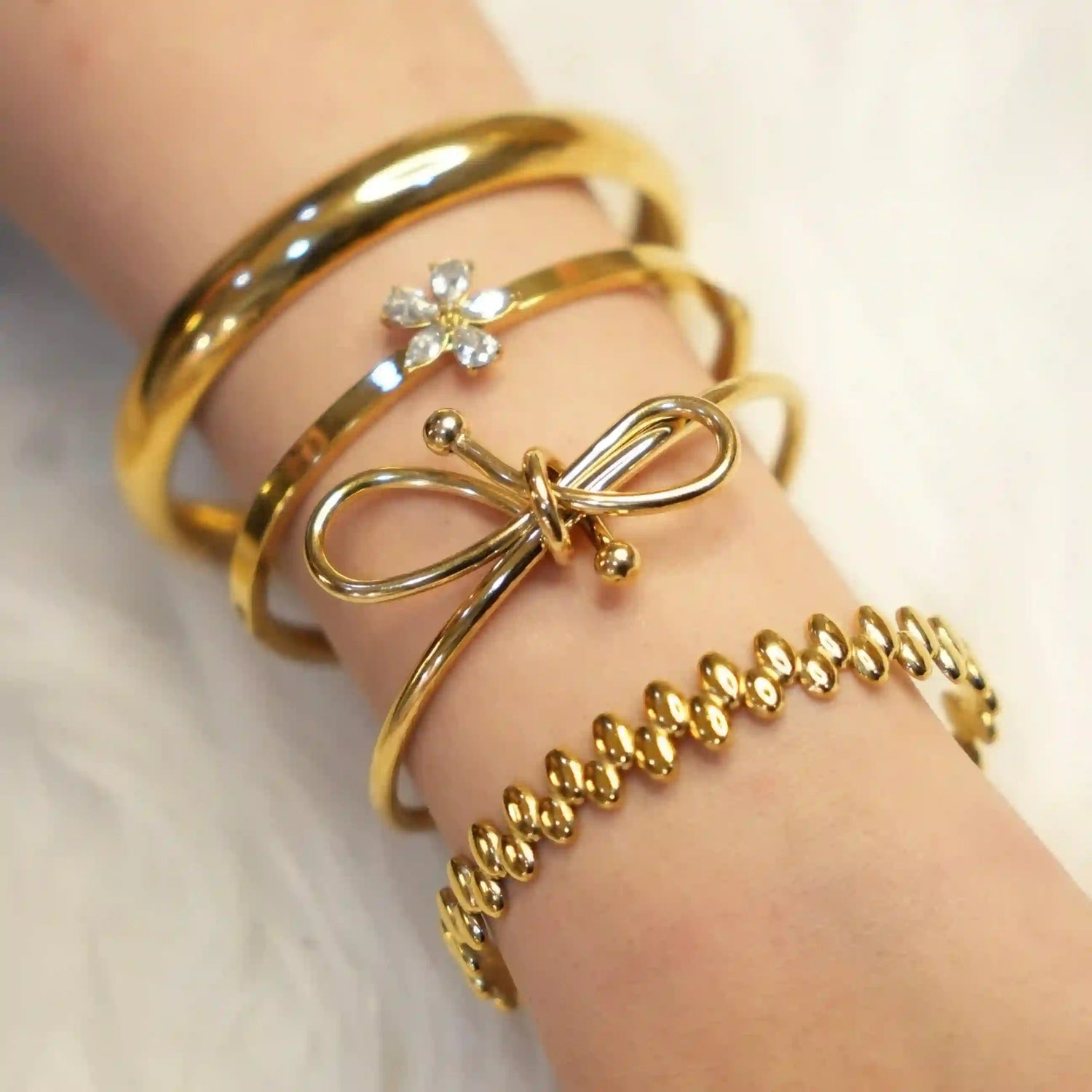
It looks effortless on everyone else. On you it either feels too loose and spins around all day, or too tight and leaves a mark by evening — and nobody ever explains that the fit is supposed to be adjusted, not just picked off a shelf.
What actually makes a cuff different from a bangle
A cuff is open — there's a gap, usually 1 to 2 centimetres, that lets the piece flex slightly to fit the wrist. A bangle is a closed circle that has to pass over the hand to get on. That single structural difference changes everything about sizing, wearing, and how the piece behaves through the day.
A bangle's size is fixed at purchase. A cuff's fit is adjustable within a range — which is also why so many cuffs feel wrong straight out of the box. They arrive set to a standard width, and almost nobody adjusts them before the first wear.
A cuff that spins freely around your wrist is not the wrong size — it's been worn unadjusted. Most cuffs ship slightly wider than a snug fit so they slide on easily. The adjustment step is intentional, not optional, and skipping it is the single most common reason people say cuffs "don't suit them."
How to adjust the fit before the first wear
Gently. A cuff with a reasonable gap (1.5 to 2 centimetres) can be narrowed slightly by hand — both palms pressing the open ends toward each other, a small amount of pressure, checked against the wrist after each adjustment rather than forced in one motion. The goal is a fit where the cuff sits with minimal rotation but still slides on without forcing over the hand.
Which wrist — and why it actually matters for a cuff specifically
A cuff sits differently than a bangle or a chain bracelet because its rigid shape interacts with everything the wrist touches — desks, phones, keyboards, bags. On the dominant hand, a cuff gets knocked, scraped, and repositioned constantly through normal use. On the non-dominant wrist, it stays put and shows less wear over time.
For daily wear in offices and university settings, the non-dominant wrist is the more practical choice — less contact with surfaces during writing or typing, and the cuff's outer edge stays visually cleaner for longer. For a single statement piece worn for a specific evening, either wrist works, since durability over months isn't the concern.
Pairing a cuff with a watch
This is the one place most people get stuck. A cuff and a watch on the same wrist usually fight for the same visual space — both are structured, both have presence, and stacking them tends to look cluttered rather than intentional.
-
Opposite wristsThe cleanest pairing. Watch on one wrist, cuff on the other. No competition, both pieces read clearly.
-
Same wrist, different widthsIf you want both on one wrist, a slim cuff paired with a slim watch face works better than two wide, structured pieces stacked together. The thinner profile lets them sit without crowding each other.
-
What to avoidA wide statement cuff directly against a chunky watch case on the same wrist. Both pieces lose definition against each other.
Layering a cuff with other bracelets
A cuff's rigid open shape behaves differently in a stack than flexible chains do. It anchors the stack rather than blending into it — which means it works best as the one structured piece against thinner, more flexible bracelets, not against another cuff or bangle of similar width.
| Pairing | Result |
|---|---|
| Cuff + one thin chain bracelet | Works well — the chain moves, the cuff anchors, neither competes |
| Cuff + tennis bracelet | Works — different textures and movement create contrast without clutter |
| Cuff + second cuff, same wrist | Crowded — two rigid pieces compete for the same space and neither sits comfortably |
| Cuff + multiple thin bangles | Works for occasion wear — the bangles provide movement and sound, the cuff provides the anchor point |
Cuff bracelets with Pakistani outfits
A cuff reads differently than a chain bracelet against Pakistani fabric. Against a plain or lightly embroidered kurta sleeve, a cuff sits cleanly on a bare wrist and photographs well — the structured shape holds its line against soft fabric. Against heavily embroidered sleeves or zari work, a slimmer cuff avoids visual competition with the embellishment; a wide statement cuff tends to fight with detailed sleeve work rather than complement it.
For mehndi and daytime functions where sleeves are often three-quarter or full-length, a cuff worn at the wrist (not pushed up the forearm) stays visible without catching on fabric every time the arm moves. For sleeveless or short-sleeve western or semi-formal pieces, the cuff has full visibility and can carry more presence.
How long a cuff holds its shape under daily wear
The opening width of a cuff in 18K PVD over stainless steel holds its adjusted shape well under normal daily handling — putting on, taking off, normal wrist movement. Repeated aggressive widening and narrowing, particularly forcing the metal past its comfortable flex range, is what causes a cuff to lose its shape or develop metal fatigue at the bend points over time. Adjust gradually and the piece holds its fit for years rather than weeks.
Frequently asked questions
-
Q1. Why does my cuff bracelet keep spinning around my wrist?A: The gap is wider than your wrist needs. Cuffs ship at a standard opening width to make them easy to slide on, and most people never narrow them before wearing. Gently press the open ends slightly closer together, checking the fit against your wrist after each small adjustment.
-
Q2. Should I wear a cuff on my dominant or non-dominant wrist?A: For daily wear, the non-dominant wrist holds up better — less contact with desks, keyboards, and bags through the day, and the surface stays cleaner for longer. For a single occasion or evening piece, either wrist works equally well.
-
Q3. Can I wear a cuff bracelet and a watch on the same wrist?A: Yes, but pair a slim cuff with a slim watch face rather than two wide, structured pieces. If you'd rather not coordinate widths, the simpler option is opposite wrists — watch on one, cuff on the other.
-
Q4. How tight should a cuff bracelet fit?A: It should sit with light contact all the way around the wrist, rotate slightly without sliding off on its own, and come off with gentle effort rather than resistance. If it leaves a pressure mark or is difficult to remove, it's too tight and needs widening.
-
Q5. Will adjusting the width of a cuff damage it?A: Gradual, gentle adjustment in small increments does not damage a quality cuff. Repeated aggressive bending past its comfortable flex range is what causes metal fatigue over time. For the full comparison of bangle and cuff construction and which holds up best for daily Pakistani wear, the bangles vs bracelets guide covers the structural differences in more depth.
The fit is adjustable — most people just never adjust it
A cuff that feels wrong on the first wear usually isn't the wrong piece. It's an unadjusted one. A few minutes of gentle shaping before you wear it the first time is the difference between a bracelet that spins and catches all day and one that sits exactly where you want it.
Browse cuffs and bangles at Mithra & Co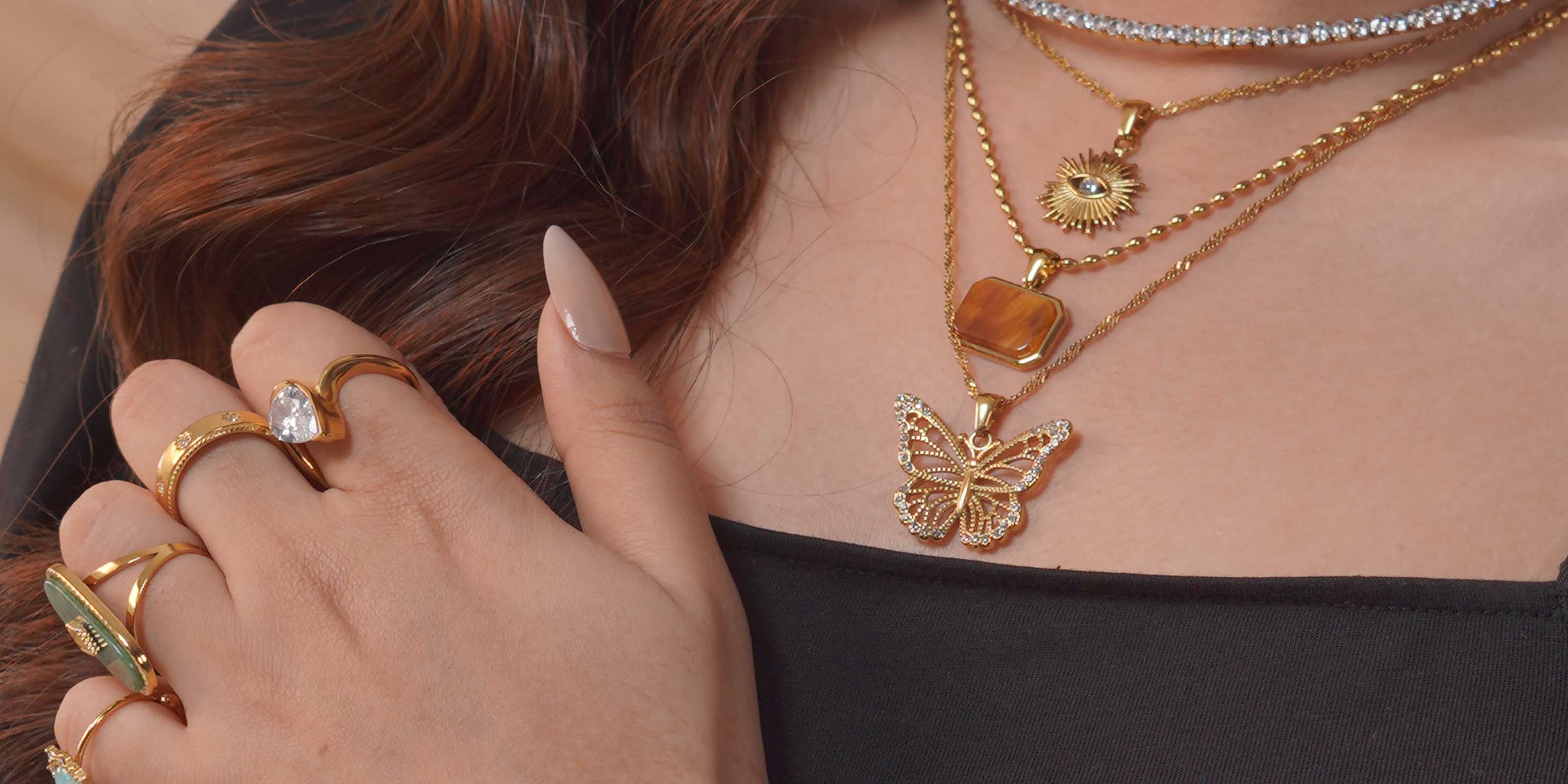

Leave a comment
This site is protected by hCaptcha and the hCaptcha Privacy Policy and Terms of Service apply.