

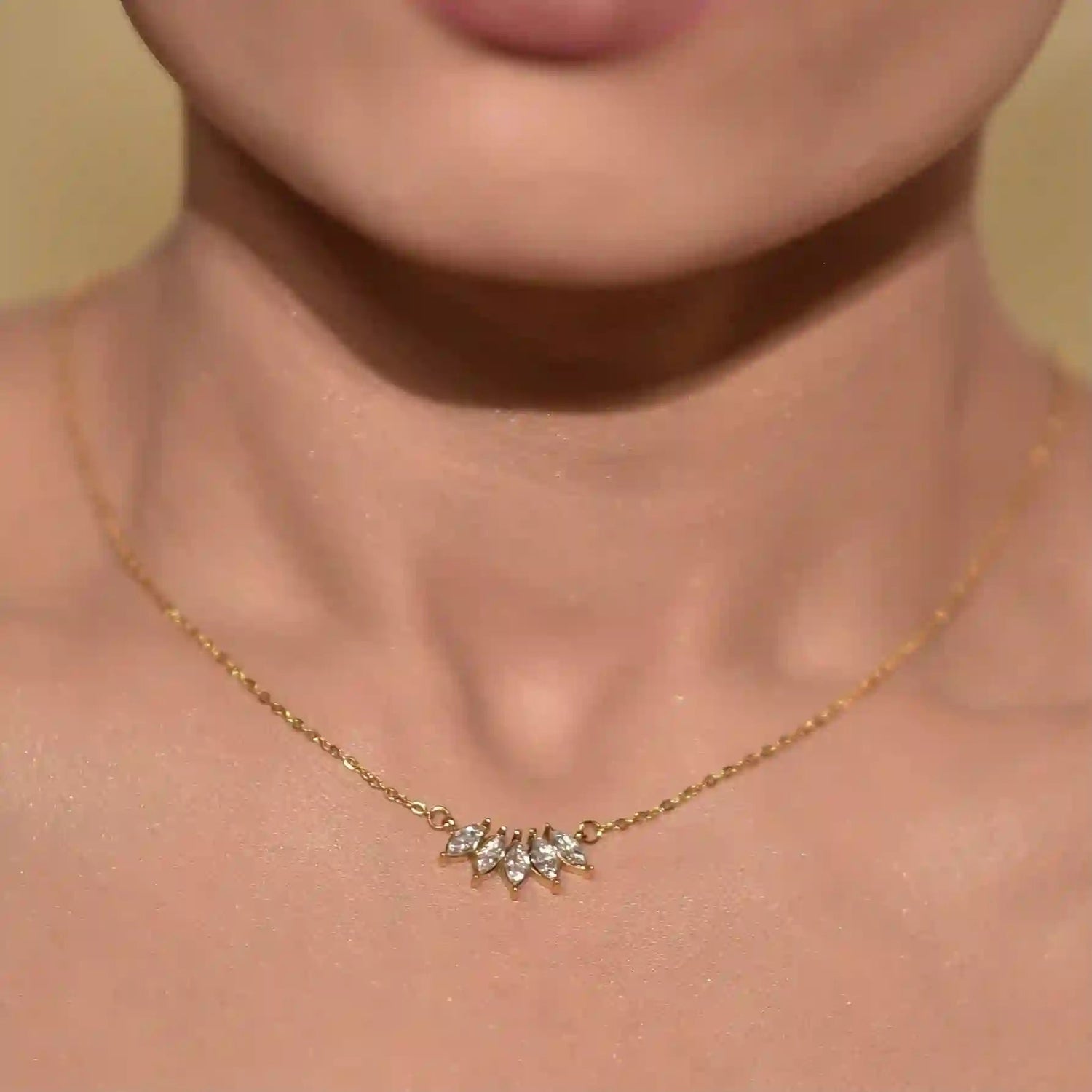
There is a type of necklace that nobody notices while you are wearing it — and everybody notices when you take it off. That is not an accident. That is the whole point of a petit necklace.
What makes a necklace petit
Petit, in jewelry, means small-scale — not short, not minimal in the aesthetic sense, but literally fine in weight, thin in chain gauge, small in pendant or charm size. A petit necklace is one where the individual elements of the piece are small: a thin box chain at 14 to 16 inches, a small stone pendant on a delicate cable link, a tiny charm on a thread-weight chain. The effect is jewelry that reads as detail rather than statement — the difference between wearing a piece that frames the look and wearing one that leads it.
In Pakistani dressing, the petit necklace fills a specific role that neither the tennis necklace nor the layered statement set fills: it is the piece that works when nothing else should. Office Monday. Afternoon errand. The casual lawn suit in July when the heat makes anything heavier feel wrong. The weekend where you want to look put together without appearing to have tried.
A petit necklace is not a substitute for a statement piece. It is the piece you reach for when the outfit is already speaking and you need something that listens without interrupting.
Petit vs minimal — the distinction that matters for Pakistani styling
Petit is about scale. Minimal is about aesthetic. These are not the same thing. A wide flat snake chain at 16 inches is minimal — clean, unadorned — but it is not petit. A multi-strand crystal set is not minimal, but individual pieces in it may be petit. The distinction matters for Pakistani styling because the country's fashion vocabulary runs toward embellishment and layering, and "minimal" can read as deliberately under-dressed in many Pakistani contexts. "Petit," by contrast, is simply fine-scaled — it can be worn with embroidered formal wear and read as intentional because the necklace is complementing the embroidery rather than competing with it.
-
With a plain lawn kurtaA petit necklace is the only category that adds without changing the register of the outfit. A single thin chain at 14 to 16 inches on a plain round-neck kurta looks finished. A longer pendant or a statement piece at the same neckline changes the outfit's intent from casual to occasion. The petit piece holds the casual register while still being worn.
-
With embroidered or printed fabricHeavy embroidery on a kameez already has visual weight at the neckline. A statement necklace over it competes with the fabric. A petit chain — delicate enough to sit above the embroidery without fighting it — gives the eye a rest point. Pakistani formal wear with heavy neckline embroidery is one of the strongest arguments for the petit necklace as occasion jewelry.
-
In an office settingPakistani professional environments — particularly in Karachi, Lahore, and Islamabad's corporate offices — read a statement necklace as occasion wear. A petit chain reads as everyday wear in the same settings. This is the functional difference: one makes a statement about having dressed up, the other simply appears as part of the outfit.
-
With western or fusion stylingContemporary Pakistani dressing increasingly includes western cuts — plain shirts, blazers, square-neck tops, boat-neck knitwear. Petit necklaces are native to this register. A thin chain on a white shirt, a small pendant on a boat-neck top, a layered pair of fine chains on a collarless blazer — these combinations read as current without effort.
The three petit necklace types and when each one works
-
Plain delicate chainNo pendant. No charm. A single thin chain — box, cable, or rope at fine gauge — sitting at 14 to 16 inches. This is the most versatile petit piece. It adds the presence of a necklace without adding any specific visual element. In Pakistani dressing, it is the equivalent of the small stud earring: always there, never wrong, noticed in its absence more than its presence. Pairs with every outfit type and every other necklace style for layering.
-
Small pendant on a fine chainA single small charm, stone, or motif — a small clover, a minimal geometric shape, a single crystal — on a chain that stays fine at the gauge. The pendant gives the eye one specific point to rest on without the pendant becoming the focal point of the entire look. This is the category where personal meaning lives: the birthstone piece, the meaningful symbol, the piece bought from a first salary. In Pakistani cultural contexts, small pendants with symbolic weight — crescents, evil eyes, clovers — read as personal rather than decorative.
-
Layered petit chainsTwo or three fine chains at slightly different lengths — 14 inches, 16 inches, 18 inches — worn together. The layered effect reads as intentional rather than accumulated if the chains are all fine gauge and the lengths are distinct enough to separate. This is the petit necklace at its most dressed-up: enough presence for an event, light enough for daily wear. In Pakistani summer, this combination works where a single heavier layered set would feel like too much weight and heat against the skin.
Layering a petit necklace with other pieces
The petit necklace's strength in layering is that it does not compete. A fine chain at 14 inches under a tennis necklace at 16 inches adds visual texture without adding bulk. A thin chain alongside a pendant chain creates depth. The rule for layering with a petit piece is that the petit piece should be the shorter one — it sits closer to the neck, which is where the eye goes first, and the longer piece creates movement below it.
A fine chain at 14 inches under a tennis necklace at 16 to 18 inches. The contrast between the delicate chain and the set crystal line of the tennis necklace is one of the cleanest layering combinations available in Pakistani jewelry styling. Both pieces remain legible.
A plain petit chain at 14 to 16 inches alongside a pendant chain at 18 to 20 inches. The petit chain provides horizontal line detail while the pendant provides vertical line detail. Worn together they create the layered look without requiring a pre-set layering set.
14 inches, 16 inches, and 18 inches in fine gauge. All the same metal tone. This reads as a considered set rather than accumulated pieces if the gauge stays consistent. For events and occasions where a statement set feels too heavy, three fine chains are the alternative.
What to avoid with petit necklaces in Pakistani contexts
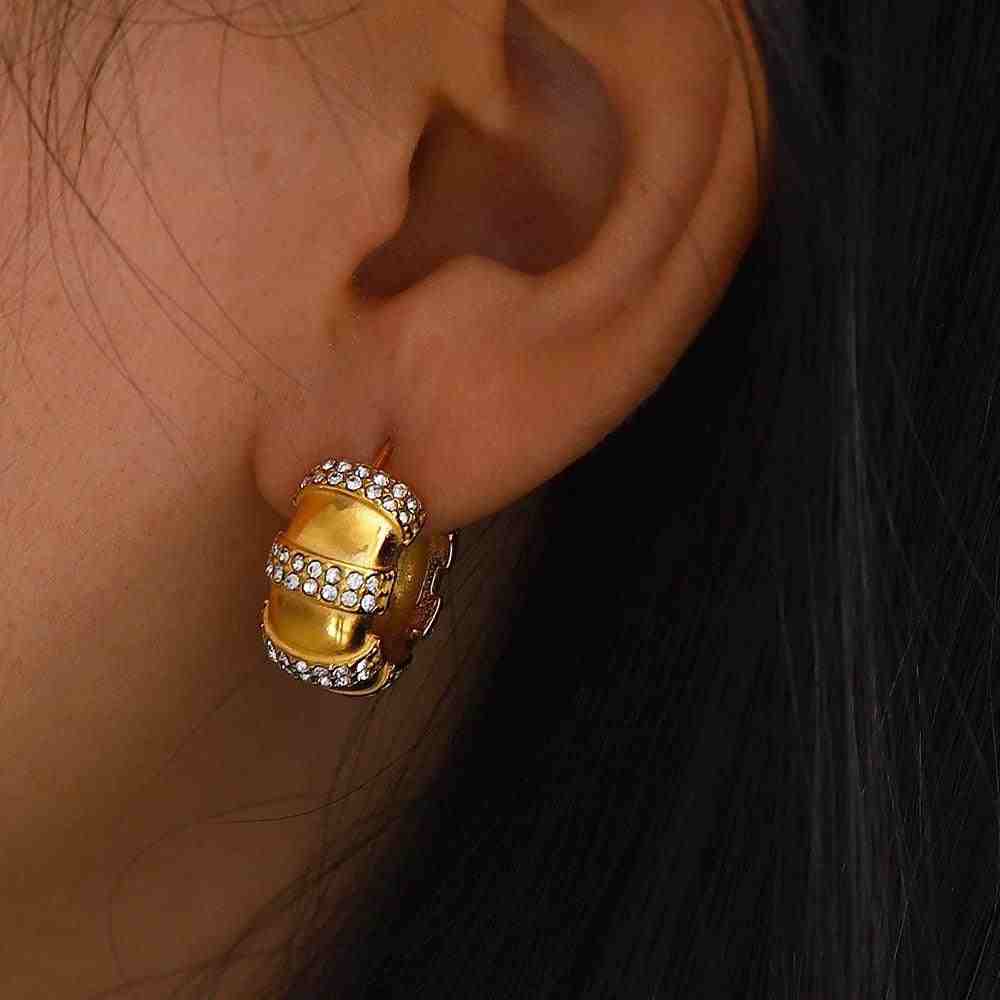
The one pairing that consistently does not work in Pakistani styling is a petit chain with heavy statement earrings. Large jhumkas, chandelier sets, or wide hoop earrings draw the eye strongly to the jaw and neck — and a delicate chain in the same space disappears. The visual weight is entirely at the ears and the necklace reads as absent rather than present. For statement earrings, either pair them with no necklace, or with a collar-style piece that sits close enough to the neck to remain visible alongside the earrings. The petit chain is the piece for when the earrings are simple — a stud, a small hoop, a tiny drop.
Frequently asked questions
Q1. What length is a petit necklace?
A: Most petit necklaces sit at 14 to 16 inches — the range that places the chain at the base of the throat and just above the collarbone. This is shorter than a standard pendant chain (18 to 20 inches) and shorter than the collarbone-sitting length (16 to 18 inches). The shorter length is part of what makes the piece read as delicate rather than draped: it sits close to the skin rather than hanging away from it.
Q2. Can petit necklaces be worn with Pakistani formal wear?
A: Yes — particularly with heavily embroidered necklines where a statement necklace would compete with the fabric. A single fine chain or a small pendant sits above the embroidery and provides a rest point without adding visual noise. For mehndi, walima, and formal dinners where the kameez already has neckline embellishment, a petit necklace is often more appropriate than a larger set.
Q3. Do petit necklaces tarnish in Pakistani conditions?
A: The material determines this, not the size. A petit necklace in 18K PVD over 316L stainless steel handles Pakistani conditions — summer heat, sweat, humidity, and wuzu — the same as any other piece in the same material. The chain's fine gauge does not make it more vulnerable. What makes a fine chain more likely to tarnish is a weaker base metal like brass, which reacts with sweat regardless of the chain's size.
Q4. How many petit necklaces can be layered at once?
A: Three is the practical maximum before the layered look becomes visually complicated. Two is the most manageable for daily wear — close enough in length to sit adjacent rather than tangled, different enough to read as distinct. For Pakistani summer conditions, fewer pieces means less metal against the skin, which matters for comfort in July and August in Karachi and Lahore.
Q5. What earrings work with petit necklaces?
A: Small to medium earrings — studs, small hoops, simple drops at under 3 cm. The petit necklace reads clearly when the earrings do not compete for visual dominance at the neckline and jaw. For the full breakdown of earring types and when each works with different necklace styles, the earring types guide covers each pairing in detail.
The necklace that makes everything else look more considered
A petit necklace does not change the outfit. It completes it. When the embroidery, the fabric, or the outfit's own structure is already doing the work, a fine chain at the throat is what makes the look appear finished rather than assembled. It is the piece that earns its place quietly — which is exactly why it works.
Browse petit necklaces — 18K gold plated, COD across Pakistan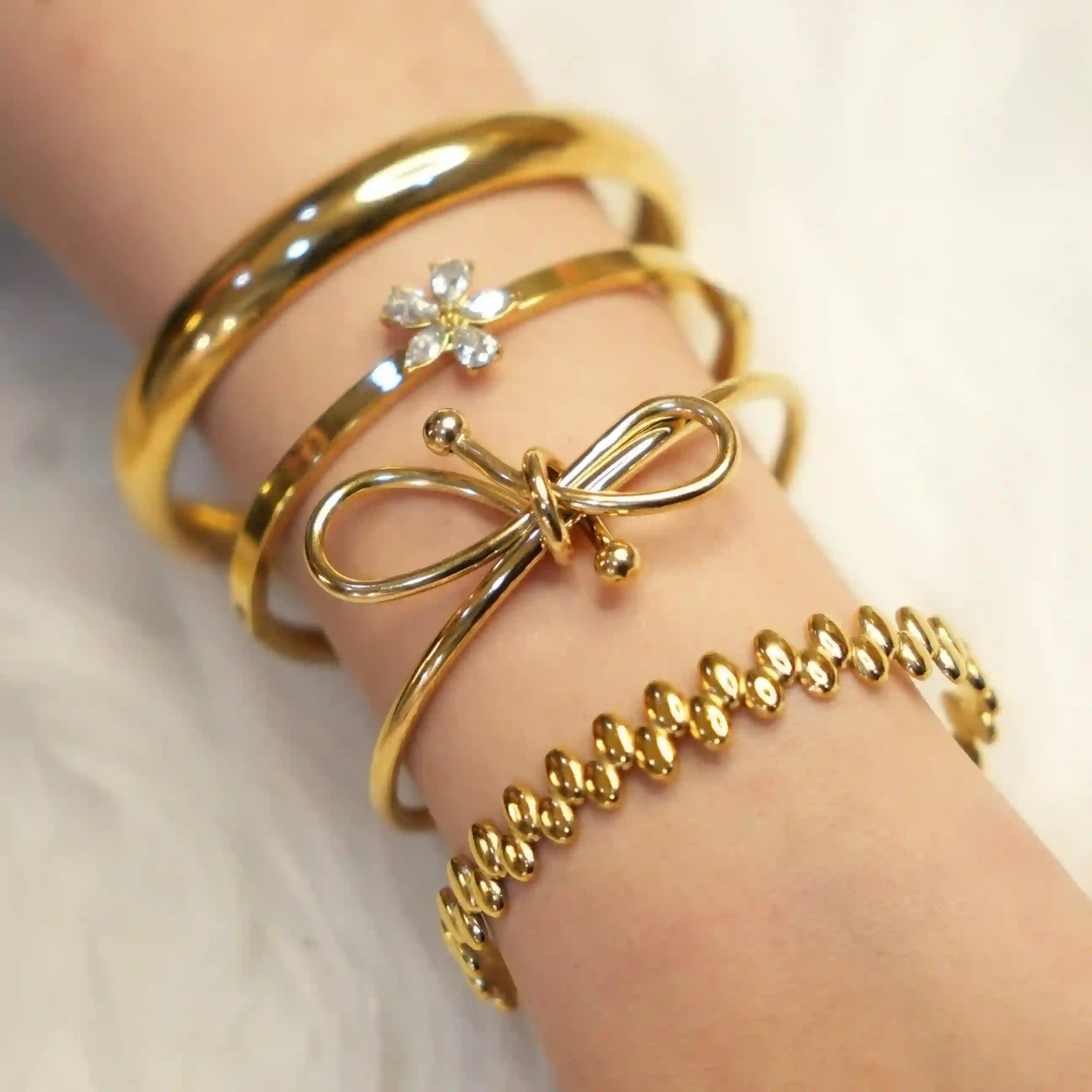

Leave a comment
This site is protected by hCaptcha and the hCaptcha Privacy Policy and Terms of Service apply.