

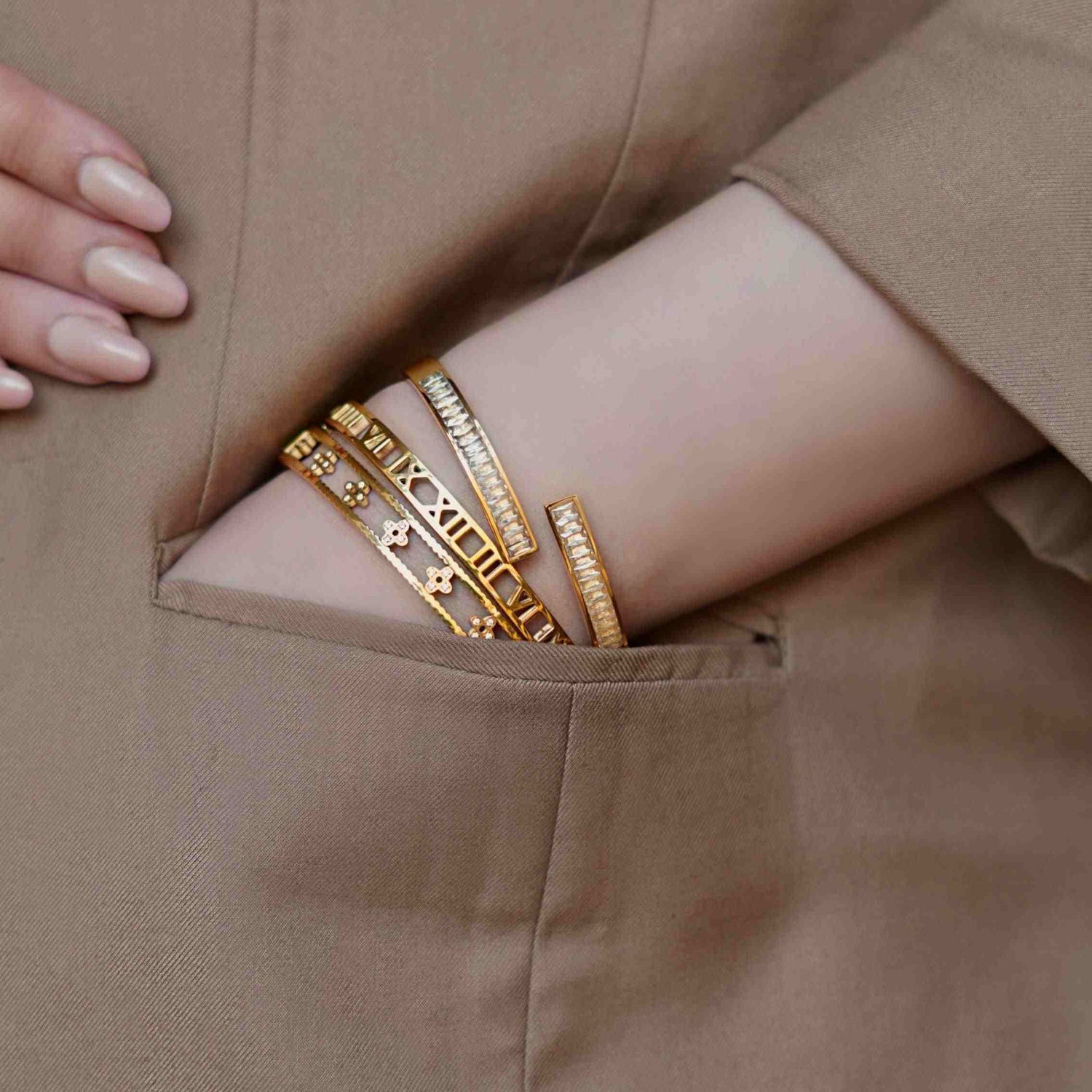
You have seven bangles on. It felt right at home. Sitting in the car on the way to the function, you start wondering if seven is too many or not enough — and realise you have never actually known what the rule is, only that there is one.
The honest answer — there is no universal number, but there are clear context rules
The number of bangles that looks right is not fixed. It is determined by three variables: the occasion, the outfit's visual weight, and the wrist they are on. A stack that reads as perfectly calibrated at a mehndi function reads as excessive in a Monday morning meeting. A single bangle that reads as quietly intentional at the office reads as underdressed at a baraat. The occasion sets the acceptable range — and working within that range is the actual skill.
Traditional rules in Pakistani culture do exist around bangle count — odd numbers, pairs, sets of twelve and twenty-four for specific occasions — but these are associated with bridal and ceremonial contexts, not daily wear. For the majority of Pakistani women navigating daily life, the office, university, and a shaadi season simultaneously, the useful rules are contextual, not ceremonial.
The question is not "how many is too many" in the abstract. It is "how many is too many for this specific occasion, this specific outfit, and this specific wrist." The same answer applies across all three: match the visual weight of the bangles to the visual weight of the context. A loud stack for a loud occasion. A quiet stack for a quiet one.
Bangles by occasion — the count that works in each Pakistani context
The sound variable — what nobody mentions but everyone notices
Bangles make sound. This is both their cultural value and their practical limitation. At a mehndi, the sound is the point. In a corporate meeting, on a video call, in a quiet office, during an exam — the sound becomes the problem. Before stacking, consider where you will spend the day. If the context is sound-sensitive, either choose fewer bangles or choose heavier, tighter-fitting bangles that do not clink against each other when the wrist moves.
The fit also affects sound. Bangles that are slightly too large for the wrist move and clink constantly. Bangles that fit snugly against the wrist do not. Sizing is therefore not only a comfort decision — it is a social context decision. A bangle that fits correctly can be worn in more contexts than one that slides freely.
Both wrists or one — and which wrist to stack on
In Pakistani tradition, both wrists are worn for ceremonial occasions — mehndi, baraat, and bridal functions. For everyday and semi-formal contexts, one wrist is the contemporary norm, and the choice of which wrist matters for practical reasons.
| Wrist | Context | Why |
|---|---|---|
| Non-dominant (usually left) | Daily wear, office, university | Less contact with surfaces during writing, typing, and phone use. Bangles stay in position and produce less sound through a working day. |
| Dominant (usually right) | When the bangle is meant to be seen and heard | More movement = more visibility and sound. Right for mehndi and festive occasions where the bangles are part of the occasion's aesthetics. Less practical for daily professional use. |
| Both wrists | Mehndi, baraat, bridal, full festive occasions | Culturally expected at ceremonial functions. Reads as underdressed at these occasions if only one wrist is stacked. |
How to count a stack — thin bangles, wide bangles, and mixed stacks
Counting bangles by number is only useful when all bangles have similar width. A stack of ten 2mm thin bangles occupies less visual and physical space than three 8mm wide bangles. When mixing widths, the more useful count is the total millimetres of wrist coverage rather than the number of individual pieces.
Traditional rules — what they actually say and when they apply
The most cited traditional bangle rules in Pakistani and South Asian culture are around odd numbers, pairs, and specific counts for ceremonial occasions. These come from bridal and celebratory traditions where bangles carry specific cultural meaning — the full set for a bride, the matched pair for a function guest, the specific colour for a specific event stage.
For non-bridal wear — which is the context most Pakistani women are navigating — these rules are cultural knowledge rather than daily constraints. Knowing that certain numbers carry traditional significance is useful context. Applying bridal bangle count logic to a Tuesday in the office is not. The traditional rules matter at the occasions where they originate. Outside those occasions, contextual rules apply.
Frequently asked questions
Q1. How many bangles should I wear to a mehndi in Pakistan?
A: Eight to sixteen per wrist is the appropriate range for a mehndi guest in Pakistan. The mehndi is the occasion with the widest cultural licence for bangle count — more is genuinely appropriate here. A full forearm stack, colour-coordinated with your outfit, reads as correctly festive. Fewer than six per wrist at a mehndi reads as underdressed for the occasion's register.
Q2. How many bangles is too many for everyday wear in Pakistan?
A: More than three on a single wrist crosses into occasion-wear territory for most daily contexts. One to three bangles reads as contemporary styled daily wear — deliberate without being festive. The additional factor is sound: any count that produces constant clinking during normal wrist movement is too many for daily wear in professional and classroom settings regardless of the number.
Q3. Should I wear bangles on both wrists or just one?
A: One wrist for daily wear and semi-formal occasions — the non-dominant wrist for practical reasons. Both wrists for ceremonial functions: mehndi, baraat, walima, and full bridal or festive occasions. Wearing bangles on both wrists in an office or university setting reads as over-dressed for the context rather than as a style choice.
Q4. Do Pakistani office environments have rules about bangles?
A: Conservative corporate offices in Karachi and Lahore — banking, law, accounting — typically expect zero to two bangles maximum, and only if they fit snugly enough not to produce sound during meetings and calls. Creative and media offices are more flexible. The functional rule is: if the bangle is audible during a phone call or video meeting, it is too many for that context regardless of the number.
Q5. What is the difference between wearing bangles and wearing a cuff bracelet in terms of styling rules?
A: Bangles are circular closed rings worn in multiples — their styling logic is count-based. A cuff is an open, adjustable piece worn as a single structured statement. The count rules for bangles do not apply to cuffs — one cuff is a complete look, whereas one bangle in a daily wear stack reads as minimal. They can be paired together, but the cuff is always the anchor piece and the bangles are the complementary stack, not vice versa. For more on layering bangles with stacked bracelets, the bracelet stacking guide covers the full layering logic.
The right number is the one that matches the occasion — not the one that feels like enough at home
The gap between how a bangle stack looks in your room and how it reads in the room you are going to is almost always a context mismatch. The pieces are right. The number is wrong for that specific occasion. Mehndi deserves the full stack. The office deserves one. Tuesday deserves two or three. Calibrating to the room is the entire skill.
Browse bangles and cuffs at Mithra & Co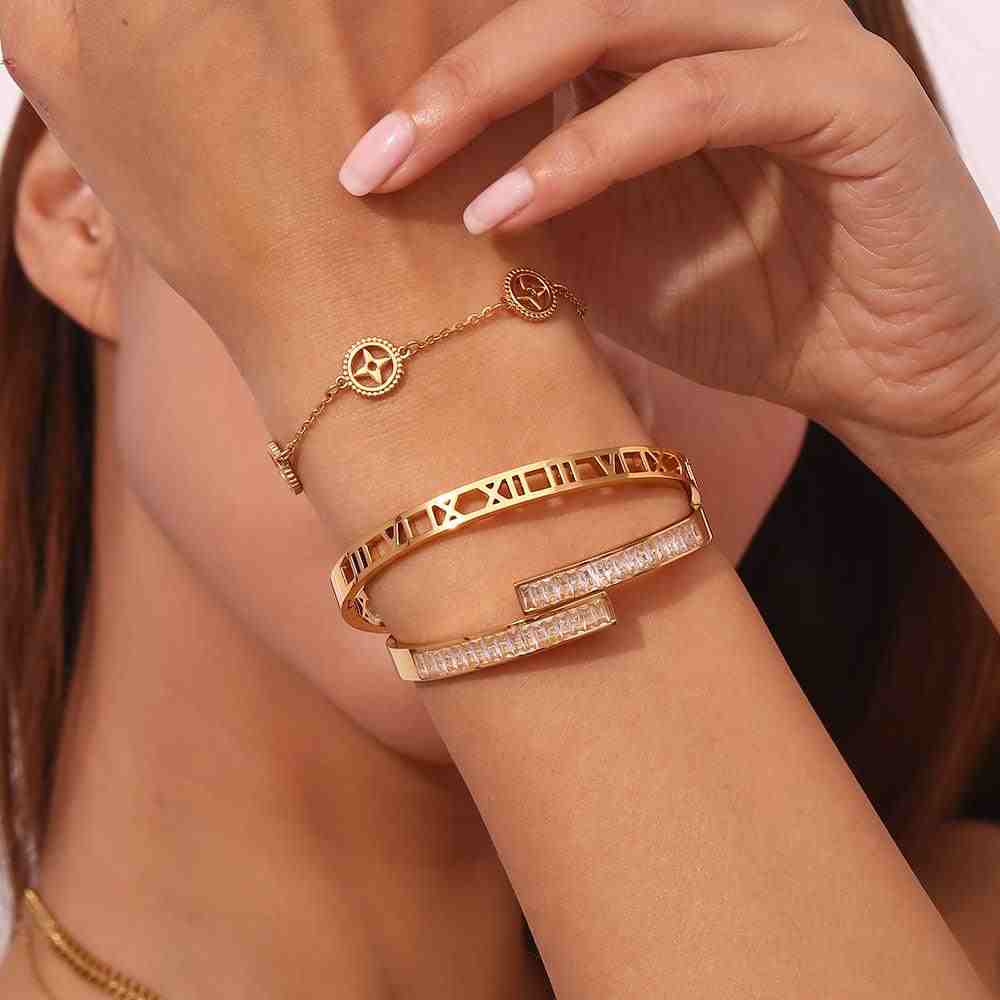

Leave a comment
This site is protected by hCaptcha and the hCaptcha Privacy Policy and Terms of Service apply.