

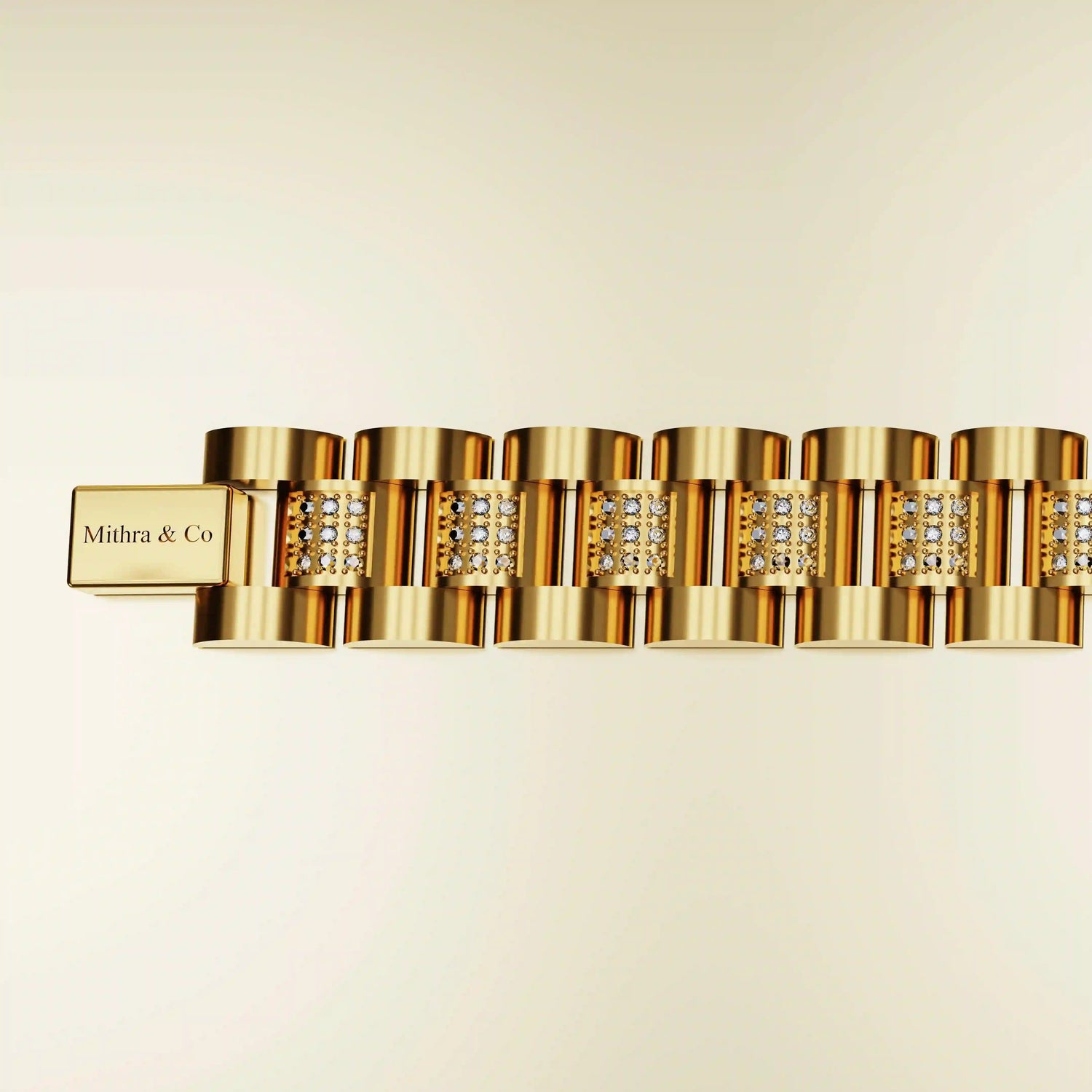
Why a watchband needs a different cleaning method from other jewelry
A flat surface — a ring band, a chain link, an earring stud — wipes clean in one motion because there is nowhere for residue to hide. A link-style watchband is built from dozens of small interlocking joints, each one with a gap between links wide enough to trap skin oil, sweat residue, and dust, but too narrow for a cloth to reach into properly. A watchband that looks clean on the visible surface can still be holding weeks of buildup in the gaps between links — which is the actual cause of the dulled, slightly grimy look a watchband develops even with regular surface wiping.
What is collecting in the link gaps specifically
Three things accumulate between watchband links under daily Pakistani wear conditions: sweat residue containing sodium chloride, natural skin oils, and fine dust that settles into the gaps throughout the day and gets sealed in as the links flex closed. None of this is visible from the outside once it settles between links, but the combination sits directly against the plated surface for hours at a time, which is part of why the clasp and inner-link area wear faster than the rest of the band, as covered in the tarnish diagnostic guide for watchbands specifically.
The correct cleaning method — link by link
- Remove the watch head if the band detaches, or protect the watch face with a small piece of tape if it does not. Cleaning solution and moisture near the watch mechanism itself risks damage that has nothing to do with the band's plating.
- Mix a small amount of mild soap in lukewarm water. Nothing stronger is needed, and anything stronger — particularly anything containing ammonia or bleach — actively degrades PVD coating faster than the dirt it is meant to remove.
- Use a soft-bristled brush, not a cloth, to work into the link gaps specifically. A soft toothbrush or a dedicated jewelry cleaning brush reaches between links in a way a cloth physically cannot. Light pressure in a back-and-forth motion along each row of links dislodges trapped residue without scratching the coating.
- Flex the band gently while brushing to open the gaps slightly. Link-style bands close tightly when laid flat. Gently bending the band as it is being cleaned opens small gaps between links that stay closed during normal wear, allowing the brush to reach residue that would otherwise stay trapped.
- Rinse under lukewarm running water, moving the band continuously. A static rinse leaves soap residue sitting in the same gaps that just been cleaned. Moving the band under the water while rinsing flushes the gaps properly.
- Dry immediately and completely — this step matters more on a watchband than on any other piece. Trapped moisture between links after cleaning creates the exact damp, low-airflow environment that accelerates coating wear. Pat the band dry with a soft cloth, then leave it lying flat in open air for at least twenty minutes before wearing or storing it, so moisture in the deeper link gaps has time to fully evaporate.
What not to do when cleaning a watchband
Avoid ultrasonic cleaners on any plated piece, watchband included — the vibration that makes them effective on solid gold or silver is aggressive enough to accelerate coating breakdown on a plated surface. Avoid toothpaste, baking soda, or any abrasive paste, which are sometimes suggested for solid metal jewelry but scratch PVD coating on contact. And avoid cleaning the band while it is still attached to a watch head that is not water-resistant — checking the watch's water resistance rating before any wet cleaning method prevents unrelated damage to the mechanism itself.
How often this actually needs doing
A full link-by-link clean once every three to four weeks under regular daily wear in Pakistan's heat is enough to prevent buildup from reaching the point where it visibly dulls the band's appearance. A quick dry-cloth wipe after unusually sweaty days — outdoor events, physical activity, particularly hot weeks — extends the interval between full cleans and reduces how much residue accumulates in the link gaps between sessions. For general gold plated jewelry cleaning that applies to flat-surface pieces, the general cleaning guide covers the broader method; the link-specific technique above is what changes for anything with interlocking joints.
Frequently asked questions
Q1. Why does my watchband look dull even though I wipe it regularly?
A: A surface wipe cleans the visible top of the links but cannot reach the residue trapped in the gaps between individual links, where sweat, skin oil, and dust accumulate out of sight. This trapped buildup is usually the actual cause of a dulled appearance even on a band that looks clean from the outside — a link-by-link clean with a soft brush reaches what a wipe-down misses.
Q2. Can I use an ultrasonic cleaner on a gold plated watchband?
A: No. Ultrasonic cleaners are built for solid metal jewelry and their vibration is aggressive enough to accelerate wear on any plated surface, watchbands included. A soft-bristled brush with mild soap and water is the safer method for link-style plated pieces.
Q3. How do I clean between watchband links without damaging the coating?
A: A soft-bristled brush — a soft toothbrush works well — combined with mild soap and lukewarm water, used with light pressure while gently flexing the band to open the gaps slightly. This reaches trapped residue between links without the abrasive contact that scratches or strips plating.
Q4. Is it safe to get my watchband wet while cleaning it?
A: Yes, for the band itself, provided the watch head is either detached or protected with tape if it is not water-resistant. The plated surface and stainless steel base handle brief water contact during cleaning without issue — the concern is the watch mechanism, not the band.
Q5. How often should I deep clean a link-style watchband in Pakistan?
A: Every three to four weeks under regular daily wear covers most of the buildup that accumulates from Pakistan's heat and sweat exposure. A quick dry wipe after particularly sweaty days in between full cleans reduces how much residue builds up in the link gaps and extends how clean the band looks between sessions.


Leave a comment
This site is protected by hCaptcha and the hCaptcha Privacy Policy and Terms of Service apply.