

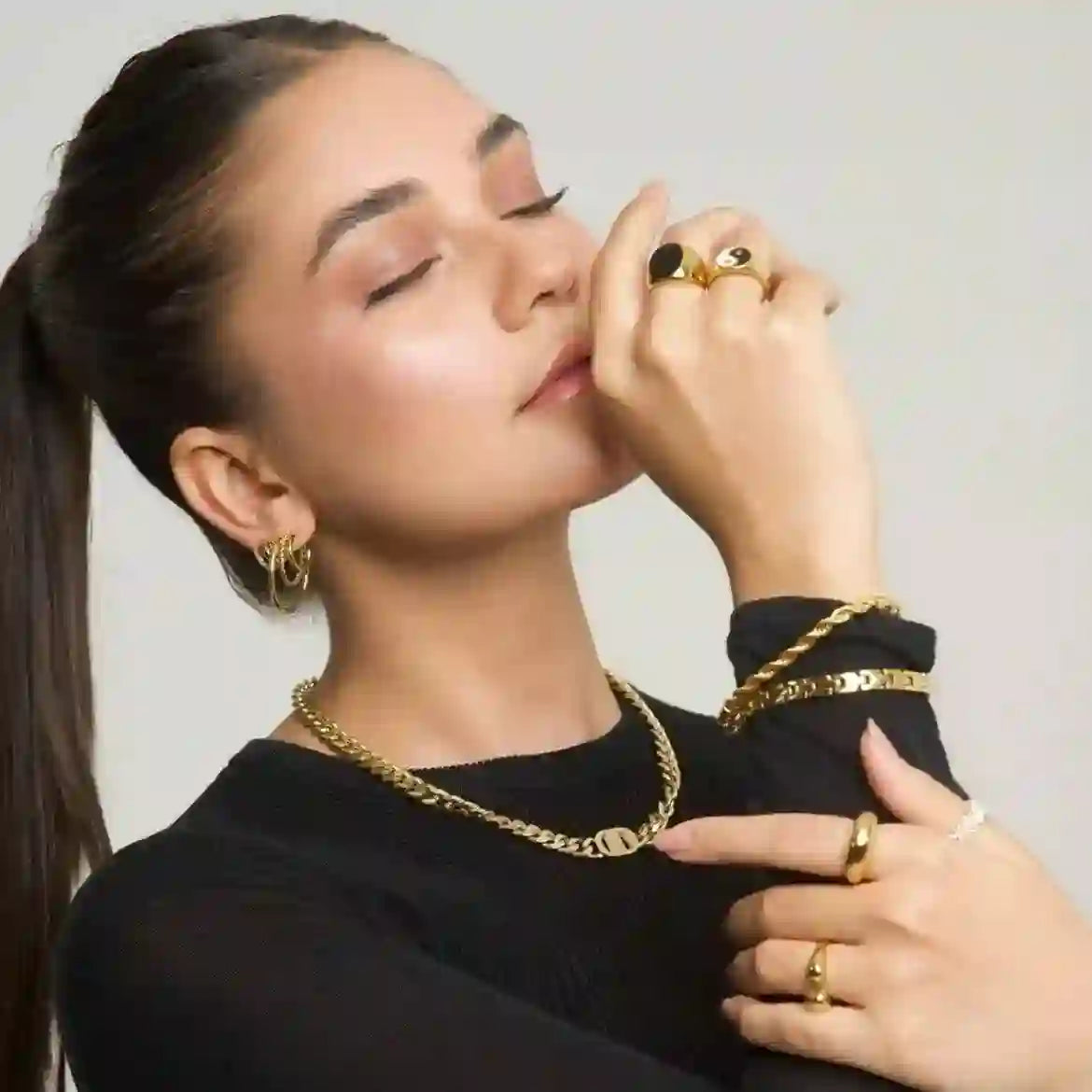
Every Pakistani woman has too much jewelry she never wears and not enough of the pieces she reaches for every morning. The problem is not quantity. It is that nobody told her which four pieces actually earn their place.
Why four pieces — and why these four
This is not a trend list. Trends change every season and the pieces you buy for them end up at the back of the drawer six months later. This is the opposite of that: the minimum viable jewelry collection for a Pakistani woman's actual life — office, home, lawn suits, formal events, wuzu five times a day, Karachi humidity in July, a mehndi on Saturday, a team meeting on Monday.
The four categories are not arbitrary. Earrings change a face. A ring makes a hand look finished. A bracelet adds movement. A necklace frames everything above the collarbone. Each one does something the others cannot. Own one excellent piece in each category and you have covered every context Pakistani life will put you in. Own twelve mediocre pieces in one category and you still feel like you have nothing to wear.
The earring: a plain stud you can sleep in
Not a statement earring. Not a hoop. Not the chandelier set from the last shaadi you attended. A plain stud — a small dome, a flat disc, a simple round stone — that sits in your ear so naturally you forget it is there. This earring goes on Monday morning and comes off when it needs cleaning. It survives the office, the commute, the afternoon outdoors, and wuzu without being removed, without catching on anything, without requiring a decision about whether it is too much or too little for the context.
The reason most Pakistani women do not own this piece is that studs feel like they are not enough. They are not. That is the point. A stud earring at the right size — not tiny enough to disappear, not large enough to read as dressed up — is the jewelry equivalent of a white shirt. It is the neutral that makes everything else easier. Once you own it, you will understand why women who own it reach for it every morning without thinking.
The earring you reach for every morning without thinking is worth more than ten you rotate through with deliberation. The first earring is not your favourite. It is your default — and default is what matters most.
For Pakistani skin tones, a gold tone stud reads warmer and more natural in most contexts. Silver tone works in contemporary and western styling but can look cooler against the warm undertones that dominate Pakistani complexions. If you are buying one stud that has to do everything, buy it in gold tone. Browse stud earrings or the full earring collection.
The ring: a slim band for the right hand
A single slim band on the right hand. Not a cocktail ring. Not a statement stone. A band — smooth, slightly textured, or with a single small detail — that sits on the index or middle finger of the right hand and stays there. This is the ring you wear to work, to the kitchen, during the school run, during the monthly family dinner, and to the niece's birthday party. It is always appropriate because it is never obtrusive.
In Pakistani culture, a right-hand ring carries no marital or engagement signalling — it is purely aesthetic, which makes it the most flexible piece in the category. Left-hand ring placement has social meaning in Pakistani contexts. Right-hand placement has none, which means it is available to carry any meaning you assign it, or no meaning at all beyond the fact that it makes your hand look considered rather than bare.
The slim band works because it adds visual interest at the hand without weight, without catching on fabric, and without requiring removal during wuzu if the fit allows water to reach beneath it. If you own one ring, it should be this one. Additional rings — stackable bands, a midi ring, an occasion stone — make sense once this one exists. They do not make sense instead of it. Find the right fit in the rings collection.
The bracelet: a single chain that moves
A single chain bracelet — not a bangle, not a cuff, not a tennis bracelet for everyday — on the wrist of your writing hand. A chain that moves when you move: a box chain, a cable link, a rope chain at the right weight. Light enough that you forget it is there. Present enough that you notice when it is absent.
Pakistani women consistently underestimate what a single chain bracelet does. Because it moves, it catches light in a way rigid bangles do not. Because it is a single piece, it does not create the noise and bulk that stacked bangles create in professional settings. Because it is a chain rather than a cuff, it is easily removed for wuzu and easily replaced. It is the bracelet that works in every Pakistani context — from the office to the bazaar to the wedding — without ever requiring a decision about whether it is appropriate.
A chain bracelet is the only bracelet style that reads as polished rather than decorative in a professional Pakistani setting. A single piece on the wrist of the writing hand is as far as most Pakistani offices need you to go.
A chain bracelet stacks. Add a bangle, a tennis bracelet, or a second chain when the occasion calls for more. The single chain is the anchor; the stacking is the event. Without the anchor, stacking looks like an accident.
A chain bracelet survives Pakistani daily conditions — commute, outdoor meetings, the afternoon heat — without tarnishing if the base metal is right. 18K PVD over stainless steel handles everything Pakistani summer asks of it.
Browse the bracelets collection for chain styles in 18K PVD over stainless steel — nickel-free, tarnish-resistant, COD across Pakistan.
The necklace: a chain at the right length
A plain chain at 16 to 18 inches — sitting just below the collarbone. No pendant. No stone. Just a chain. This is the piece most Pakistani women talk themselves out of because it feels too simple. It is not too simple. It is the foundation that makes everything else work.
A plain chain at 16 to 18 inches works with every Pakistani outfit because it sits in the space where the neckline ends and the chest begins — and that space exists in almost every garment. It shows above a dupatta. It reads as finished rather than overdressed in the office. It layers with a pendant when you want more. It pairs with a collar piece for events. On its own, at the right weight, it is the necklace equivalent of the slim ring band — always present, never wrong.
The length matters. A 14-inch chain sits at the throat and reads as a choker or collar piece — a specific style choice, not a neutral. A 20-inch chain drops below the collarbone and reads as a pendant-length chain even without a pendant — it hangs rather than frames. The 16-to-18-inch range sits in the exact zone where the chain frames the neckline rather than dominating it or disappearing into it. For Pakistani necklines specifically — the round-neck kurta, the square-neck kameez, the open-collar shirt — this is the length that works. Explore the full range in the necklace collection.
What these four pieces do together
-
They cover every contextOffice to occasion to casual to formal — the stud, band, chain bracelet, and plain necklace work in all of them. You do not add or remove pieces based on context. You add to them for occasions. The base remains constant.
-
They survive Pakistani conditionsIn 18K PVD over 316L stainless steel, all four pieces handle Karachi humidity, Lahore summer heat, daily wuzu, office air conditioning, and outdoor commutes without tarnishing, discolouring, or marking skin. The material choice makes the low-maintenance claim real, not aspirational.
-
They photograph wellAt events and occasions where pictures matter — mehndi, walima, Eid, a work event — the four-piece base reads as intentional rather than assembled. The stud shows in close-up photographs. The band catches light at the hand. The chain appears above the dupatta. The bracelet moves in candid shots. None of them disappear the way statement pieces sometimes do in full-body photographs.
-
They compoundEach piece works alone. Together they create a complete look. Add one statement piece — a collar necklace for an event, a second ring for stacking, a bangle over the chain bracelet for a mehndi — and the base absorbs it. Without the base, the statement piece looks isolated. With it, the statement piece looks like a decision.
Frequently asked questions
Q1. What jewelry should a Pakistani woman buy first?
A: A plain stud earring. It is the most versatile piece in the collection — works in the office, at events, during daily wear, and with wuzu — and it establishes the template for what the rest of the collection should do. Everything else builds from this anchor. If you only buy one piece, buy the stud.
Q2. What is the best everyday jewelry material for Pakistan?
A: 18K PVD over 316L stainless steel. The PVD layer does not tarnish in Pakistani conditions — heat, sweat, humidity, and wuzu water do not break it down. The stainless steel base is nickel-free, which means no skin reactions for sensitive skin. For daily Pakistani wear, it outperforms gold-filled, gold vermeil, and standard electroplating on every practical criterion.
Q3. How much should a Pakistani woman spend on everyday jewelry?
A: Enough that the material is right, not enough that wearing the piece every day feels like a risk. For 18K PVD stainless steel, the range that covers all four base pieces — stud, band, chain bracelet, plain necklace — is achievable without making any individual purchase a significant decision. The point of everyday jewelry is that it can be worn without anxiety. Pricing that creates anxiety defeats the purpose.
Q4. Can these four pieces be worn during wuzu?
A: The stud earring and the slim ring band are the most wuzu-compatible pieces in this collection. Both can remain in place if the fit allows water to reach beneath them. The chain bracelet and plain necklace are easy to remove and replace quickly. None of these pieces require the extended removal time that more complex clasps or layered pieces do. For specific guidance on each piece type, the wuzu and jewelry guide covers the full breakdown.
Q5. Is this the same as a capsule jewelry collection?
A: Yes — the concept is identical. A capsule collection in fashion means the minimum set of pieces that covers the maximum range of contexts. In jewelry, four pieces — one per category — is the Pakistani capsule. The term capsule collection in jewelry comes from the same logic as the capsule wardrobe: fewer pieces, all of them right, none of them redundant.
Four pieces. Every context. No decisions in the morning.
The jewelry every Pakistani woman should own is not the most beautiful jewelry she will ever buy. It is the jewelry she will reach for every morning without thinking — and that is the more useful thing to own. The statement pieces come later, and they matter more when the foundation already exists.
Browse the everyday essentials collection — COD across Pakistan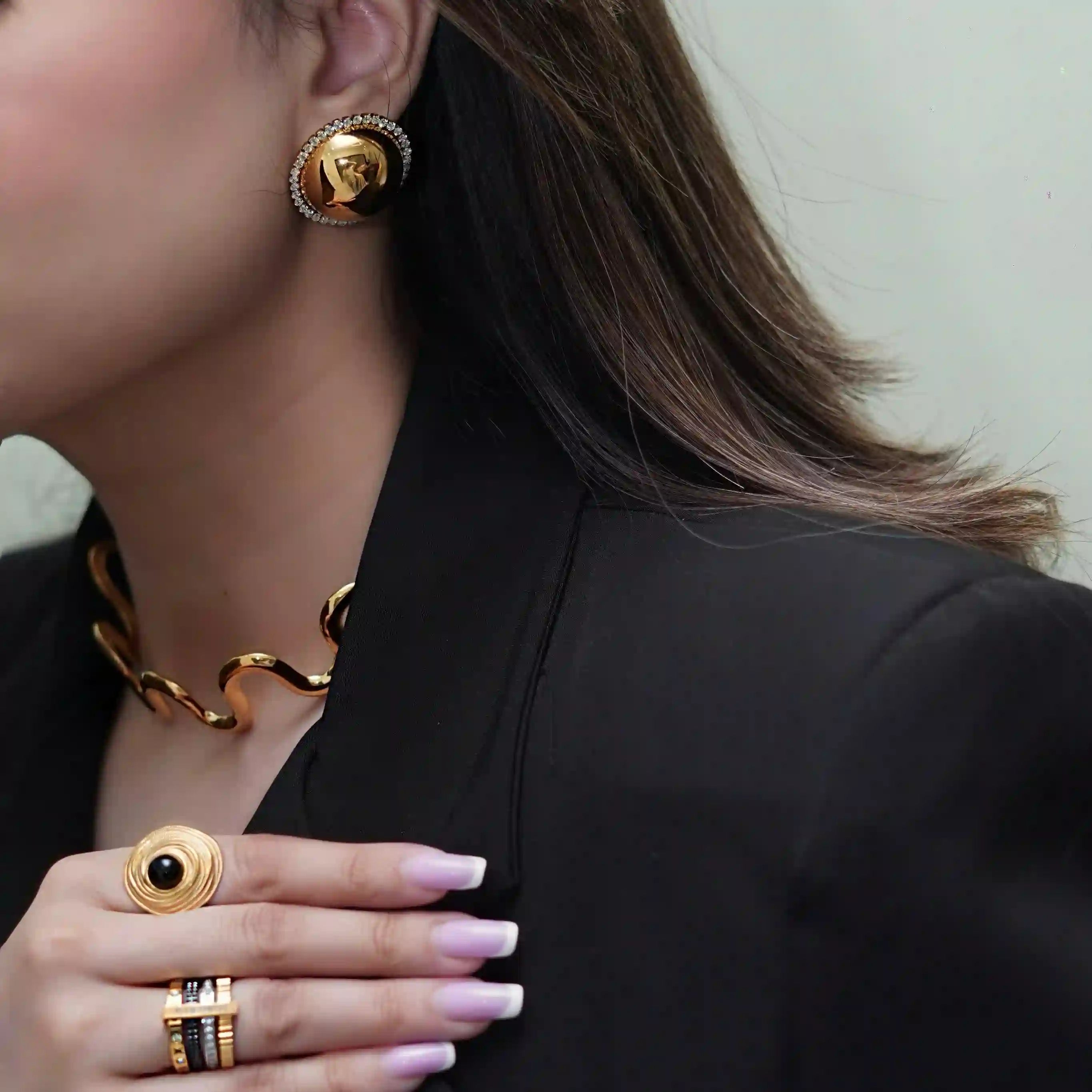

Leave a comment
This site is protected by hCaptcha and the hCaptcha Privacy Policy and Terms of Service apply.