

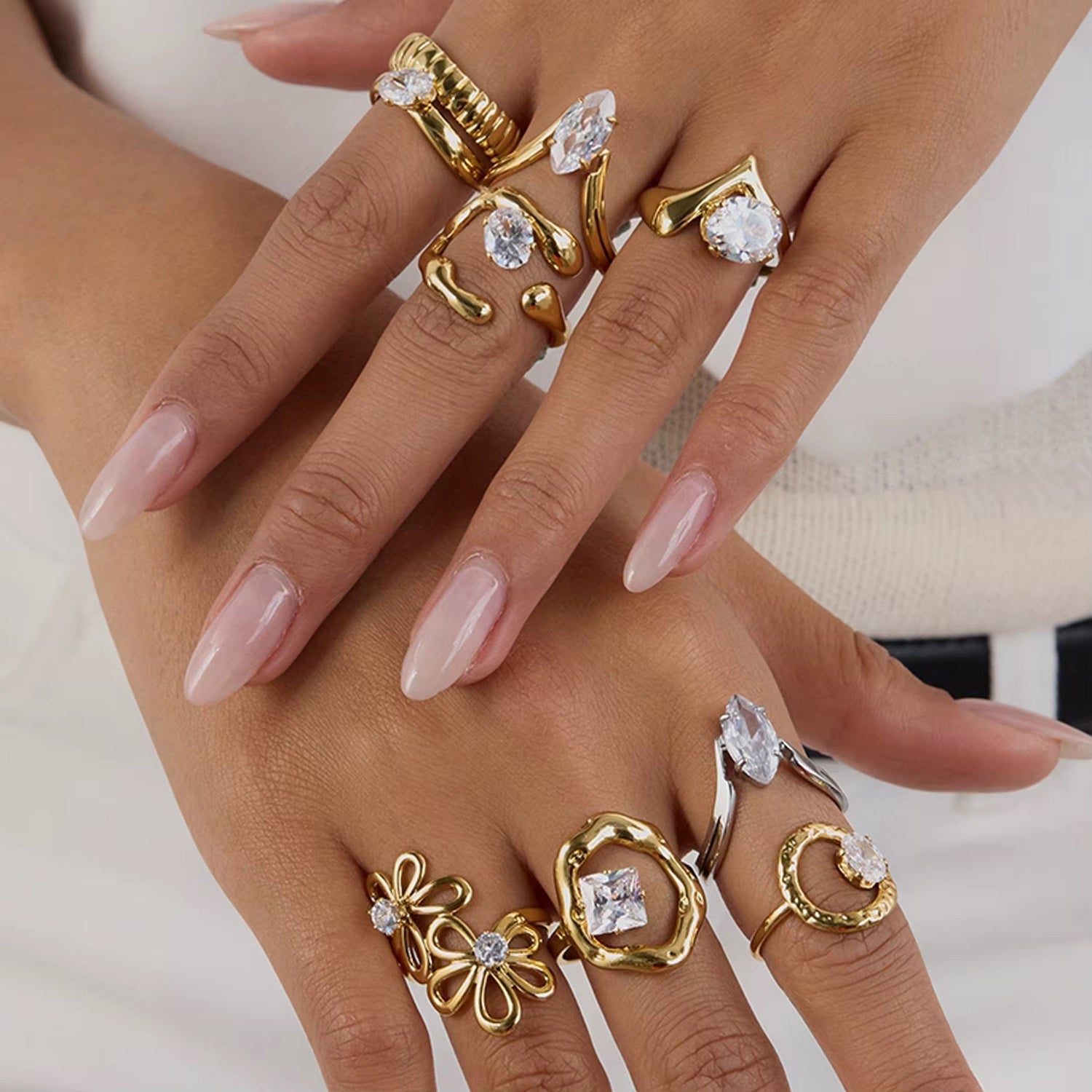
You own rings. Probably three or four at least. A slim band you bought yourself, one that was a gift, maybe a set you ordered online that came looking different from the photo. They sit in your jewelry box because every time you go to put one on, you don't quite know which finger to use, how many is too many, or whether it looks intentional or like you grabbed whatever was closest. That is the problem this guide solves.
Which finger — what each one actually signals in Pakistan
Finger placement is not arbitrary. In Pakistani and broader South Asian culture, certain fingers carry specific meaning. Others are simply styling territory. Understanding the distinction saves you from wearing something that reads as a cultural signal you did not intend to send.
-
R4Right ring finger The most neutral finger for ring-wearing in Pakistan. No engagement or marital connotation on the right hand. This is styling territory — wear any ring here without it signalling relationship status. Most Pakistani women who wear rings for aesthetic reasons default to the right ring finger.
-
L4Left ring finger Engagement and wedding ring territory in Pakistani culture, aligned with Western convention. Wearing a fashion ring on the left ring finger can read as a relationship signal depending on the audience. For daily wear fashion rings, the right hand is safer.
-
R3Right middle finger The second most common styling finger. A slightly larger or bolder ring works here — the middle finger has more visual mass in proportion to the hand and can absorb a statement piece without looking overpowered. No cultural connotation in Pakistani context.
-
R2Right index finger Less common but increasingly visible in Pakistani fashion. An index finger ring — particularly a slim band or geometric shape — reads as intentionally fashion-forward. It does not compete with other fingers because it is visually separated from the ring and middle fingers by position.
-
R5Pinky finger (either hand) Traditional in Pakistani culture for men, but women increasingly wear pinky rings as a contemporary styling choice. A very slim band or a small signet shape works here. The pinky ring should be smaller in scale than rings on other fingers — proportionality is everything on a small finger.
-
TThumb Uncommon in mainstream Pakistani styling but present in contemporary jewelry editorial. A thick band on the thumb reads as very deliberate and fashion-specific. If you are wearing a thumb ring, everything else on the hand should be minimal — the thumb ring is the only statement.
How many rings — the number that works for each context
The right number of rings is not a fixed rule — it shifts with the occasion, the outfit, and how much other jewelry you are wearing. The common mistake is treating rings as separate from the rest of the look: a woman who wears a statement necklace, bold earrings, and three rings on each hand is not building a look, she is building noise.
Rings work best when they are the decision, not an afterthought. If the earrings are the statement, wear one ring or none. If the rings are the statement, keep the rest minimal. The hand and the neck are competing display areas — you cannot run both at full volume.
-
One ringThe most versatile choice for daily and office wear. One ring on one finger, chosen deliberately, reads as more considered than three rings worn without thinking about them. For Pakistani university and professional environments, one slim band or modest signet is the setting where a single ring does the most work with the least risk.
-
Two ringsEither on the same hand — adjacent fingers for a deliberate look, or separated fingers for a casual look — or one on each hand for a balanced, symmetrical approach. Two rings is the sweet spot for most Pakistani lifestyle contexts: family lunches, semi-formal events, everyday work. Enough presence to feel styled, not enough to require active coordination with the rest of the outfit.
-
Three ringsStarts to read as a stacking look, which requires some intention to pull off. Three rings on the same hand needs to be treated as a designed stack — mixed widths, clear proportional difference between pieces. Three rings across both hands is more casual and reads as collected rather than styled. For festive occasions (Eid, mehndi, family gatherings) three rings is the appropriate upper limit before the look tips into costume territory.
-
Four or moreThis is statement territory and requires the rest of the look to be stripped back completely. No statement necklace, no large earrings, minimal bracelet if any. Four-plus rings on Pakistani women appears most often at weddings and high-fashion contexts. For daily Pakistani life — commuting, office, university — four or more rings is too much to be practical and tends to look accumulated rather than intentional.
Ring styles and when each one works in Pakistani dressing
Pakistan's jewelry market has a specific range of ring styles available in the gold plated segment. Each one has a different relationship with different outfit registers — what works with a lawn kurta on a casual Tuesday is not what works at a cousin's walima.
| Ring Style | Best Outfit Context | Occasion Suitability | Stacking Behaviour |
|---|---|---|---|
| Slim plain band | Everything — the most versatile ring in any collection | Daily, office, university, events | Stacks with anything. The foundation of any ring stack. |
| Signet / flat-face ring | Western and smart-casual outfits. Plain kurta. | Daily, office, casual evenings | Pairs with slim bands on adjacent fingers. Does not stack well with other statement pieces. |
| Geometric / architectural | Contemporary western and minimal Pakistani outfits | Casual, evenings, fashion-forward contexts | Wear alone or with one slim band maximum. The geometry is the statement. |
| Stone-set (CZ / crystal) | Formal Pakistani wear, semi-formal events | Mehndi, walima, lunches, Eid | One stone-set ring per hand. Multiple stone-set pieces compete. |
| Midi ring (worn above the knuckle) | Casual western, editorial, contemporary looks | Daily casual, fashion contexts | Pair with a full-finger ring on an adjacent finger for deliberate proportional contrast. |
| Wide band / cuff ring | Plain outfits with minimal other jewelry | Casual, evenings, statement occasions | Wear alone. A wide band is a statement ring — it should not compete with other pieces on the same hand. |
Rings with Pakistani outfits — the pairing logic by outfit type
The outfit is the context. The ring style and quantity that works on a plain lawn kurta is genuinely different from what works on a formal embroidered shalwar kameez at a wedding function. This is not about matching — it is about matching the visual weight of the jewelry to the visual weight of the outfit.
With casual lawn and daily kurta
One or two slim bands on the right hand. Or a single signet on the right ring finger. The outfit is light — lawn fabric, simple silhouette — and the ring should match that lightness. A large stone-set ring on a casual printed lawn looks like you forgot to take off your event jewelry. One clean, minimal ring reads as deliberately low-effort, which is what works with casual Pakistani everyday dressing.
With formal embroidered shalwar kameez
The outfit has embellishment built in. The rings should complement without competing. One or two slim bands plus one stone-set ring — no more — is the right proportion. The dupatta and the embroidery are already doing heavy visual work. The rings are punctuation, not the full sentence.
With western casual — jeans, tops, western shirts
Western outfits create the most freedom for rings because the garment itself is visually simpler. A stack of two or three rings on one hand reads as intentional editorial with a plain western top in a way it would not with a heavily embroidered Pakistani outfit. This is where mixing ring styles — a slim band, a geometric piece, a midi ring — works best, because the outfit provides a clean background for the rings to exist against.
For office in Pakistani professional settings
Conservative environments: one slim band, maximum. It signals adornment without commanding attention. Creative and media environments in Karachi and Lahore have more tolerance for stacking and statement rings — two or three rings is appropriate. The test for any professional ring choice: would you be comfortable if the ring was the first thing a client or senior colleague noticed about you? If not, simplify.
The office jewelry Pakistan guide covers the full professional context — rings are one piece of a broader professional jewelry decision.
The wuzu consideration — rings and daily prayer in Pakistan
For Pakistani women who perform wuzu before daily prayers, rings raise a practical question: do they need to be removed? The short answer is that water must reach the skin beneath the ring for wuzu to be valid. A very tight-fitting ring that prevents water from reaching the skin underneath should be removed or loosened during wuzu. A ring with a comfortable fit — where water can flow freely between the band and the finger — does not need to be removed.
For daily wear rings worn through Pakistani prayer routines: a slim band in a comfortable fit is the most practical choice. Wide bands and very snug-fitting rings require either removal or deliberate loosening at the time of wuzu. Stainless steel PVD rings handle the repeated water exposure of five daily wuzu sessions without the base metal corroding — a brass or zinc alloy ring in the same situation degrades within weeks from the combined sweat and water chemistry.
The material question — what Pakistan's conditions actually require
Rings are in contact with skin more continuously than almost any other piece of jewelry. The inner band of a ring sits in direct sealed contact with the finger all day — sweat accumulates in that space, heat builds up, and in Pakistan's summer the chemistry of that trapped moisture is the primary driver of how fast a ring degrades.
Brass-base gold plated rings in Pakistani summer conditions leave green marks on the ring finger, develop dark patches on the inner band within weeks of daily wear, and begin to smell metallic by August. This is copper chloride forming from the brass base reacting with the salt in sweat. It is not a quality issue with that specific ring — it is a base metal issue with the category.
316L stainless steel with 18K PVD coating does not produce this chemistry. The base metal is inert to the sodium chloride, lactic acid, and ammonia in sweat. The inner band stays clean. The ring finger stays mark-free. For a piece worn every day through Pakistani summer, the base metal is the only decision that actually matters for longevity.
For the full explanation of what sweat does to each base metal: what sweat does to gold plated jewelry in Pakistan.
How to size rings correctly when buying online in Pakistan
Ring sizing is the most common complaint in Pakistani online jewelry reviews: "it was too tight," "it slid off," "it fit in winter but not in summer." All three are predictable and preventable with two minutes of measurement.
Measure your finger at the end of the day, not the morning — fingers swell slightly through the day, and in Pakistan's summer heat they swell more than in cooler months. A ring sized in the morning in January may fit uncomfortably tight by July afternoon. The measurement to use: wrap a thin strip of paper around the finger at its widest point (usually the knuckle), mark where it meets, measure the length in millimetres. That measurement is your finger circumference. Compare to the seller's size chart.
If you are between sizes, go up one size for rings you plan to wear in summer and for rings on your dominant hand, which tends to be slightly larger. The ring size guide for Pakistan covers this in full with printable sizing reference.
Frequently asked questions
Which finger should Pakistani women wear rings on?
The right ring finger is the most neutral and versatile choice — no cultural connotation, works for all outfit contexts, and is proportionally the most flattering placement for most ring styles. The left ring finger carries engagement and wedding ring associations in Pakistani culture. For fashion rings worn for aesthetic reasons, the right hand is almost always the better default. The right middle finger works for bolder or larger rings that need more visual mass beneath them.
How many rings can Pakistani women wear at once?
One to two rings is the everyday sweet spot — enough to feel styled, not so much that the rings require active coordination with the rest of the outfit. Three rings works for festive occasions and deliberate stacking looks. Four or more is statement territory and requires everything else — necklace, earrings, bracelets — to be stripped back completely. The number of rings and the presence of other jewelry are inversely related: the more rings, the less everything else.
What rings work best with Pakistani lawn suits and kurtas?
One or two slim plain bands on the right hand. The visual weight of a casual lawn suit is light — heavy or elaborate rings create an imbalance between the delicacy of the fabric and the weight of the jewelry. A single slim band or a modest signet on the right ring finger reads as deliberately minimal, which complements rather than competes with everyday Pakistani casual dressing. Stone-set rings are better reserved for formal embroidered outfits and event wear.
Do I need to remove rings for wuzu in Pakistan?
Water must reach the skin beneath the ring for wuzu to be valid — so a very tight ring that prevents water flow underneath should be removed or loosened. A ring with a comfortable everyday fit, where water moves freely between the band and the skin, does not need to be removed. For practical daily prayer routines, a slim band in a comfortable fit is the most convenient choice. Stainless steel rings handle the repeated water exposure of daily wuzu without corroding, unlike brass-base rings.
Why does my ring turn my finger green in Pakistan's summer?
The green mark is copper chloride — the product of a copper or brass base metal reacting with the sodium chloride (salt) in sweat. The ring's gold plating has worn through at the inner band contact point and the base metal is now in direct contact with your skin. Pakistan's heat accelerates this reaction because sweat volume is higher and temperature speeds up the oxidation chemistry. Switching to a stainless steel base ring stops this permanently — stainless steel does not contain copper and does not produce this reaction regardless of how much you sweat.
Can I wear the same rings in summer and winter in Pakistan?
Yes, but fingers change size between seasons — slightly larger in summer heat, slightly smaller in winter. A ring that fits perfectly in December may feel tight by July afternoon. If you are buying online, measure your finger at the end of a summer day for the most accurate Pakistan-season fit. If a ring feels snug in summer but you prefer not to size up, wearing it slightly higher on the finger (above the lower knuckle crease rather than at the base) gives a fractionally looser fit without changing the size.
The ring is not decoration — it is a decision
Every ring choice is actually three choices: which finger, how many, and which style relative to the rest of what you are wearing. Most ring mistakes in Pakistani everyday dressing are not about the ring itself — they are about one of those three decisions being made without the other two in mind.
Start with one slim band on the right ring finger. That is your baseline. Everything else — the second ring, the stack, the stone-set piece for Eid — gets added on top of that baseline as the occasion earns it. A ring that is 18K PVD over stainless steel will still look like a decision in September. A brass-base ring will be a different conversation by July.
Browse rings at mithraofficial.com — COD across Pakistan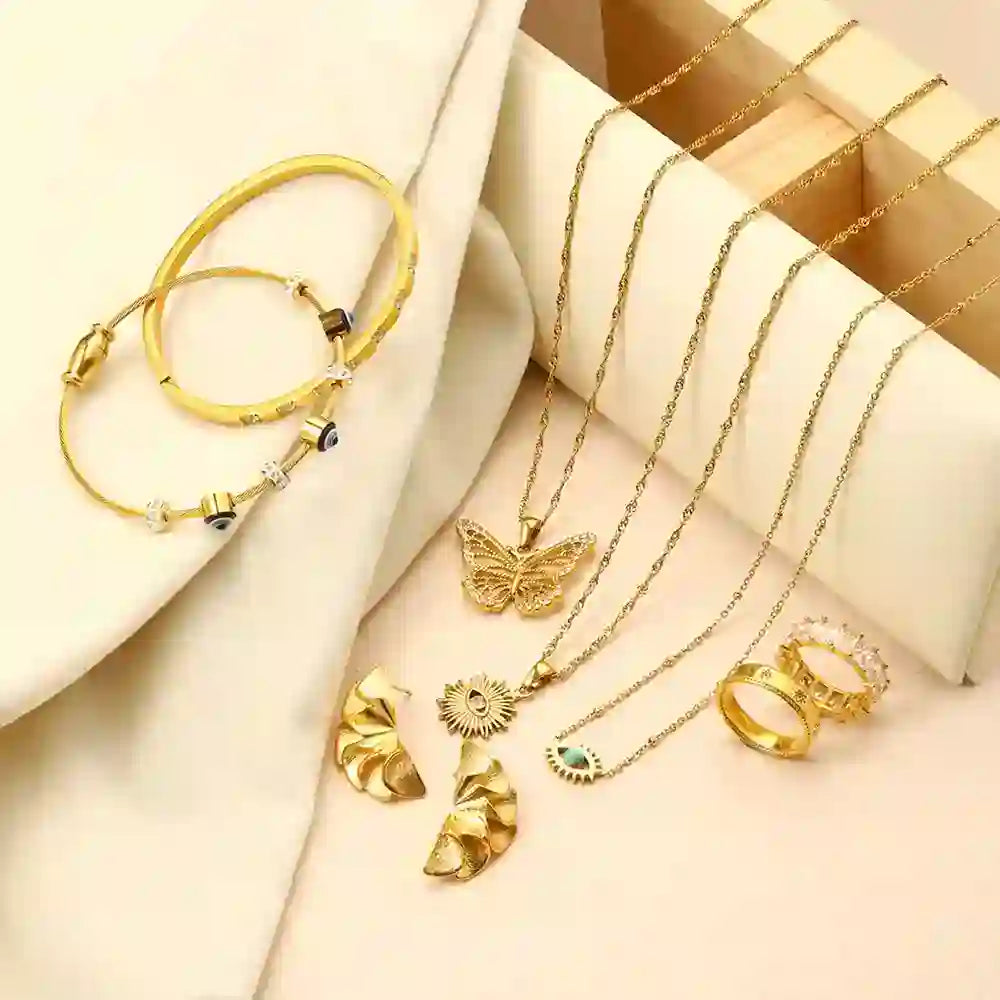

Leave a comment
This site is protected by hCaptcha and the hCaptcha Privacy Policy and Terms of Service apply.