

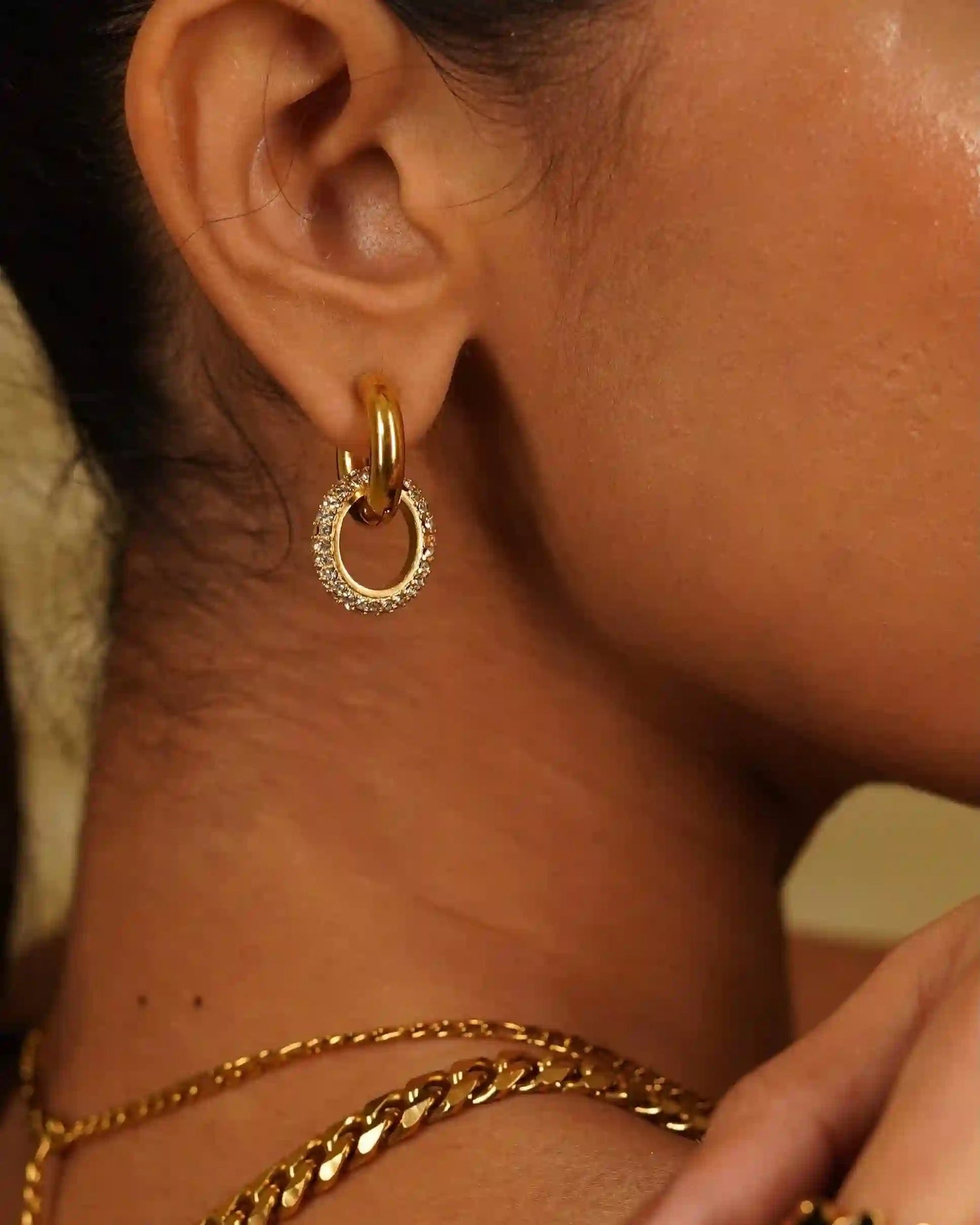
The outfit is right. The makeup is right. The photo comes back and something is off — and you cannot place it until someone points out the earrings are fighting the necklace, or the wrong size for your face, or simply the wrong piece for where you actually went.
Why earring mistakes are harder to spot than other jewelry mistakes
A wrong necklace is obvious — it sits at the wrong length, competes with the neckline, or looks mismatched with the fabric. A wrong bracelet is obvious — it does not fit the wrist, or clashes with the watch. Earring mistakes are harder to catch because earrings are on either side of the face, not in the direct line of sight. They appear in the mirror periphery, get assessed quickly, and the decision is made before the full picture registers.
The result: earring mistakes are the most common jewelry error in Pakistani dressing and the least corrected one. Most women own the right earrings for the occasion — the problem is reaching for the wrong pair out of habit or time pressure, and not catching the mismatch until the photo.
The earring is the piece closest to the face in every photograph. It is the first jewelry element visible in a portrait, a selfie, or a Eid group photo. This means earring mistakes are the most permanently documented jewelry errors — they exist in every photograph from that day, permanently.
Mistake 1 — Wearing the same earring to every occasion regardless of formality
The single-earring-for-everything habit is the most widespread earring mistake in Pakistan. A pair of medium gold hoops that work for university are worn to a mehndi. A chandelier earring worn to a baraat is also worn to a Saturday lunch. The earring is not wrong — it is in the wrong room.
Earrings carry a formality register as strongly as outfits do. A plain small stud is office formality. A medium hoop is casual formality. A drop earring is semi-formal. A chandelier is event formality. Wearing above your occasion's register reads as overdressed. Wearing below it reads as underinvested. The Pakistani occasion calendar — which moves from university on Monday to a mehndi on Friday to a family gathering on Sunday — requires earrings in at least three distinct registers.
For the full breakdown of how to build a collection that covers all three occasion levels without buying a separate earring for every event, the earring types guide for Pakistan maps every earring style to its correct occasion register.
Mistake 2 — Choosing earring size without considering face shape
Earring size is not a personal preference — it is a proportional relationship between the earring's dimensions and the face's proportions. An earring that is too wide for a narrow face makes the face look narrower. An earring that is too long for a round face pulls the eye down rather than creating the length that balances a fuller face shape. These effects are subtle in a mirror and obvious in photographs.
For the complete guide to which earring silhouettes flatter which Pakistani face shapes — with specific earring type recommendations for each — the earring and face shape guide covers the full pairing logic with examples.
Mistake 3 — Competing with the neckline or the necklace simultaneously
Earrings and necklaces share the same visual real estate — the face, neck, and collarbone zone. When a statement earring and a statement necklace occupy this space simultaneously, neither reads clearly. They fight for the eye's attention and the eye loses both. This is one of the most photographed jewelry mistakes in Pakistan because it appears constantly in wedding function photos — a heavy set worn because it matches, not because the pieces can coexist.
| Earring type | Necklace that works with it | Necklace that competes |
|---|---|---|
| Statement chandelier or long drop | Nothing, or a very thin chain that stays below the collarbone | Any pendant necklace, any choker, any statement necklace |
| Medium hoop (25–40mm) | A thin layered chain or a delicate collar necklace | A statement pendant or heavy chain at the same visual level as the earring |
| Small stud | Any necklace — the stud does not compete because it has minimal visual presence | Nothing — studs are the one earring type that supports any necklace choice |
| Drop earring (small to medium) | A thin chain or nothing — the drop earring creates movement that a necklace interrupts | A wide collar or bib necklace that fills the neck-to-collarbone space the earring is moving through |
| Wide hoop or geometric statement | Nothing at the neck, or a very simple chain at clavicle level | Any necklace that sits at or above clavicle level — it will crowd the geometric presence of the earring |
The neckline creates the same competition risk as the necklace. A heavily embroidered neckline at collar level plus statement earrings means three things competing in the same visual zone — neckline embellishment, earring detail, and the transition between them. For how to choose earrings based on neckline type, the statement earring wearing guide covers the neckline compatibility rules in detail.
Mistake 4 — Wrong earring weight for the duration of the occasion
Earring weight is experienced across time, not at the moment of putting them on. A chandelier earring that feels fine in the first five minutes of a baraat feels like it is pulling the earlobe off by hour three. Pakistani events are long. A mehndi that starts at 7pm often runs past midnight. A family formal occasion can span six hours. The earring that handles an hour does not necessarily handle six.
Heavy earrings — particularly long chandeliers with multiple hanging elements — stretch the piercing hole with sustained wear. This is not immediately visible but accumulates over years of occasion wear. For daily Pakistani wear where earrings are worn ten to twelve hours at a stretch, earring weight is a durability consideration, not just a comfort one.
Any weight is fine. Statement chandeliers, heavy drops, structured geometric pieces — all manageable for short events, photo sessions, or occasions where sitting is most of the activity.
Medium weight. Drop earrings with lightweight construction — thin metal, open geometric frames, single-element drops rather than multi-tier chandeliers. The earring reads as statement from a distance while remaining comfortable across the full event.
Light weight only. Hoops, small drops, well-fitted studs. For Pakistani mehndi and baraat events that run long into the night, the lightest earring that still reads as occasion-appropriate is the correct choice — not the most impressive earring that can be tolerated for two hours.
Mistake 5 — Wearing studs to photographed occasions out of habit
The opposite error to the over-dressed mistake: wearing daily studs to an occasion where the photograph is the most lasting outcome. Small studs disappear in photographs — particularly in group photos taken from more than two metres away, or in outdoor light where the stud's reflective surface is competed by every other light source in the frame.
A birthday lunch, a graduation night, an Eid gathering, a farewell dinner — all of these are photographed occasions. The question before leaving is not "are these earrings fine?" but "will these earrings read in the photograph?" A small stud does not. At minimum, a medium hoop that catches light and creates a visible presence in a photograph is the threshold for any photographed occasion.
Mistake 6 — Ignoring earring and hair interaction
Hair determines how much of the earring is actually visible. A long chandelier worn with thick, voluminous hair down disappears into the hair's lower section. A wide hoop worn with a tight bun reads completely. The same earring performs differently depending entirely on what the hair is doing — and this relationship is almost never accounted for when the earring decision is made at the dressing table.
For Pakistani formal occasions where hair is often styled in a juda or updo, the earring has maximum visibility and the choice can be more substantial. For casual occasions with hair down and loose, the earring needs to clear the hair's volume or be short enough to read above it. The earring and the hair should be decided together, not sequentially. For detailed guidance on which earring types work with which hair placements, the drop earrings guide covers the visibility and hair interaction rules for the earring type most affected by this variable.
Frequently asked questions
Q1. What is the most common earring mistake Pakistani women make at weddings?
A: Wearing a full matching set — statement earring plus statement necklace plus matching bracelet — to a formal wedding function. The matching set reads as over-coordinated in photographs and each piece competes with the others for visual attention. A single statement earring with no necklace, or a pendant necklace with small studs, reads as more intentional and photographs more cleanly than a fully matched set at the same formality level.
Q2.How do I know if my earrings are too heavy for daily wear in Pakistan?
A: If the earring feels noticeably heavy within the first hour of wearing, it is too heavy for a full day of Pakistani daily wear — typically ten to twelve hours including commuting, sitting at a desk, and outdoor movement in heat. Earrings for daily wear in Pakistan should be light enough that they are forgotten about by mid-morning. If they are still being consciously felt at noon, they will be pulled off by the afternoon. For the types and weights that hold up through Pakistani daily conditions, the stud earrings guide covers the lightest high-visibility options for daily wear.
Q3. Can I wear chandelier earrings to a Pakistani office?
A: In most Pakistani corporate offices — banking, law, accounting, government — no. Chandelier earrings read as event formality in a professional setting and create a register mismatch that reads as poor dressing judgment rather than bold personal style. In creative offices, media, fashion, and client-facing roles in Karachi and Lahore's more contemporary professional environments, a restrained chandelier — one that is structured and not heavily embellished — can work with a plain formal outfit. The rule: if the earring would be at home at a mehndi, it does not belong in a conservative office.
Q4. What earrings work best for photographed casual occasions in Pakistan?
A: Medium hoops in the 25–35mm range are the most photograph-friendly earring for Pakistani casual occasions — birthday lunches, farewell dinners, chai outings. They are large enough to read clearly in a group photo from two metres, small enough not to overwhelm a casual outfit, and versatile enough to work against both printed lawn suits and casual western outfits. A gold-toned hoop also catches natural daylight well, which is the dominant light source in most Pakistani outdoor and cafe settings.
Q5. How do I match earrings to a dupatta in Pakistani formal wear?
A: The dupatta creates a layering challenge — it covers one or both earrings intermittently when worn draped over the shoulders. For formal Pakistani occasions where the earring is a key part of the look, either pin the dupatta before the event so it holds its position and does not drift onto the earring, or choose an earring long enough that its lower portion remains visible below the dupatta's edge when it does shift. A stud or very short drop disappears completely under a dupatta. A chandelier that hangs below the dupatta's edge remains visible regardless of how the dupatta is positioned.
The earring is in every photograph — the mistake is too
Most earring mistakes are not about buying the wrong piece. They are about reaching for a familiar piece without checking whether it suits the face, the occasion, the neckline, the hair, or the duration of the event. The right earring for each of those variables is usually already in the drawer — it just needs to be the one that is chosen.
Browse earrings at Mithra & Co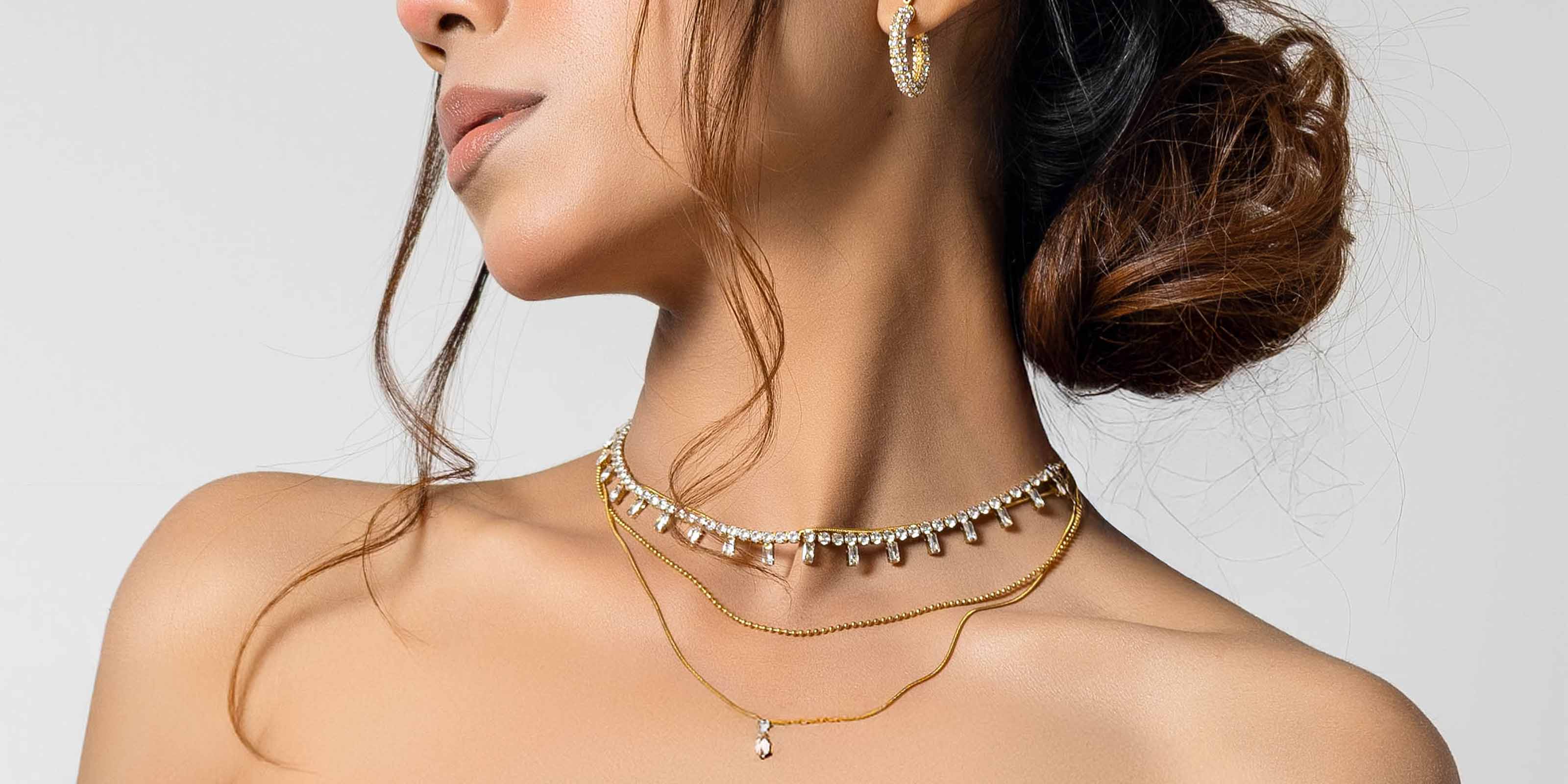

Leave a comment
This site is protected by hCaptcha and the hCaptcha Privacy Policy and Terms of Service apply.