

The short answer
Yes — but "18K gold jewelry" in Pakistan means three different products, and only two of them are worth buying for the way most people wear jewelry daily. 18K describes gold purity: 75 percent gold. It says nothing about what that gold is sitting on. In Pakistan's heat and humidity, what it sits on is the whole decision.
The three things "18K gold" can mean
- Solid 18K gold. 75 percent gold all the way through. No coating, no fading, no skin reaction. Holds its value and lasts for decades. Priced accordingly — many times the cost of any plated alternative — and, as a soft metal, scratches more readily than stainless steel under daily contact with phones, keyboards, and bags.
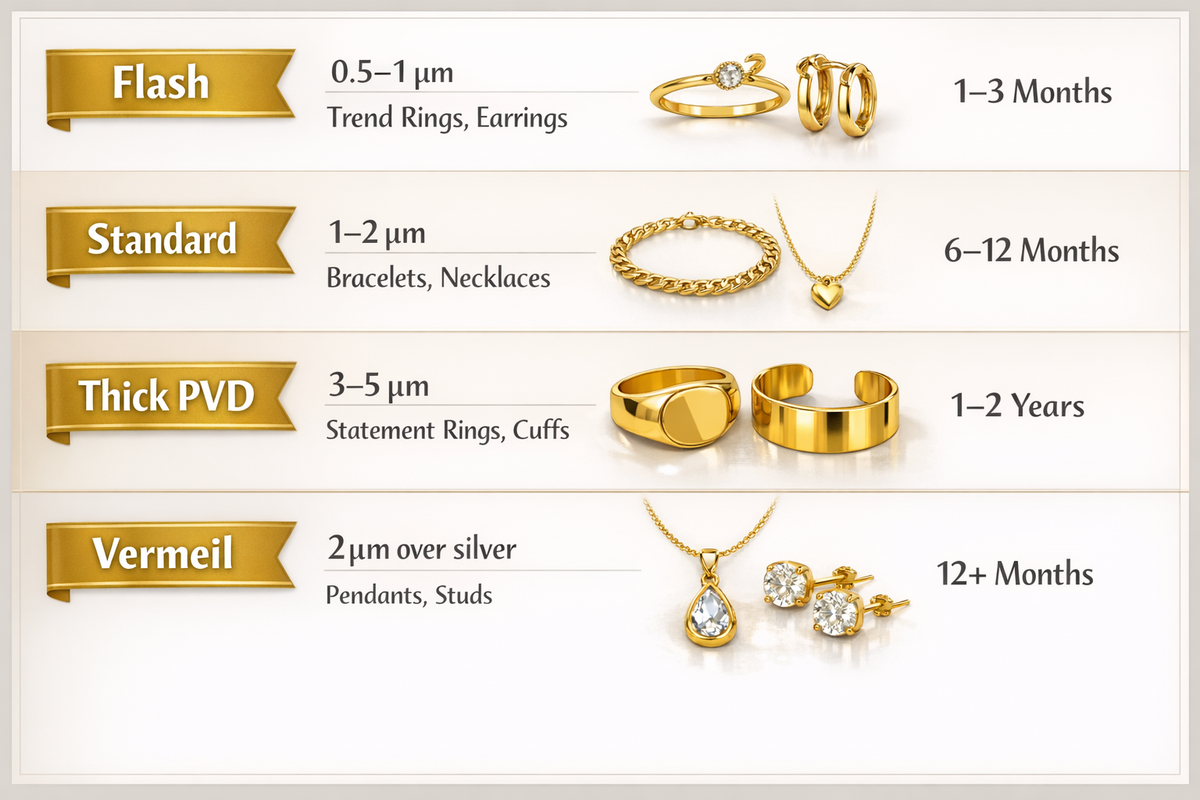
- 18K gold plated on brass. A real 18K gold layer, 0.5 to 2 microns thick, electroplated onto a reactive copper-zinc base. Looks identical to the other two new. Under daily Pakistani wear the coating wears through at the inner band or clasp within 2 to 8 weeks, and the brass underneath turns skin green.
- 18K PVD on stainless steel. The same 75 percent gold, vacuum-bonded at 1 to 3 microns onto a non-reactive 316L stainless steel base. No green marks even where the coating eventually thins. Lasts years of daily wear, not weeks. Fashion jewelry, not an asset — no resale value.
Why the base metal and coating method matter more than the karat number is explained in the gold plated jewelry buyer's guide; how PVD differs from electroplating is in PVD jewelry explained.
The cost-per-wear calculation
| Type | Upfront cost | Daily-wear lifespan in Pakistan | What you pay for over a year |
|---|---|---|---|
| 18K plated brass | Low | 2–8 weeks | Six to twenty replacements, plus green marks in between |
| 18K PVD stainless steel | Moderate | 1–5 years by piece | One purchase; no replacement cycle, no reactions |
| Solid 18K gold | High | Decades | One purchase that holds value — but a premium daily wear does not require |
The brass piece is the cheapest on the day and the most expensive by the end of the year. Replacing a Rs. 500 ring every six weeks costs more over twelve months than one PVD ring, before counting the irritation. Solid gold is the right answer when permanence and value matter; it is not necessary for the chain you wear to the office or the studs you never take out, because PVD stainless steel delivers the same daily performance at a fraction of the price.
Which type for which use
- Daily wear — office, university, errands. 18K PVD on stainless steel. Handles sweat, wudu, hand washing, and friction without replacement cycles or reactions.
- Event wear — shaadi season, Eid, formal dinners. Still 18K PVD on stainless steel. A six-hour evening of heat, sunscreen, sweat, and fabric friction is exactly what electroplated brass fails under — see jewelry for Pakistani summer.
- Investment and heirloom. Solid 18K gold. Engagement rings, pieces meant to be passed on, anything bought once and kept for life. This is the only category where the premium is justified.
- Occasional fashion wear. 18K electroplated brass is acceptable for a piece worn a few times a month and stored carefully. The mistake is moving it into daily rotation and expecting daily-wear performance.
Care that applies to all three
Perfume, sunscreen, and moisturiser on first and fully absorbed, then jewelry. A dry microfiber wipe after wearing. Each piece in its own pouch, out of the bathroom. The full routine is in the complete care guide.
Frequently asked questions
Q1. Is 18K gold jewelry good for daily use in Pakistan?
A: Yes — 18K PVD on stainless steel for daily rotation, and solid 18K gold for pieces you want to keep for life. 18K electroplated brass is not suited to daily wear in Pakistan's climate. The karat alone does not decide this; the base metal and coating method do.
Q2. What is the difference between 18K solid gold and 18K gold plated?
A: Solid 18K is 75 percent gold throughout — permanent colour, no coating. 18K gold plated is a thin 18K gold layer over a base metal, and its quality depends entirely on that base metal and how the gold was applied. PVD on stainless steel is the best plated option for daily wear; electroplating on brass is the worst.
Q3. Is it worth paying more for 18K PVD over 18K electroplated?
A: For anything worn regularly, yes. The replacement cost of electroplated brass — a new piece every 2 to 8 weeks — exceeds the price of one PVD piece within the first year, before counting green marks and irritation.
Q4. When is solid 18K gold worth buying over PVD stainless steel?
A: When permanence or value is the point — engagement rings, heirlooms, gifts meant to last decades. For everyday rotation pieces, PVD stainless steel gives equivalent daily performance without the premium, and resists scratching better than soft solid gold.
Q5. Does 18K PVD jewelry have any resale value?
A: No. It is fashion jewelry — a thin gold coating on stainless steel — and should be bought for wear, not as an asset. Solid gold is the only one of the three that holds value.

Leave a comment
This site is protected by hCaptcha and the hCaptcha Privacy Policy and Terms of Service apply.