

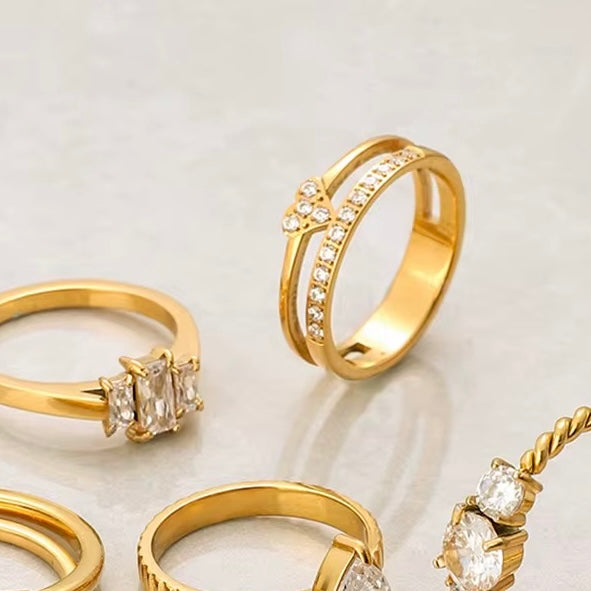
Yes, jewelry tarnishes in storage — and faster in Pakistan than most guides allow for
Most people assume jewelry only degrades while it is being worn. It does not. Metal surfaces keep reacting with the air around them in a drawer, just more slowly — and in Pakistan "slowly" still means weeks. Most storage advice is written for climates with 40 to 50 percent indoor humidity. Karachi sits at 70 to 90 percent for most of the year. Lahore reaches 80 percent and above through the monsoon. Islamabad and Rawalpindi run 60 to 75 percent through summer. At those levels, a brass-base piece left on an open tray can dull within two to three weeks, and even stainless steel PVD loses some brilliance over months of open storage.
Whether a piece comes out of storage looking the way it went in depends on three things: the base metal, whether it was cleaned before being put away, and where and how it was stored. This guide covers all three for Pakistani conditions.
What causes tarnish in storage — the actual chemistry
- Hydrogen sulphide in indoor air. Produced by cooking, household products, and pollution. It reacts with silver to form silver sulphide — the black-grey layer that appears on sterling silver and vermeil pieces in a drawer. No moisture needed; it happens at room temperature.
- Oxygen plus moisture. Brass and copper oxidise in air, and humidity acts as the electrolyte that speeds the reaction up. In Karachi's indoor air, moisture alone is enough to keep a brass-base piece oxidising continuously without any skin contact.
- Tap-water residue. A piece stored damp after wudu or hand washing holds chlorine compounds from tap water against the surface for the whole storage period.
- Sweat and skin oil left on the piece. Dried sweat is mostly sodium chloride — aggressive to brass and copper. Storing a piece unwiped concentrates that residue against the metal for days or weeks. This is the single most avoidable cause of storage tarnish.
Which materials tarnish fastest in storage
| Material | Storage tarnish risk | Primary cause | Visible change in Pakistani open storage |
|---|---|---|---|
| Copper base, electroplated | Very high | Copper oxidation — green patina | 1–4 weeks |
| Brass base, electroplated | High | Oxygen and moisture through a porous coating | 2–8 weeks |
| Sterling silver and gold vermeil | High | Silver sulphide from hydrogen sulphide in air | 2–6 weeks |
| Stainless steel, standard plating | Low to moderate | Coating oxidation; base metal stable | 3–6 months |
| Stainless steel, 18K PVD | Very low | Low-porosity coating slows air penetration | Minimal for 12+ months |
| Solid gold | Negligible | Chemically inert in normal conditions | None |
Two variables set storage stability: how reactive the base metal is, and how porous the coating is. Brass and copper react regardless of what is on top; a porous electroplated layer lets humid air reach them. PVD's low porosity slows that penetration, and a stainless steel base has nothing to react in the first place. Why PVD and stainless steel behave this way is in PVD jewelry explained.
The five storage mistakes that cause most tarnish in Pakistan
- Storing without wiping first. Sweat, skin oil, sunscreen, and perfume residue concentrate against the surface for the entire storage period. A ten-second dry microfibre wipe removes them.
- Open trays, dishes, and dressing tables. Continuous exposure to humid air and sulphur compounds. A jewelry dish looks organised; in Pakistani indoor air it is continuous low-level chemical exposure. Even a basic pouch is meaningfully better.
- The bathroom. The worst location in any Pakistani home, for any material. Shower steam takes a bathroom to 90–100 percent humidity several times a day. Move all jewelry out.
- Pieces touching each other. Metal-on-metal contact scratches, and scratches age a finish faster than wear does. Dissimilar metals in contact under humidity — brass against stainless steel — also set up galvanic corrosion that accelerates tarnish on the brass piece.
- Plain plastic bags with no moisture control. A plain bag traps whatever humidity was in the air when it was sealed. A bag with a silica gel packet, or an anti-tarnish pouch, absorbs it instead.
What actually works — storage methods for Pakistani humidity
| Method | How it helps | Verdict for Pakistan |
|---|---|---|
| Individual fabric pouches | Prevents metal contact; limits direct humidity exposure | The standard for every piece in daily rotation |
| Airtight ziplock bag, air pressed out | Removes air exposure almost entirely | Best for anything not being worn for more than two weeks |
| Anti-tarnish strips or activated-charcoal pouches | Absorb hydrogen sulphide and moisture inside the container | Strongly recommended; essential for silver and vermeil |
| Silica gel packets in the jewelry box | Absorb ambient moisture | Good; replace every 4–6 weeks in Karachi summer |
| Open dish or tray | No protection, no separation | Avoid |
| Bathroom shelf | Peak humidity several times daily | Avoid entirely |
Storage by material
18K PVD over stainless steel. The most storage-tolerant option in fashion jewelry. Wipe after the last wear, then an individual fabric pouch in a bedroom drawer is sufficient for day-to-day storage. For anything put away longer than two weeks in Karachi humidity, a ziplock bag with a silica gel packet gives maximum protection.
Brass and standard electroplated pieces. The most vulnerable category. Wipe thoroughly, then seal in a ziplock with the air pressed out and a silica gel packet inside. Keep away from the kitchen as well as the bathroom — cooking is the main indoor source of hydrogen sulphide.
Sterling silver and gold vermeil. Anti-tarnish strips are not optional. Silver sulphide forms fastest of all storage tarnish, and a vermeil piece stored unprotected through a Lahore monsoon will show black patches within a month. Airtight container plus an anti-tarnish strip for anything stored more than a few weeks.
Solid gold. Chemically stable. The only storage concerns are scratching from contact with other pieces and dulling from skin oil — individual pouches handle both.
Where in the house to store it
A bedroom drawer or wardrobe shelf — away from the bathroom, away from the kitchen, and away from windows that get direct sun. If a bedroom is air-conditioned, that is the right room for all jewelry regardless of material; AC keeps humidity well below the rest of the house through summer. Direct sunlight fades coloured CZ stones and warms metal enough over time to affect coating adhesion, so keep pieces off window sills and out of cars.
Storage priority by piece
- Rings and bracelets — highest priority. They collect the most sweat and skin oil during wear and arrive in storage with the heaviest chemical load. Wiping before storage matters most here.
- Necklaces — moderate. The clasp and back-of-neck section carry the residue; wipe those specifically. Tangling is as much a storage problem as tarnish — coil in a pouch or hang.
- Earrings — lower, but clean the posts. Posts collect sebum and product from the piercing. The visible surface tarnishes slowly; the post is the hygiene issue.
If a piece comes out of storage already tarnished
- Dull but no colour change. Surface particulate, not tarnish. A dry microfibre wipe restores it.
- Light tarnish with slight colour shift. Mild soapy water on a soft cloth, wiped gently and dried immediately. Works where the coating is still intact. Never toothpaste, baking soda, or abrasive cleaners — all three strip the gold layer faster than they remove tarnish.
- Green on a brass-base piece. Copper patina on exposed base metal. If the coating is mostly intact, gentle cleaning helps temporarily. If it has worn through, cleaning removes the green but cannot restore the gold — the coating is gone, and professional re-plating usually costs more than the piece.
- Black on silver or vermeil. Silver sulphide. A silver polishing cloth on the exposed silver only — keep it off any remaining gold plating, which it will remove.
The full cleaning method and the household products to avoid are in how to clean gold plated jewelry at home. The complete care routine is in the complete care guide.
Frequently asked questions
Q1. Does gold plated jewelry tarnish in storage in Pakistan?
A: Yes. Brass-base electroplated pieces show visible dulling or colour shift within two to eight weeks of open storage in Pakistani humidity. 18K PVD over stainless steel shows minimal change for twelve months or more in a sealed pouch. The base metal and coating decide storage stability more than anything else.
Q2. How do I stop jewelry tarnishing in storage?
A: Three steps: wipe it with a dry soft cloth before putting it away; store each piece in its own pouch rather than on a tray or in a shared box; keep storage in a cool bedroom drawer, not the bathroom or kitchen. For brass or silver pieces stored more than a month, add a silica gel packet or anti-tarnish strip inside a sealed bag.
Q3. Can I store jewelry in the bathroom?
A: No. Showers take Pakistani bathrooms to 90–100 percent humidity several times a day. Even stainless steel pieces show faster surface change under repeated cycles like that. Move everything to a bedroom drawer.
Q4. Why does stored jewelry turn black or green?
A: Black is silver sulphide — hydrogen sulphide in indoor air reacting with silver. Green is copper patina — oxygen and moisture reaching brass or copper where the coating has worn through. Both happen faster in Pakistani humidity than international guides predict. Prevention is sealed storage and cleaning before storing; restoration depends on whether the coating is still intact.
Q5. Does jewelry tarnish faster in Karachi than Lahore?
A: Karachi's coastal humidity is high year-round; Lahore's spikes through the monsoon and drops in winter. Both need active humidity management for stored jewelry — Karachi all year, Lahore from June through September especially.
Q6. How should I store a piece bought as a gift?
A: Keep it in its original pouch and box until the occasion. If it will be more than two weeks before giving, add a small silica gel packet inside the outer box.


Leave a comment
This site is protected by hCaptcha and the hCaptcha Privacy Policy and Terms of Service apply.