

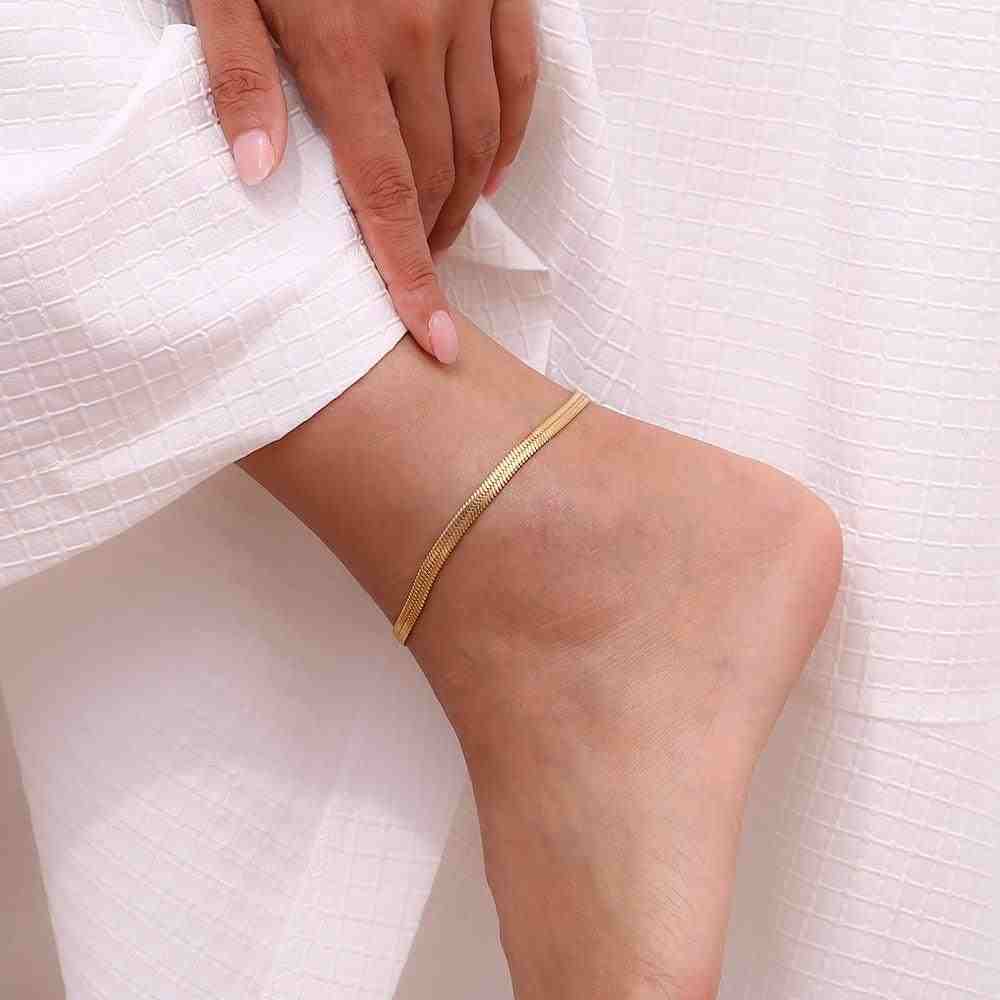
Why Anklets Are Worth Talking About Again — and Why Now
The anklet occupied a strange middle ground in Pakistani fashion for the better part of a decade. Culturally significant — the payal is woven into wedding traditions, into classical dance, into the way generations of Pakistani women marked important moments — but stylistically dormant, associated more with a look from fifteen years ago than with anything happening in contemporary dress.
That has changed. The shift started quietly and accelerated through 2025 into 2026 as the broader jewelry conversation in Pakistan moved away from sets and occasion pieces toward deliberate everyday pieces chosen for their own quality. The anklet benefited from this shift significantly — because a slim gold chain worn at the ankle is, in many ways, the most understated and the most versatile jewelry decision available. It adds without competing. It is visible to the right people — the people close enough to notice — and invisible to everyone else.
This guide covers everything practically useful about anklets: material, sizing, styling across outfit types, layering, occasion fit, and care. It is written for anyone deciding whether to add an anklet to their regular rotation, and for anyone who already has one and wants to wear it better.
Material First — Because Everything Else Depends on It
The anklet faces a specific material challenge that most other jewelry does not: it lives at the point of maximum daily stress on the body. Ankles encounter moisture constantly — from sweat, from floors, from accidentally stepping through water, from summer sandals, from the particular Pakistani combination of heat and humidity that accelerates every form of metal degradation. An anklet built on a reactive base metal will show that stress very quickly.
The two base metals that matter in this conversation:
Zinc alloy or copper base with dip plating — the construction used in most mass-market anklets available in Pakistan. The base metal reacts with sweat and moisture once the surface coating breaks down, which at ankle level happens faster than on any other part of the body. The result: green marks on the ankle, surface patchiness within weeks, and a piece that looks worn before it has been meaningfully used.
Stainless steel base with PVD gold plating — the construction that makes ankle wear genuinely practical. Steel is inert at the structural level — it does not react with moisture, sweat, or skin chemistry regardless of how much exposure it gets. PVD plating bonds to the steel at a molecular level rather than sitting on top of it, which means the surface holds under the constant friction and moisture that the ankle position involves. An anklet built on this construction can be worn through a full Pakistani summer — including the sweating, the sandals, the occasional splash — without the surface breakdown that makes most anklets unwearable within a season.
If there is one thing to check before buying any anklet online in Pakistan, it is the base metal specification on the product page. If it is not listed, that absence is information.
For a complete breakdown of why the base metal determines everything about how jewelry holds up over time, the material guide explains the chemistry in plain terms.
Sizing — The Detail Most People Get Wrong
Ankle sizing is the most practically significant specification on any anklet listing and the most commonly underestimated. An anklet that is too tight is uncomfortable through a full day of walking. An anklet that is too loose slides down toward the foot, catches on footwear, and gets damaged from the friction.
How to measure correctly at home:
Use a soft measuring tape or a strip of paper. Wrap it around the narrowest point of your ankle — typically just above the ankle bone, not at the widest point of the foot. Measure the circumference in centimetres. For a comfortable fit that sits without sliding, add 1.5 to 2 centimetres to your measurement. This gives you the anklet length to look for on the product listing.
A few practical considerations that most guides skip:
Time of day matters. Ankles, like fingers, are slightly larger at the end of the day than in the morning — particularly in Pakistani summer heat when the body retains more fluid. Measuring in the evening gives you a more accurate reading for daily wear comfort.
Adjustable or extender chain. Many anklets come with a small extender chain — typically 2 to 3 centimetres — that gives the piece a range of fit rather than a fixed length. This is the most practical option for online purchasing, since it tolerates minor measurement variations without becoming a return. When reviewing any anklet listing, check whether an extender is included before ordering.
Layering changes the sizing equation. If you intend to wear two anklets together, the second piece should sit slightly higher on the ankle — which means it needs to be slightly longer to achieve the same comfortable fit. A 1 centimetre difference in length between the two pieces is usually enough to create clear visual separation without the upper piece sliding down to compete with the lower one.
How to Style Anklets With Pakistani Outfits — By Outfit Type
The anklet is one of the few jewelry pieces that behaves completely differently depending on the footwear and hem length of the outfit it is worn with. Understanding this is the difference between an anklet that looks intentional and one that looks like an afterthought.
Shalwar Kameez — Straight Cut and Wide Leg
The full coverage of a straight cut shalwar or wide leg trouser means the anklet is only visible when seated, when the fabric moves, or when the wearer crosses her legs. This is not a reason to skip it — it is actually one of the most elegant contexts for an anklet, because the glimpse quality of the visibility makes it feel like a personal detail rather than a display. A slim single chain in this context is the right choice. Something that catches the light briefly and disappears. The anklet is doing its work quietly, which is appropriate for an outfit that already has presence.
Shalwar Kameez — Cigarette Pant and Capri Cut
The shorter hem creates the most natural anklet visibility in traditional Pakistani dressing. The ankle is exposed consistently rather than occasionally, which means the anklet has a proper stage. Both single and layered anklets work here — the choice depends on the overall weight of the outfit. A heavily embroidered or embellished kameez reads better with a single slim anklet. A plain or minimal kameez can carry a layered arrangement or a piece with more detail.
Western Dress — Jeans and Trousers
Cropped jeans, ankle-length trousers, and wide-leg denim all create different levels of anklet visibility. Cropped cuts — sitting two to three inches above the ankle — give the anklet its most deliberate frame. This is where a slightly bolder piece works: a chain with a small pendant, a layered arrangement, or a piece with subtle texture reads clearly without being overwhelming. For full-length trousers, the anklet disappears most of the time and only appears in motion — the same logic as the straight cut shalwar applies.
Summer Dresses and Skirts
The most anklet-friendly outfit category. The exposed leg means the anklet is visible consistently and from multiple angles. The barefoot or sandal context means it is also seen against skin rather than fabric, which makes the material quality of the piece much more apparent. This is the outfit type where a quality construction — stainless steel, clean PVD finish — matters most visibly, because the piece is being examined rather than glimpsed.
Ethnic Formal — Sharara, Gharara, Lehenga
These silhouettes typically have enough volume and hem coverage that the anklet is almost invisible while standing. The visibility comes during movement — specifically when the fabric lifts while walking or when the wearer is seated on a lower surface. For formal ethnic occasions, a piece with slightly more presence — a chain with small charms, a slightly wider band — is appropriate because the moments of visibility are brief and benefit from a more deliberate piece. The payal tradition in Pakistani bridal and formal wear gives the anklet genuine cultural weight in this context, which is worth acknowledging rather than defaulting to the same slim chain used for casual everyday wear.
Footwear — The Factor That Changes Everything
The anklet interacts with footwear more directly than any other jewelry piece, and getting this interaction right is the most overlooked element of anklet styling.
Bare feet and slides — the cleanest context for any anklet. The piece sits on skin with no visual competition. A single slim chain reads clearly. A layered arrangement reads intentional. This is the context where the anklet does the most work with the least effort.
Strappy sandals — the most challenging footwear for anklets because the straps create visual competition at exactly the same point where the anklet sits. The solution is either to wear the anklet above the highest strap — so there is clear separation between the jewelry and the shoe hardware — or to choose a very slim anklet that reads as a deliberate complement to the straps rather than competing with them. Avoid anklets with large pendants or charms in this context, as they tend to get caught on sandal hardware.
Block heels and mules — good anklet context. The ankle is elevated and prominent, making the anklet more visible than it would be in flat footwear. This is an occasion to wear something with slightly more presence than the everyday slim chain.
Sneakers and trainers — the anklet either disappears behind the shoe collar or sits just above it. For this context specifically, an adjustable anklet with an extender chain that allows you to position it higher on the ankle — above the shoe line — works significantly better than a fixed-length piece at standard ankle sizing.
Closed formal shoes — the anklet disappears, which is relevant for anyone considering whether to wear one to a formal work context. The piece is there for the moments when it becomes visible — seated at a desk, walking up stairs — but is otherwise private. This is a perfectly valid way to wear an anklet in a conservative professional environment.
Single Versus Layered — How to Make Both Work
The single anklet is the most versatile and the lowest-maintenance option. One slim chain, correctly sized, worn consistently. It is visible when it needs to be and unobtrusive when it does not. For anyone new to wearing anklets, or anyone who wants the daily wear option without the styling decisions, the single chain is the right starting point.
Layering two anklets — a look that has grown significantly across Pakistani street style in 2025 and 2026 — requires a few specific things to work rather than just looking like two anklets that happened to be put on at the same time:
Length separation. The two pieces need to sit at visibly different heights. A 1 to 1.5 centimetre difference in length achieves clear separation without the pieces sliding into the same position throughout the day. Less than this and they migrate toward each other; more than this and the upper piece can feel too high on the leg.
Weight contrast. A very slim chain layered with a slightly heavier chain or a chain with a small pendant gives the arrangement visual structure. Two identical pieces layered reads as doubling rather than layering. The contrast between the two is what makes the arrangement read as deliberate.
Metal consistency. Two gold-tone anklets worn together read as intentional. A gold anklet and a silver anklet worn together can work but requires that the rest of the outfit's jewelry also mixes tones consistently — otherwise it reads as accidental rather than styled.
The full anklet collection at Mithra includes both slim single-chain styles and pieces with pendant detail that work specifically as layering anchors — the piece with detail sitting lower, the plain chain sitting above.
Occasion Guide — Which Anklet for Which Moment
Daily wear — office, university, errands. The slim plain chain in gold tone. Minimal enough to be appropriate in any context. The everyday essentials category at Mithra contains the styles that function specifically as daily defaults — chosen for their versatility across contexts rather than their presence in any single one.
Casual social — friends, weekend, informal daawat. This is where a second anklet or a chain with a small pendant earns its place. The context is relaxed enough to accommodate a slightly more deliberate piece, and the footwear is typically open enough for it to be visible properly.
Party and formal event. A piece with more presence — a wider chain, a charm or pendant detail, a layered arrangement worn with open footwear. The party ready collection contains ankle styles suited specifically to event contexts — pieces that have the right visual weight for an occasion without being so elaborate that they require the event to justify wearing them.
Wedding functions — mehndi, barat, walima. The traditional payal context. An anklet with charms, a layered arrangement, or a piece with more decorative detail is appropriate here. This is also the context where the anklet has the most cultural weight — the payal is part of the bridal aesthetic in Pakistani tradition — and choosing a piece with genuine craft and quality reflects that context appropriately.
Beach, pool, or travel. Specifically the waterproof construction matters here. The guide on gold plated jewelry in water covers what PVD construction handles and what it does not — worth reading before wearing any anklet into chlorinated water or the sea.
Care — What the Ankle Position Specifically Requires
Anklets need slightly more deliberate care than wrist or neck jewelry because of the specific conditions they face — more moisture, more friction, more contact with surfaces. The care requirements are not complicated but they are worth knowing.
Rinse after beach or pool. Chlorinated water and salt water both accelerate surface wear on any plated piece, including PVD. A quick rinse under clean water after exposure and a wipe with a soft cloth removes the chemical residue before it sits on the surface. This single habit extends the life of any anklet significantly.
Remove before applying lotion to the legs. Moisturiser and body lotion, left to dry on the anklet chain, create a residue that dulls the surface over time. Apply lotion first, let it absorb, then put the anklet on.
Unclasp and store flat rather than coiled. A chain stored in a tight coil develops weak points at the stress areas over time. A slim flat storage position — in a pouch or in a drawer section where it can lie without bunching — keeps the chain structure intact across months of regular wear.
Check the clasp periodically. The clasp is the mechanical point of the anklet and it experiences more stress at ankle level than clasps elsewhere, because the ankle moves more and in more directions than the wrist. A clasp that is beginning to feel loose should be addressed rather than ignored — an anklet that falls off unnoticed is a more likely outcome at the ankle than anywhere else on the body.
The Cultural Dimension — Payal, Modernity, and Wearing Both at Once
The payal carries specific cultural meaning in Pakistan that other jewelry pieces simply do not. It is present in wedding traditions, in Kathak and classical dance, in poetry and in music. The sound of a payal has its own cultural register — which is why modern anklets that do not produce sound sit in a different category from traditional payals that do.
For the contemporary Pakistani woman navigating both registers, the practical distinction is useful: a slim silent chain anklet belongs to the everyday modern wardrobe without carrying the specific cultural weight of a traditional payal. It can be worn without any of the contextual associations that a traditional payal carries. A more elaborate anklet — with charms, with bells, with the decorative weight of a traditional piece — belongs to the occasions where that cultural reference is appropriate and welcome.
Neither is more correct. They serve different purposes for different moments, and understanding the distinction means the anklet can work across the full range of Pakistani life — from a Tuesday at the office to a cousin's walima — rather than being limited to one register or the other.
What to Look for When Buying Anklets Online in Pakistan
The practical checklist before placing any anklet order:
Base metal specified. Stainless steel listed on the product page, not implied by general quality language. If it says "premium alloy" or similar without naming the metal, assume it is zinc or copper.
Plating method clear. PVD is the construction that holds at ankle level under daily wear conditions. Standard electroplating at the ankle tends to show wear within weeks of regular use in Pakistani summer conditions.
Length and extender chain noted. Check the listed length against your ankle measurement plus 1.5 to 2 centimetres. Confirm whether an extender chain is included and how much additional length it provides.
Clasp type identified. Lobster clasps are the most secure option for anklets — they are less likely to open accidentally from the movement and friction the ankle position involves. Spring ring clasps are functional but require a more deliberate check of the mechanism before wearing.
COD available. Anklet sizing is highly variable in online purchasing. Choosing COD ensures you retain financial control until delivery, allowing you to quickly verify the item at your doorstep and utilize the 24-hour reporting window if any sizing adjustments are needed. Mithra offers COD on anklets across Pakistan — all major cities and most smaller ones.
Frequently Asked Questions About Anklets in Pakistan
Can I wear an anklet every day in Pakistan's heat and humidity?
Yes — but only if the anklet is built on a stainless steel base with PVD plating. Anklets built on zinc alloy or copper bases with conventional electroplating will show surface degradation quickly at ankle level because the position involves more moisture and friction than any other jewelry placement on the body. Stainless steel with PVD plating handles daily Pakistani conditions without the green marks, colour shift, or surface patchiness that most affordable anklets produce within a few weeks of regular wear.
Is it culturally appropriate to wear an anklet to the office in Pakistan?
A slim, quiet gold chain anklet worn under trousers or closed footwear is generally inconspicuous enough for any professional context in Pakistan. The visible payal — audible or elaborate — carries different cultural associations that may not fit every workplace. The practical distinction is: a slim modern anklet in closed footwear is essentially invisible at the office and presents no cultural ambiguity. The choice becomes relevant only if the outfit and footwear make the anklet consistently visible, in which case a more minimal style is the appropriate choice for a conservative professional environment.
How do I measure my ankle size for buying an anklet online?
Wrap a soft measuring tape or a strip of paper around the narrowest point of your ankle — just above the ankle bone. Measure the circumference in centimetres. Add 1.5 to 2 centimetres for comfortable daily wear fit. Measure in the evening rather than the morning, as ankles are slightly larger at the end of the day, particularly in warm weather. If the anklet listing includes an extender chain, you have an additional 2 to 3 centimetres of adjustment range — which accommodates most measurement variations without a return being necessary.
Can I wear an anklet with traditional Pakistani outfits?
Yes. The payal is part of Pakistani cultural dress and has been worn with traditional outfits for generations. A slim modern anklet works specifically well with cigarette pants and capri cuts where the ankle is visible consistently. With full-length shalwar, the anklet functions as a personal detail that appears during movement rather than as a consistent visible element — both are valid ways to wear it. For formal ethnic occasions including wedding functions, a more elaborate or layered anklet is appropriate and consistent with the payal tradition in Pakistani bridal wear.
What is the difference between a payal and a modern anklet?
Traditionally, a payal refers to an anklet that produces sound — typically through small bells or charms that create the distinctive payal sound associated with classical dance and bridal contexts in Pakistan. A modern anklet is typically a silent chain, with or without pendant detail, that sits at the ankle without producing sound. The distinction matters culturally: a silent chain anklet can be worn across everyday and professional contexts without carrying the specific ceremonial associations of a traditional payal. Both are valid and serve different purposes within Pakistani dressing.
How do I stop my anklet from turning my ankle green?
The green mark comes from reactive base metals — zinc alloy or copper — oxidising against skin when sweat or moisture breaks down the surface coating. The only permanent solution is an anklet built on stainless steel, which does not react with skin chemistry regardless of moisture exposure. Cleaning a reactive metal anklet or applying nail polish to the inside of the band are temporary measures that delay rather than prevent the reaction. If green marks are a recurring problem, the base metal of your current anklet is the cause — and replacing it with a stainless steel piece removes the problem entirely.
Can I wear an anklet swimming or in the rain?
Stainless steel with PVD plating handles routine water exposure — rain, accidental splashing, light pool contact — without damage. Prolonged immersion in chlorinated pool water or salt water accelerates surface wear on any plated piece and is best avoided. If swimming with an anklet is a regular situation, rinse the piece under clean water immediately after and wipe it dry before storage. This removes the chemical residue before it sits on the surface and significantly extends the life of any plated anklet.

Leave a comment
This site is protected by hCaptcha and the hCaptcha Privacy Policy and Terms of Service apply.